• Contact info@abtriva.com for inquiries and orders.
  • Chinese (Simplified)

  • English

  • German

  • Korean

  • Spanish

United States (English / $ USD)

Rabbit anti-Human PILRA Polyclonal Antibody

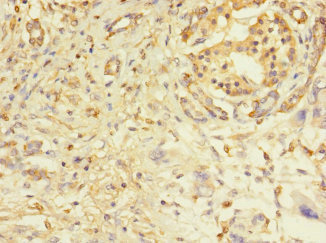
The antibody against PILRA was raised in rabbit using the Recombinant Human Paired immunoglobulin-like type 2 receptor alpha protein (22-226AA) as the immunogen. This antibody exists as a non-conjugated isotype IgG, purified by protein G with a purity greater than 95%. This antibody has been validated on ELISA, IHC.

ADC-17729A

The antibody against PILRA was raised in rabbit using the Recombinant Human Paired immunoglobulin-like type 2 receptor alpha protein (22-226AA) as the immunogen. This antibody exists as a non-conjugated isotype IgG, purified by protein G with a purity greater than 95%. This antibody has been validated on ELISA, IHC.

$299.00

Number
Order Exclusive Products Now

Request a Quote
High Purity LevelsPrecision and ReliabilityCustomization Options

Specifications


Cat.No ADC-17729A ClonalityPolyclonal
Host SpeciesRabbitTarget NamePILRA
FormLiquidSpecies ReactivityHuman
IsotypeIgGStorage Buffer0.01M PBS, 0.03% Proclin 300; Constituents: 50% Glycerol, PH 7.4
Purification Method>95%, Protein G purifiedConjugateNon-conjugated
ApplicationELISA, IHCStorageUpon receipt

Immunogen Information


Immunogen DescriptionRecombinant Human Paired immunoglobulin-like type 2 receptor alpha protein (22-226AA)Target SpeciesHuman
Immunogen SequenceComplete sequences for the immunogen, target protein, and peptides are available upon request.Uniprot IDQ9UKJ1
Background Information
  • Uniprot Id

    Q9UKJ1

  • Target Species

    Human

  • Target Name

    PILRA

  • Target Full Name

    Paired immunoglobulin-like type 2 receptor alpha

  • Target Function

    Paired receptors consist of highly related activating and inhibitory receptors and are widely involved in the regulation of the immune system. PILRA is thought to act as a cellular signaling inhibitory receptor by recruiting cytoplasmic phosphatases like PTPN6/SHP-1 and PTPN11/SHP-2 via their SH2 domains that block signal transduction through dephosphorylation of signaling molecules. Receptor for PIANP.; (Microbial infection) Acts as an entry co-receptor for herpes simplex virus 1.

  • Target Subcellular Location

    [Isoform 1]: Cell membrane; Single-pass type I membrane protein.; [Isoform 2]: Cell membrane; Single-pass type I membrane protein.; [Isoform 3]: Secreted.; [Isoform 4]: Secreted.

  • Target Tissue Specificity

    Predominantly detected in hemopoietic tissues and is expressed by monocytes, macrophages, and granulocytes, but not by lymphocytes. Also strongly expressed by dendritic cells (DC); preferentially by CD14+/CD1a- DC derived from CD34+ progenitors. Also expr

  • Target Synonyms

    Cell surface receptor FDF03; FDF03; Inhibitory receptor PILR-alpha; paired immunoglobulin-like receptor alpha; Paired immunoglobulin-like type 2 receptor alpha; PILRA; PILRA_HUMAN

  • Target Background

    Cell signaling pathways rely on a dynamic interaction between activating and inhibiting processes. SHP-1-mediated dephosphorylation of protein tyrosine residues is central to the regulation of several cell signaling pathways. Two types of inhibitory receptor superfamily members are immunoreceptor tyrosine-based inhibitory motif (ITIM)-bearing receptors and their non-ITIM-bearing, activating counterparts. Control of cell signaling via SHP-1 is thought to occur through a balance between PILRalpha-mediated inhibition and PILRbeta-mediated activation. These paired immunoglobulin-like receptor genes are located in a tandem head-to-tail orientation on chromosome 7. This particular gene encodes the ITIM-bearing member of the receptor pair, which functions in the inhibitory role. Alternative splicing has been observed at this locus and three variants, each encoding a distinct isoform, are described.

Inquire Rabbit anti-Human PILRA Polyclonal Antibody Now


AbTriva respects your privacy and protects your personal data in accordance with AbTriva. For more information, please see our data protection statement. *

Notification