-
Chinese (Simplified)
-
English
-
German
-
Korean
-
Spanish
Chinese (Simplified)
English
German
Korean
Spanish
Sign up for an account to enjoy easy online shopping and instant order tracking.
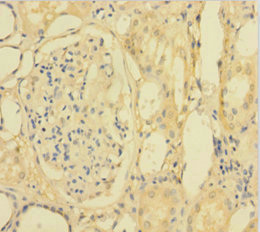
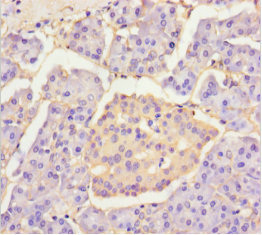
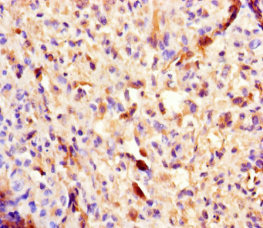
The antibody against PLA2G2D was raised in rabbit using the Recombinant Human Group IID secretory phospholipase A2 protein (22-145AA) as the immunogen. This antibody exists as a non-conjugated isotype IgG, purified by protein G with a purity greater than 95%. This antibody has been validated on ELISA, IHC.
$299.00
| Cat.No | ADC-49680A | Clonality | Polyclonal |
|---|---|---|---|
| Host Species | Rabbit | Target Name | PLA2G2D |
| Form | Liquid | Species Reactivity | Human |
| Isotype | IgG | Storage Buffer | 0.01M PBS, 0.03% Proclin 300; Constituents: 50% Glycerol, PH 7.4 |
| Purification Method | >95%, Protein G purified | Conjugate | Non-conjugated |
| Application | ELISA, IHC | Storage | Upon receipt |
| Immunogen Description | Recombinant Human Group IID secretory phospholipase A2 protein (22-145AA) | Target Species | Human |
|---|---|---|---|
| Immunogen Sequence | Complete sequences for the immunogen, target protein, and peptides are available upon request. | Uniprot ID | Q9UNK4 |
Uniprot Id
Q9UNK4
Target Species
Human
Target Name
PLA2G2D
Target Full Name
Group IID secretory phospholipase A2
Target Function
Secretory calcium-dependent phospholipase A2 that primarily targets extracellular lipids, exerting anti-inflammatory and immunosuppressive functions. Hydrolyzes the ester bond of the fatty acyl group attached at sn-2 position of phospholipids (phospholipase A2 activity) with preference for phosphatidylethanolamines and phosphatidylglycerols over phosphatidylcholines. In draining lymph nodes, selectively hydrolyzes diacyl and alkenyl forms of phosphatidylethanolamines, releasing omega-3 polyunsaturated fatty acids (PUFAs) such as eicosapentaenoate and docosahexaenoate that are precursors of the anti-inflammatory lipid mediators, resolvins. During the resolution phase of acute inflammation drives docosahexaenoate-derived resolvin D1 synthesis, which suppresses dendritic cell activation and T-helper 1 immune response. May act in an autocrine and paracrine manner. Via a mechanism independent of its catalytic activity, promotes differentiation of regulatory T cells (Tregs) and participates in the maintenance of immune tolerance. May contribute to lipid remodeling of cellular membranes and generation of lipid mediators involved in pathogen clearance. Displays bactericidal activity against Gram-positive bacteria by directly hydrolyzing phospholipids of the bacterial membrane.
Target Subcellular Location
Secreted.
Target Protein Families
Phospholipase A2 family
Target Tissue Specificity
Highly expressed in pancreas and spleen and less abundantly in colon, thymus, placenta, small intestine, and prostate.
Target Research Area
Metabolism
Target Synonyms
2IID; EC 3.1.1.4; GIID sPLA2; Group IID secretory phospholipase A2; Group IID secretory phospholipase A2 precursor ; PA2GD_HUMAN; Phosphatidylcholine 2 acylhydrolase GIID; Phosphatidylcholine 2-acylhydrolase 2D; Phospholipase A2 group IID ; Pla2g2d; PLA2IID; Secretory phospholipase A2s; Secretory type PLA stroma associated homolog; Secretory-type PLA; sPLA ; sPLA2-IID; sPLA2S ; SPLASH ; stroma-associated homolog
Target Background
This gene encodes a secreted member of the phospholipase A2 family, and is found in a cluster of related family members on chromosome 1. Phospholipase A2 family members hydrolyze the sn-2 fatty acid ester bond of glycerophospholipids to produce lysophospholipids and free fatty acid. This gene may be involved in inflammation and immune response, and in weight loss associated with chronic obstructive pulmonary disease. Alternative splicing results in multiple transcript variants encoding different isoforms.
Notification