• Contact info@abtriva.com for inquiries and orders.
  • Chinese (Simplified)

  • English

  • German

  • Korean

  • Spanish

United States (English / $ USD)

Rabbit anti-Human PLSCR1 Polyclonal Antibody

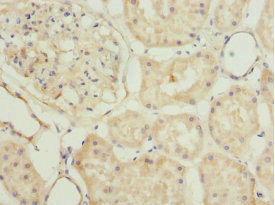
The antibody against PLSCR1 was raised in rabbit using the Recombinant Human Phospholipid scramblase 1 protein (1-318AA) as the immunogen. This antibody exists as a non-conjugated isotype IgG, Antigen affinity purified. This antibody has been validated on ELISA, WB, IHC.

ADC-17383A

The antibody against PLSCR1 was raised in rabbit using the Recombinant Human Phospholipid scramblase 1 protein (1-318AA) as the immunogen. This antibody exists as a non-conjugated isotype IgG, Antigen affinity purified. This antibody has been validated on ELISA, WB, IHC.

$299.00

Number
Order Exclusive Products Now

Request a Quote
High Purity LevelsPrecision and ReliabilityCustomization Options

Specifications


Cat.No ADC-17383A ClonalityPolyclonal
Host SpeciesRabbitTarget NamePLSCR1
FormLiquidSpecies ReactivityHuman
IsotypeIgGStorage Buffer50% Glycerol, PBS with 0.02% sodium azide, pH7.3.
Purification MethodAntigen affinity purifiedConjugateNon-conjugated
ApplicationELISA, IHC, WBStorageUpon receipt

Immunogen Information


Immunogen DescriptionRecombinant Human Phospholipid scramblase 1 protein (1-318AA)Target SpeciesHuman
Immunogen SequenceComplete sequences for the immunogen, target protein, and peptides are available upon request.Uniprot IDO15162
Background Information
  • Uniprot Id

    O15162

  • Target Species

    Human

  • Target Name

    PLSCR1

  • Target Full Name

    Phospholipid scramblase 1

  • Target Function

    Catalyzes calcium-induced ATP-independent rapid bidirectional and non-specific movement of phospholipids (lipid scrambling or lipid flip-flop) between the inner and outer leaflet of the plasma membrane resulting in collapse of the phospholipid asymmetry which leads to phosphatidylserine externalization on the cell surface. Mediates calcium-dependent phosphatidylserine externalization and apoptosis in neurons via its association with TRPC5. Also exhibits magnesium-dependent nuclease activity against double-stranded DNA and RNA but not single-stranded DNA and can enhance DNA decatenation mediated by TOP2A. Negatively regulates FcR-mediated phagocytosis in differentiated macrophages. May contribute to cytokine-regulated cell proliferation and differentiation. May play a role in the antiviral response of interferon (IFN) by amplifying and enhancing the IFN response through increased expression of select subset of potent antiviral genes. Acts as an attachment receptor for HCV.

  • Target Subcellular Location

    Cell membrane; Single-pass type II membrane protein. Cell membrane; Lipid-anchor; Cytoplasmic side. Nucleus. Cytoplasm. Cytoplasm, perinuclear region.

  • Target Protein Families

    Phospholipid scramblase family

  • Target Tissue Specificity

    Expressed in platelets, erythrocyte membranes, lymphocytes, spleen, thymus, prostate, testis, uterus, intestine, colon, heart, placenta, lung, liver, kidney and pancreas. Not detected in brain and skeletal muscle.

  • Target Research Area

    Microbiology

  • Target Synonyms

    Ca(2+) dependent phospholipid scramblase 1; Ca(2+)-dependent phospholipid scramblase 1; Erythrocyte phospholipid scramblase; MM1 cell-derived transplantability-associated gene 1b; mouse; homolog of; MmTRA1a; MmTRA1b; Nor1; Phospholipid scramblase 1; PL scramblase 1; PLS1_HUMAN; PLSCR 1; Plscr1; Scramblase1; Tra1; Tra1a; Tra1b; Transplantability-associated protein 1; Tras1; Tras2

  • Target Background

    This gene encodes a phospholipid scramblase family member. The encoded protein is involved in disruption of the asymmetrical distribution of phospholipids between the inner and outer leaflets of the plasma membrane, resulting in externalization of phosphatidylserine. This cell membrane disruption plays an important role in the blood coagulation cascade as well as macrophage clearing of apoptotic cells. The encoded protein has additionally been implicated in gene regulation and interferon-induced antiviral responses.

Inquire Rabbit anti-Human PLSCR1 Polyclonal Antibody Now


AbTriva respects your privacy and protects your personal data in accordance with AbTriva. For more information, please see our data protection statement. *

Notification