• Contact info@abtriva.com for inquiries and orders.
  • Chinese (Simplified)

  • English

  • German

  • Korean

  • Spanish

United States (English / $ USD)

Rabbit anti-Human POC1B Polyclonal Antibody

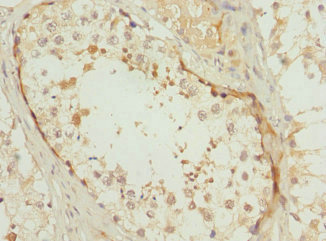
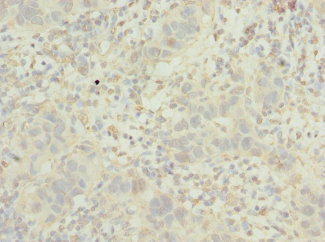
The antibody against POC1B was raised in rabbit using the Recombinant Human POC1 centriolar protein homolog B protein (299-478AA) as the immunogen. This antibody exists as a non-conjugated isotype IgG, Antigen affinity purified. This antibody has been validated on ELISA, WB, IHC.

ADC-16981A

The antibody against POC1B was raised in rabbit using the Recombinant Human POC1 centriolar protein homolog B protein (299-478AA) as the immunogen. This antibody exists as a non-conjugated isotype IgG, Antigen affinity purified. This antibody has been validated on ELISA, WB, IHC.

$299.00

Number
Order Exclusive Products Now

Request a Quote
High Purity LevelsPrecision and ReliabilityCustomization Options

Specifications


Cat.No ADC-16981A ClonalityPolyclonal
Host SpeciesRabbitTarget NamePOC1B
FormLiquidSpecies ReactivityHuman, Mouse
IsotypeIgGStorage Buffer50% Glycerol, PBS with 0.02% sodium azide, pH7.3.
Purification MethodAntigen affinity purifiedConjugateNon-conjugated
ApplicationELISA, IHC, WBStorageUpon receipt

Immunogen Information


Immunogen DescriptionRecombinant Human POC1 centriolar protein homolog B protein (299-478AA)Target SpeciesHuman
Immunogen SequenceComplete sequences for the immunogen, target protein, and peptides are available upon request.Uniprot IDQ8TC44
Background Information
  • Uniprot Id

    Q8TC44

  • Target Species

    Human

  • Target Name

    POC1B

  • Target Full Name

    POC1 centriolar protein homolog B

  • Target Function

    Plays an important role in centriole assembly and/or stability and ciliogenesis. Involved in early steps of centriole duplication, as well as in the later steps of centriole length control. Acts in concert with POC1A to ensure centriole integrity and proper mitotic spindle formation. Required for primary cilia formation, ciliary length and also cell proliferation. Required for retinal integrity.

  • Target Involvement

    Cone-rod dystrophy 20 (CORD20)

  • Target Subcellular Location

    Cytoplasm, cytoskeleton, microtubule organizing center, centrosome. Cytoplasm, cytoskeleton, microtubule organizing center, centrosome, centriole. Cytoplasm, cytoskeleton, cilium basal body. Cytoplasm, cytoskeleton, spindle pole.

  • Target Protein Families

    WD repeat POC1 family

  • Target Tissue Specificity

    Expressed in the retina.

  • Target Synonyms

    4933430F16Rik; FLJ14923; FLJ41111; Pix1; POC1 centriolar protein homolog B (Chlamydomonas); POC1 centriolar protein homolog B; POC1B; POC1B_HUMAN; TUWD12; WD repeat containing protein 51B; WD repeat domain 51B; WD repeat-containing protein 51B; WDR51B

  • Target Background

    POC1 proteins contain an N-terminal WD40 domain and a C-terminal coiled coil domain and are part of centrosomes. They play an important role in basal body and cilia formation. This gene encodes one of the two POC1 proteins found in humans. Mutation in this gene result in autosomal-recessive cone-rod dystrophy. Alternative splicing results in multiple transcript variants.

Inquire Rabbit anti-Human POC1B Polyclonal Antibody Now


AbTriva respects your privacy and protects your personal data in accordance with AbTriva. For more information, please see our data protection statement. *

Notification