-
Chinese (Simplified)
-
English
-
German
-
Korean
-
Spanish
Chinese (Simplified)
English
German
Korean
Spanish
Sign up for an account to enjoy easy online shopping and instant order tracking.
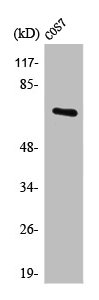
The antibody against POT1 was raised in rabbit using the Synthesized peptide derived from the Internal region of Human POT1. as the immunogen. This antibody exists as a non-conjugated isotype IgG. The antibody was affinity-purified from rabbit antiserum by affinity-chromatography using epitope-specific immunogen. This antibody has been validated on WB, ELISA.
$167.00
| Cat.No | ADC-37811A | Clonality | Polyclonal |
|---|---|---|---|
| Host Species | Rabbit | Target Name | POT1 |
| Form | Liquid | Species Reactivity | Human, Monkey |
| Isotype | IgG | Storage Buffer | 0.5% BSA and 0.02% sodium azide., Liquid in PBS containing 50% glycerol |
| Purification Method | The antibody was affinity-purified from rabbit antiserum by affinity-chromatography using epitope-specific immunogen. | Conjugate | Non-conjugated |
| Application | ELISA, WB | Storage | Upon receipt |
| Immunogen Description | Synthesized peptide derived from the Internal region of Human POT1. | Target Species | Human |
|---|---|---|---|
| Immunogen Sequence | Complete sequences for the immunogen, target protein, and peptides are available upon request. | Uniprot ID | Q9NUX5 |
Uniprot Id
Q9NUX5
Target Species
Human
Target Name
POT1
Target Full Name
Protection of telomeres protein 1
Target Function
Component of the telomerase ribonucleoprotein (RNP) complex that is essential for the replication of chromosome termini. Is a component of the double-stranded telomeric DNA-binding TRF1 complex which is involved in the regulation of telomere length by cis-inhibition of telomerase. Also acts as a single-stranded telomeric DNA-binding protein and thus may act as a downstream effector of the TRF1 complex and may transduce information about telomere maintenance and/or length to the telomere terminus. Component of the shelterin complex (telosome) that is involved in the regulation of telomere length and protection. Shelterin associates with arrays of double-stranded TTAGGG repeats added by telomerase and protects chromosome ends; without its protective activity, telomeres are no longer hidden from the DNA damage surveillance and chromosome ends are inappropriately processed by DNA repair pathways. Binds to two or more telomeric single-stranded 5'-TTAGGG-3' repeats (G-strand) and with high specificity to a minimal telomeric single-stranded 5'-TAGGGTTAG-3' sequence. Binds telomeric single-stranded sequences internally or at proximity of a 3'-end. Its activity is TERT dependent but it does not increase TERT activity by itself. In contrast, the ACD-POT1 heterodimer enhances telomere elongation by increasing telomerase processivity.
Target Involvement
Melanoma, cutaneous malignant 10 (CMM10); Glioma 9 (GLM9)
Target Subcellular Location
Nucleus. Chromosome, telomere. Note=Colocalizes with telomeric DNA.
Target Protein Families
Telombin family
Target Tissue Specificity
Ubiquitous.
Target Synonyms
DKFZP586D211; hPot 1; hPot1; POT 1; POT1; POT1 like telomere end-binding protein; POT1 protection of telomeres 1 homolog; POT1-like telomere end-binding protein; POTE1_HUMAN; Protection of telomeres 1; Protection of telomeres 1 homolog (S. pombe); Protection of telomeres protein 1
Target Background
This gene is a member of the telombin family and encodes a nuclear protein involved in telomere maintenance. Specifically, this protein functions as a member of a multi-protein complex that binds to the TTAGGG repeats of telomeres, regulating telomere length and protecting chromosome ends from illegitimate recombination, catastrophic chromosome instability, and abnormal chromosome segregation. Increased transcriptional expression of this gene is associated with stomach carcinogenesis and its progression. Alternatively spliced transcript variants have been described.
Notification