• Contact info@abtriva.com for inquiries and orders.
  • Chinese (Simplified)

  • English

  • German

  • Korean

  • Spanish

United States (English / $ USD)

Rabbit anti-Human PPARA Polyclonal Antibody

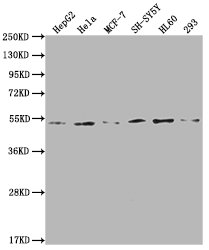
The antibody against PPARA was raised in rabbit using the Recombinant Human Peroxisome proliferator-activated receptor alpha protein (1-237AA) as the immunogen. This antibody exists as a non-conjugated isotype IgG, antigen affinity purified & affinity purified with a purity greater than 95%. This antibody has been validated on ELISA, WB.

ADC-00588A

The antibody against PPARA was raised in rabbit using the Recombinant Human Peroxisome proliferator-activated receptor alpha protein (1-237AA) as the immunogen. This antibody exists as a non-conjugated isotype IgG, antigen affinity purified & affinity purified with a purity greater than 95%. This antibody has been validated on ELISA, WB.

$299.00

Number
Order Exclusive Products Now

Request a Quote
High Purity LevelsPrecision and ReliabilityCustomization Options

Specifications


Cat.No ADC-00588A ClonalityPolyclonal
Host SpeciesRabbitTarget NamePPARA
FormLiquidSpecies ReactivityHuman
IsotypeIgGStorage Buffer0.01M PBS, 0.03% Proclin 300; Constituents: 50% Glycerol, PH 7.4
Purification Method>95%, Antigen Affinity purified & Affinity purifiedConjugateNon-conjugated
ApplicationELISA, WBStorageUpon receipt

Immunogen Information


Immunogen DescriptionRecombinant Human Peroxisome proliferator-activated receptor alpha protein (1-237AA)Target SpeciesHuman
Immunogen SequenceComplete sequences for the immunogen, target protein, and peptides are available upon request.Uniprot IDQ07869
Background Information
  • Uniprot Id

    Q07869

  • Target Species

    Human

  • Target Name

    PPARA

  • Target Full Name

    Peroxisome proliferator-activated receptor alpha

  • Target Function

    Ligand-activated transcription factor. Key regulator of lipid metabolism. Activated by the endogenous ligand 1-palmitoyl-2-oleoyl-sn-glycerol-3-phosphocholine (16:0/18:1-GPC). Activated by oleylethanolamide, a naturally occurring lipid that regulates satiety. Receptor for peroxisome proliferators such as hypolipidemic drugs and fatty acids. Regulates the peroxisomal beta-oxidation pathway of fatty acids. Functions as transcription activator for the ACOX1 and P450 genes. Transactivation activity requires heterodimerization with RXRA and is antagonized by NR2C2. May be required for the propagation of clock information to metabolic pathways regulated by PER2.

  • Target Subcellular Location

    Nucleus.

  • Target Protein Families

    Nuclear hormone receptor family, NR1 subfamily

  • Target Tissue Specificity

    Skeletal muscle, liver, heart and kidney. Expressed in monocytes.

  • Target Research Area

    Cancer

  • Target Synonyms

    hPPAR; MGC2237; MGC2452; NR1C1; Nuclear receptor subfamily 1 group C member 1; OTTHUMP00000197740; OTTHUMP00000197741; Peroxisome proliferative activated receptor alpha; Peroxisome proliferator activated receptor alpha; Peroxisome proliferator-activated receptor alpha; PPAR; PPAR-alpha; ppara; PPARA_HUMAN; PPARalpha

  • Target Background

    Peroxisome proliferators include hypolipidemic drugs, herbicides, leukotriene antagonists, and plasticizers; this term arises because they induce an increase in the size and number of peroxisomes. Peroxisomes are subcellular organelles found in plants and animals that contain enzymes for respiration and for cholesterol and lipid metabolism. The action of peroxisome proliferators is thought to be mediated via specific receptors, called PPARs, which belong to the steroid hormone receptor superfamily. PPARs affect the expression of target genes involved in cell proliferation, cell differentiation and in immune and inflammation responses. Three closely related subtypes (alpha, beta/delta, and gamma) have been identified. This gene encodes the subtype PPAR-alpha, which is a nuclear transcription factor. Multiple alternatively spliced transcript variants have been described for this gene, although the full-length nature of only two has been determined.

Inquire Rabbit anti-Human PPARA Polyclonal Antibody Now


AbTriva respects your privacy and protects your personal data in accordance with AbTriva. For more information, please see our data protection statement. *

Notification