• Contact info@abtriva.com for inquiries and orders.
  • Chinese (Simplified)

  • English

  • German

  • Korean

  • Spanish

United States (English / $ USD)

Rabbit anti-Human PPM1D Polyclonal Antibody

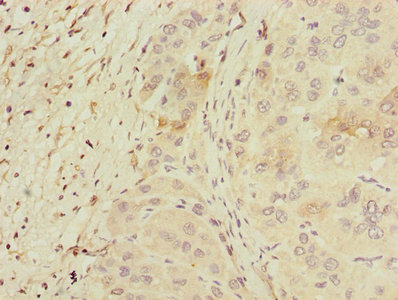
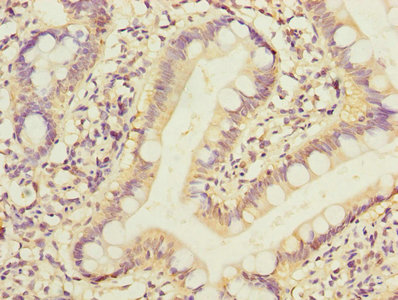
The antibody against PPM1D was raised in rabbit using the Recombinant Human Protein phosphatase 1D protein (1-250AA) as the immunogen. This antibody exists as a non-conjugated isotype IgG, Antigen affinity purified. This antibody has been validated on ELISA, WB, IHC.

ADC-17591A

The antibody against PPM1D was raised in rabbit using the Recombinant Human Protein phosphatase 1D protein (1-250AA) as the immunogen. This antibody exists as a non-conjugated isotype IgG, Antigen affinity purified. This antibody has been validated on ELISA, WB, IHC.

$299.00

Number
Order Exclusive Products Now

Request a Quote
High Purity LevelsPrecision and ReliabilityCustomization Options

Specifications


Cat.No ADC-17591A ClonalityPolyclonal
Host SpeciesRabbitTarget NamePPM1D
FormLiquidSpecies ReactivityHuman, Rat
IsotypeIgGStorage Buffer50% Glycerol, PBS with 0.02% sodium azide, pH7.3.
Purification MethodAntigen affinity purifiedConjugateNon-conjugated
ApplicationELISA, IHC, WBStorageUpon receipt

Immunogen Information


Immunogen DescriptionRecombinant Human Protein phosphatase 1D protein (1-250AA)Target SpeciesHuman
Immunogen SequenceComplete sequences for the immunogen, target protein, and peptides are available upon request.Uniprot IDO15297
Background Information
  • Uniprot Id

    O15297

  • Target Species

    Human

  • Target Name

    PPM1D

  • Target Full Name

    Protein phosphatase 1D

  • Target Function

    Involved in the negative regulation of p53 expression. Required for the relief of p53-dependent checkpoint mediated cell cycle arrest. Binds to and dephosphorylates 'Ser-15' of TP53 and 'Ser-345' of CHEK1 which contributes to the functional inactivation of these proteins. Mediates MAPK14 dephosphorylation and inactivation. Is also an important regulator of global heterochromatin silencing and critical in maintaining genome integrity.

  • Target Involvement

    Intellectual developmental disorder with gastrointestinal difficulties and high pain threshold (IDDGIP); Breast cancer (BC); Ovarian cancer (OC)

  • Target Subcellular Location

    Nucleus. Cytoplasm, cytosol.

  • Target Protein Families

    PP2C family

  • Target Tissue Specificity

    Expressed in fetal and adult brain. Also detected in fetal liver and skeletal muscle, but not in their adult counterparts.

  • Target Synonyms

    EC 3.1.3.16; p53 induced protein phosphatase 1; p53-induced protein phosphatase 1; PP2C delta; PP2C-delta; PP2CD; Ppm1d; PPM1D_HUMAN; Protein phosphatase 1D; protein phosphatase 1D magnesium-dependent delta isoform ; Protein phosphatase 2C delta isoform; Protein phosphatase 2C isoform delta; Protein phosphatase magnesium dependent 1 delta; Protein phosphatase magnesium-dependent 1 delta; Protein phosphatase Mg2+/Mn2+ dependent 1D; Protein phosphatase Wip1; Wild type p53 induced phosphatase 1; WIP 1; WIP1

  • Target Background

    The protein encoded by this gene is a member of the PP2C family of Ser/Thr protein phosphatases. PP2C family members are known to be negative regulators of cell stress response pathways. The expression of this gene is induced in a p53-dependent manner in response to various environmental stresses. While being induced by tumor suppressor protein TP53/p53, this phosphatase negatively regulates the activity of p38 MAP kinase, MAPK/p38, through which it reduces the phosphorylation of p53, and in turn suppresses p53-mediated transcription and apoptosis. This phosphatase thus mediates a feedback regulation of p38-p53 signaling that contributes to growth inhibition and the suppression of stress induced apoptosis. This gene is located in a chromosomal region known to be amplified in breast cancer. The amplification of this gene has been detected in both breast cancer cell line and primary breast tumors, which suggests a role of this gene in cancer development.

Inquire Rabbit anti-Human PPM1D Polyclonal Antibody Now


AbTriva respects your privacy and protects your personal data in accordance with AbTriva. For more information, please see our data protection statement. *

Notification