-
Chinese (Simplified)
-
English
-
German
-
Korean
-
Spanish
Chinese (Simplified)
English
German
Korean
Spanish
Sign up for an account to enjoy easy online shopping and instant order tracking.
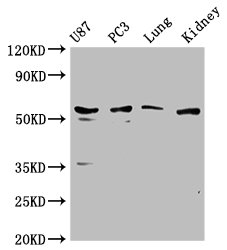
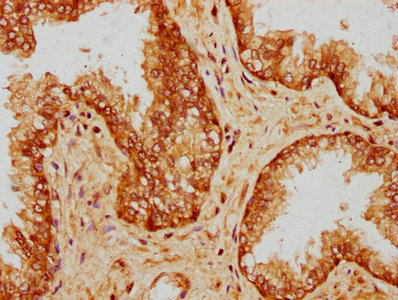
The antibody against PPP5C was raised in rabbit using the Recombinant Human Serine/threonine-protein phosphatase 5 protein (370-488AA) as the immunogen. This antibody exists as a non-conjugated isotype IgG, purified by protein G with a purity greater than 95%. This antibody has been validated on ELISA, WB, IHC, IF.
$299.00
| Cat.No | ADC-02189A | Clonality | Polyclonal |
|---|---|---|---|
| Host Species | Rabbit | Target Name | PPP5C |
| Target Synonyms | catalytic subunit antibody; Protein phosphatase T antibody; Serine/threonine protein phosphatase 5 antibody; Serine/threonine-protein phosphatase 5 antibody, FLJ36922 antibody; FLJ55954 antibody; OTTHUMP00000165834 antibody; PP-T antibody; PP5 antibody; PPP5 antibody; PPP5_HUMAN antibody; Ppp5c antibody; PPT antibody; Protein phosphatase 5 | Form | Liquid |
| Species Reactivity | Human, Mouse | Isotype | IgG |
| Storage Buffer | 0.01M PBS, 0.03% Proclin 300; Constituents: 50% Glycerol, PH 7.4 | Purification Method | >95%, Protein G purified |
| Conjugate | Non-conjugated | Application | ELISA, IF, IHC, WB |
| Storage | Upon receipt |
| Immunogen Description | Recombinant Human Serine/threonine-protein phosphatase 5 protein (370-488AA) | Target Species | Human |
|---|---|---|---|
| Immunogen Sequence | Complete sequences for the immunogen, target protein, and peptides are available upon request. | Uniprot ID | P53041 |
Uniprot Id
P53041
Target Species
Human
Target Name
PPP5C
Target Full Name
Serine/threonine-protein phosphatase 5
Target Function
Serine/threonine-protein phosphatase that dephosphorylates a myriad of proteins involved in different signaling pathways including the kinases CSNK1E, ASK1/MAP3K5, PRKDC and RAF1, the nuclear receptors NR3C1, PPARG, ESR1 and ESR2, SMAD proteins and TAU/MAPT. Implicated in wide ranging cellular processes, including apoptosis, differentiation, DNA damage response, cell survival, regulation of ion channels or circadian rhythms, in response to steroid and thyroid hormones, calcium, fatty acids, TGF-beta as well as oxidative and genotoxic stresses. Participates in the control of DNA damage response mechanisms such as checkpoint activation and DNA damage repair through, for instance, the regulation ATM/ATR-signaling and dephosphorylation of PRKDC and TP53BP1. Inhibits ASK1/MAP3K5-mediated apoptosis induced by oxidative stress. Plays a positive role in adipogenesis, mainly through the dephosphorylation and activation of PPARG transactivation function. Also dephosphorylates and inhibits the anti-adipogenic effect of NR3C1. Regulates the circadian rhythms, through the dephosphorylation and activation of CSNK1E. May modulate TGF-beta signaling pathway by the regulation of SMAD3 phosphorylation and protein expression levels. Dephosphorylates and may play a role in the regulation of TAU/MAPT. Through their dephosphorylation, may play a role in the regulation of ions channels such as KCNH2. Dephosphorylate FNIP1, disrupting interaction with HSP90AA1/Hsp90.
Target Subcellular Location
Nucleus. Cytoplasm. Cell membrane.
Target Protein Families
PPP phosphatase family, PP-5 (PP-T) subfamily
Target Tissue Specificity
Ubiquitous.
Target Research Area
Epigenetics and Nuclear Signaling
Target Synonyms
FLJ36922; FLJ55954; OTTHUMP00000165834; PP-T; PP5; PPP5; PPP5_HUMAN; Ppp5c; PPT; Protein phosphatase 5, catalytic subunit; Protein phosphatase T; Serine/threonine protein phosphatase 5; Serine/threonine-protein phosphatase 5
Target Background
This gene encodes a serine/threonine phosphatase which is a member of the protein phosphatase catalytic subunit family. Proteins in this family participate in pathways regulated by reversible phosphorylation at serine and threonine residues; many of these pathways are involved in the regulation of cell growth and differentiation. The product of this gene has been shown to participate in signaling pathways in response to hormones or cellular stress, and elevated levels of this protein may be associated with breast cancer development. Alternative splicing results in multiple transcript variants.
Notification