-
Chinese (Simplified)
-
English
-
German
-
Korean
-
Spanish
Chinese (Simplified)
English
German
Korean
Spanish
Sign up for an account to enjoy easy online shopping and instant order tracking.
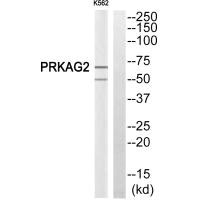
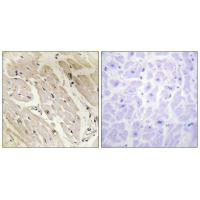
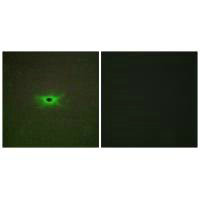
The antibody against PRKAG2 was raised in rabbit using the Synthesized peptide derived from internal of Human PRKAG2. as the immunogen. The antibody was affinity-purified from rabbit antiserum by affinity-chromatography using epitope-specific immunogen. This antibody has been validated on ELISA, WB, IHC, IF.
$297.00
| Cat.No | ADC-41772A | Clonality | Polyclonal |
|---|---|---|---|
| Host Species | Rabbit | Target Name | PRKAG2 |
| Target Synonyms | PRKAG25'-AMP-activated protein kinase subunit gamma-2 antibody; AMPK gamma2 antibody; AMPK subunit gamma-2 antibody; H91620p antibody | Form | Liquid |
| Species Reactivity | Human, Mouse | Storage Buffer | PH 7.4, 0.02% sodium azide and 50% glycerol., 150mM NaCl, Rabbit IgG in phosphate buffered saline (without Mg2+ and Ca2+) |
| Purification Method | The antibody was affinity-purified from rabbit antiserum by affinity-chromatography using epitope-specific immunogen. | Application | ELISA, IF, IHC, WB |
| Storage | Upon receipt |
| Immunogen Description | Synthesized peptide derived from internal of Human PRKAG2. | Target Species | Human |
|---|---|---|---|
| Immunogen Sequence | Complete sequences for the immunogen, target protein, and peptides are available upon request. | Uniprot ID | Q9UGJ0 |
Uniprot Id
Q9UGJ0
Target Species
Human
Target Name
PRKAG2
Target Full Name
5'-AMP-activated protein kinase subunit gamma-2
Target Function
AMP/ATP-binding subunit of AMP-activated protein kinase (AMPK), an energy sensor protein kinase that plays a key role in regulating cellular energy metabolism. In response to reduction of intracellular ATP levels, AMPK activates energy-producing pathways and inhibits energy-consuming processes: inhibits protein, carbohydrate and lipid biosynthesis, as well as cell growth and proliferation. AMPK acts via direct phosphorylation of metabolic enzymes, and by longer-term effects via phosphorylation of transcription regulators. Also acts as a regulator of cellular polarity by remodeling the actin cytoskeleton; probably by indirectly activating myosin. Gamma non-catalytic subunit mediates binding to AMP, ADP and ATP, leading to activate or inhibit AMPK: AMP-binding results in allosteric activation of alpha catalytic subunit (PRKAA1 or PRKAA2) both by inducing phosphorylation and preventing dephosphorylation of catalytic subunits. ADP also stimulates phosphorylation, without stimulating already phosphorylated catalytic subunit. ATP promotes dephosphorylation of catalytic subunit, rendering the AMPK enzyme inactive.
Target Involvement
Wolff-Parkinson-White syndrome (WPWS); Cardiomyopathy, familial hypertrophic 6 (CMH6); Glycogen storage disease of heart lethal congenital (GSDH)
Target Protein Families
5'-AMP-activated protein kinase gamma subunit family
Target Tissue Specificity
Isoform B is ubiquitously expressed except in liver and thymus. The highest level is detected in heart with abundant expression in placenta and testis.
Target Research Area
Cardiovascular
Target Synonyms
PRKAG25'-AMP-activated protein kinase subunit gamma-2; AMPK gamma2; AMPK subunit gamma-2; H91620p
Notification