• Contact info@abtriva.com for inquiries and orders.
  • Chinese (Simplified)

  • English

  • German

  • Korean

  • Spanish

United States (English / $ USD)

Rabbit anti-Human PTGES Polyclonal Antibody

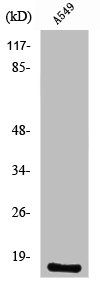
The antibody against PTGES was raised in rabbit using the Synthesized peptide derived from the Internal region of Human PGE synthase. as the immunogen. This antibody exists as a non-conjugated isotype IgG. The antibody was affinity-purified from rabbit antiserum by affinity-chromatography using epitope-specific immunogen. This antibody has been validated on WB, ELISA.

ADC-37866A

The antibody against PTGES was raised in rabbit using the Synthesized peptide derived from the Internal region of Human PGE synthase. as the immunogen. This antibody exists as a non-conjugated isotype IgG. The antibody was affinity-purified from rabbit antiserum by affinity-chromatography using epitope-specific immunogen. This antibody has been validated on WB, ELISA.

$167.00

Number
Order Exclusive Products Now

Request a Quote
High Purity LevelsPrecision and ReliabilityCustomization Options

Specifications


Cat.No ADC-37866A ClonalityPolyclonal
Host SpeciesRabbitTarget NamePTGES
FormLiquidSpecies ReactivityHuman, Mouse, Rat
IsotypeIgGStorage Buffer0.5% BSA and 0.02% sodium azide., Liquid in PBS containing 50% glycerol
Purification MethodThe antibody was affinity-purified from rabbit antiserum by affinity-chromatography using epitope-specific immunogen.ConjugateNon-conjugated
ApplicationELISA, WBStorageUpon receipt

Immunogen Information


Immunogen DescriptionSynthesized peptide derived from the Internal region of Human PGE synthase.Target SpeciesHuman
Immunogen SequenceComplete sequences for the immunogen, target protein, and peptides are available upon request.Uniprot IDO14684
Background Information
  • Uniprot Id

    O14684

  • Target Species

    Human

  • Target Name

    PTGES

  • Target Full Name

    Prostaglandin E synthase

  • Target Function

    Terminal enzyme of the cyclooxygenase (COX)-2-mediated prostaglandin E2 (PGE2) biosynthetic pathway. Catalyzes the glutathione-dependent oxidoreduction of prostaglandin endoperoxide H2 (PGH2) to prostaglandin E2 (PGE2) in response to inflammatory stimuli. Plays a key role in inflammation response, fever and pain. Catalyzes also the oxidoreduction of endocannabinoids into prostaglandin glycerol esters and PGG2 into 15-hydroperoxy-PGE2. In addition, displays low glutathione transferase and glutathione-dependent peroxidase activities, toward 1-chloro-2,4-dinitrobenzene and 5-hydroperoxyicosatetraenoic acid (5-HPETE), respectively.

  • Target Subcellular Location

    Membrane; Multi-pass membrane protein. Cytoplasm, perinuclear region.

  • Target Protein Families

    MAPEG family

  • Target Synonyms

    PTGES; MGST1L1; MPGES1; PGES; PIG12; Prostaglandin E synthase; Glutathione peroxidase PTGES; Glutathione transferase PTGES; Microsomal glutathione S-transferase 1-like 1; MGST1-L1; Microsomal prostaglandin E synthase 1; MPGES-1; p53-induced gene 12 protein

  • Target Background

    The protein encoded by this gene is a glutathione-dependent prostaglandin E synthase. The expression of this gene has been shown to be induced by proinflammatory cytokine interleukin 1 beta (IL1B). Its expression can also be induced by tumor suppressor protein TP53, and may be involved in TP53 induced apoptosis. Knockout studies in mice suggest that this gene may contribute to the pathogenesis of collagen-induced arthritis and mediate acute pain during inflammatory responses.

Inquire Rabbit anti-Human PTGES Polyclonal Antibody Now


AbTriva respects your privacy and protects your personal data in accordance with AbTriva. For more information, please see our data protection statement. *

Notification