-
Chinese (Simplified)
-
English
-
German
-
Korean
-
Spanish
Chinese (Simplified)
English
German
Korean
Spanish
Sign up for an account to enjoy easy online shopping and instant order tracking.
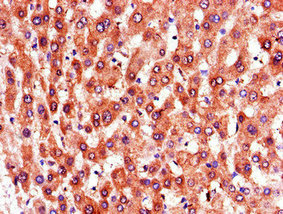
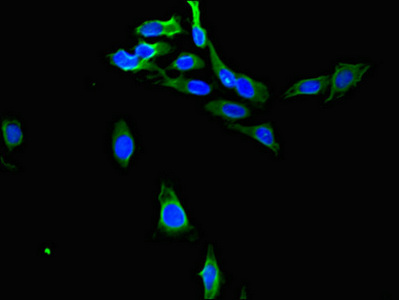
The antibody against PTGR1 was raised in rabbit using the Recombinant Human Prostaglandin reductase 1 protein (202-282AA) as the immunogen. This antibody exists as a non-conjugated isotype IgG, purified by protein G with a purity greater than 95%. This antibody has been validated on ELISA, IHC, IF.
$299.00
| Cat.No | ADC-13926A | Clonality | Polyclonal |
|---|---|---|---|
| Host Species | Rabbit | Target Name | PTGR1 |
| Form | Liquid | Species Reactivity | Human |
| Isotype | IgG | Storage Buffer | 0.01M PBS, 0.03% Proclin 300; Constituents: 50% Glycerol, PH 7.4 |
| Purification Method | >95%, Protein G purified | Conjugate | Non-conjugated |
| Application | ELISA, IF, IHC | Storage | Upon receipt |
| Immunogen Description | Recombinant Human Prostaglandin reductase 1 protein (202-282AA) | Target Species | Human |
|---|---|---|---|
| Immunogen Sequence | Complete sequences for the immunogen, target protein, and peptides are available upon request. | Uniprot ID | Q14914 |
Uniprot Id
Q14914
Target Species
Human
Target Name
PTGR1
Target Full Name
Prostaglandin reductase 1
Target Function
NAD(P)H-dependent oxidoreductase involved in metabolic inactivation of pro- and anti-inflammatory eicosanoids: prostaglandins (PG), leukotrienes (LT) and lipoxins (LX). Catalyzes with high efficiency the reduction of the 13,14 double bond of 15-oxoPGs, including 15-oxo-PGE1, 15-oxo-PGE2, 15-oxo-PGF1-alpha and 15-oxo-PGF2-alpha. Catalyzes with lower efficiency the oxidation of the hydroxyl group at C12 of LTB4 and its derivatives, converting them into biologically less active 12-oxo-LTB4 metabolites. Reduces 15-oxo-LXA4 to 13,14 dihydro-15-oxo-LXA4, enhancing neutrophil recruitment at the inflammatory site. May play a role in metabolic detoxification of alkenals and ketones. Reduces alpha,beta-unsaturated alkenals and ketones, particularly those with medium-chain length, showing highest affinity toward (2E)-decenal and (3E)-3-nonen-2-one. May inactivate 4-hydroxy-2-nonenal, a cytotoxic lipid constituent of oxidized low-density lipoprotein particles.
Target Subcellular Location
Cytoplasm.
Target Protein Families
NADP-dependent oxidoreductase L4BD family
Target Tissue Specificity
High expression in the kidney, liver, and intestine but not in leukocytes.
Target Synonyms
15-oxoprostaglandin 13-reductase; FLJ99229; leukotriene B4 12-hydroxydehydrogenase; LTB4DH; MGC34943; NADP-dependent leukotriene B4 12-hydroxydehydrogenase; PGR1; PRG-1; Prostaglandin reductase 1; Ptgr1; PTGR1_HUMAN; RP11-16L21.1; ZADH3; zinc binding alcohol dehydrogenase domain containing 3
Target Background
This gene encodes an enzyme that is involved in the inactivation of the chemotactic factor, leukotriene B4. The encoded protein specifically catalyzes the NADP+ dependent conversion of leukotriene B4 to 12-oxo-leukotriene B4. A pseudogene of this gene is found on chromosome 1. Alternative splicing results in multiple transcript variants.
Notification