• Contact info@abtriva.com for inquiries and orders.
  • Chinese (Simplified)

  • English

  • German

  • Korean

  • Spanish

United States (English / $ USD)

Rabbit anti-Human PTGS1 Polyclonal Antibody

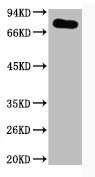
The antibody against PTGS1 was raised in rabbit using the Synthetic Peptide as the immunogen. This antibody exists as a non-conjugated isotype IgG. This antibody has been validated on WB.

ADC-39816A

The antibody against PTGS1 was raised in rabbit using the Synthetic Peptide as the immunogen. This antibody exists as a non-conjugated isotype IgG. This antibody has been validated on WB.

$167.00

Number
Order Exclusive Products Now

Request a Quote
High Purity LevelsPrecision and ReliabilityCustomization Options

Specifications


Cat.No ADC-39816A ClonalityPolyclonal
Host SpeciesRabbitTarget NamePTGS1
Target SynonymsCOX 1 antibody; COX 3 antibody; COX-1 antibody; COX1 antibody; Cox3 antibody; Cyclooxygenase 1 antibody; Cyclooxygenase 3, included antibody; Cyclooxygenase-1 antibody; EC 1.14.99.1 antibody; Partial COX1 proteinsFormLiquid
Species ReactivityHumanIsotypeIgG
Storage BufferPH 7.4, containing 0.02% sodium azide as Preservative and 50% Glycerol., PBSConjugateNon-conjugated
ApplicationWBStorageUpon receipt

Immunogen Information


Immunogen DescriptionSynthetic PeptideTarget SpeciesHuman
Immunogen SequenceComplete sequences for the immunogen, target protein, and peptides are available upon request.Uniprot IDP23219
Background Information
  • Uniprot Id

    P23219

  • Target Species

    Human

  • Target Name

    PTGS1

  • Target Full Name

    Prostaglandin G/H synthase 1

  • Target Function

    Dual cyclooxygenase and peroxidase in the biosynthesis pathway of prostanoids, a class of C20 oxylipins mainly derived from arachidonate, with a particular role in the inflammatory response. The cyclooxygenase activity oxygenates arachidonate (AA, C20:4(n-6)) to the hydroperoxy endoperoxide prostaglandin G2 (PGG2), and the peroxidase activity reduces PGG2 to the hydroxy endoperoxide PGH2, the precursor of all 2-series prostaglandins and thromboxanes. This complex transformation is initiated by abstraction of hydrogen at carbon 13 (with S-stereochemistry), followed by insertion of molecular O2 to form the endoperoxide bridge between carbon 9 and 11 that defines prostaglandins. The insertion of a second molecule of O2 (bis-oxygenase activity) yields a hydroperoxy group in PGG2 that is then reduced to PGH2 by two electrons. Involved in the constitutive production of prostanoids in particular in the stomach and platelets. In gastric epithelial cells, it is a key step in the generation of prostaglandins, such as prostaglandin E2 (PGE2), which plays an important role in cytoprotection. In platelets, it is involved in the generation of thromboxane A2 (TXA2), which promotes platelet activation and aggregation, vasoconstriction and proliferation of vascular smooth muscle cells.

  • Target Subcellular Location

    Microsome membrane; Peripheral membrane protein. Endoplasmic reticulum membrane; Peripheral membrane protein.

  • Target Protein Families

    Prostaglandin G/H synthase family

  • Target Synonyms

    COX 1; COX 3; COX-1; COX1; Cox3; Cyclooxygenase 1; Cyclooxygenase 3, included; Cyclooxygenase-1; EC 1.14.99.1; Partial COX1 proteins, included; PCOX1; PGG/HS; PGH synthase 1; PGH1_HUMAN; PGHS 1; PGHS-1; PGHS1; PHS 1; PHS1; Prostaglandin endoperoxide synthase 1; Prostaglandin G/H synthase 1; Prostaglandin H2 synthase 1; Prostaglandin-endoperoxide synthase 1 (prostaglandin G/H synthase and cyclooxygenase); Prostaglandin-endoperoxide synthase 1; PTGHS; PTGS1

  • Target Background

    This is one of two genes encoding similar enzymes that catalyze the conversion of arachidonate to prostaglandin. The encoded protein regulates angiogenesis in endothelial cells, and is inhibited by nonsteroidal anti-inflammatory drugs such as aspirin. Based on its ability to function as both a cyclooxygenase and as a peroxidase, the encoded protein has been identified as a moonlighting protein. The protein may promote cell proliferation during tumor progression. Alternative splicing results in multiple transcript variants.

Inquire Rabbit anti-Human PTGS1 Polyclonal Antibody Now


AbTriva respects your privacy and protects your personal data in accordance with AbTriva. For more information, please see our data protection statement. *

Notification