• Contact info@abtriva.com for inquiries and orders.
  • Chinese (Simplified)

  • English

  • German

  • Korean

  • Spanish

United States (English / $ USD)

Rabbit anti-Human PTN Polyclonal Antibody

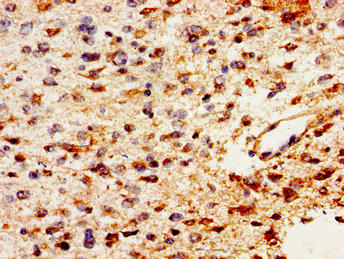
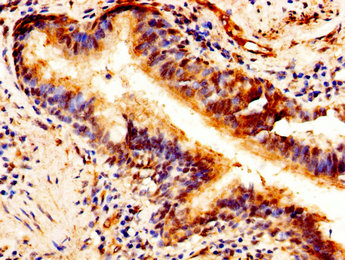
The antibody against PTN was raised in rabbit using the Recombinant Human Pleiotrophin protein (33-168AA) as the immunogen. This antibody exists as a non-conjugated isotype IgG, purified by protein G with a purity greater than 95%. This antibody has been validated on ELISA, IHC.

ADC-08311A

The antibody against PTN was raised in rabbit using the Recombinant Human Pleiotrophin protein (33-168AA) as the immunogen. This antibody exists as a non-conjugated isotype IgG, purified by protein G with a purity greater than 95%. This antibody has been validated on ELISA, IHC.

$299.00

Number
Order Exclusive Products Now

Request a Quote
High Purity LevelsPrecision and ReliabilityCustomization Options

Specifications


Cat.No ADC-08311A ClonalityPolyclonal
Host SpeciesRabbitTarget NamePTN
FormLiquidSpecies ReactivityHuman
IsotypeIgGStorage Buffer0.01M PBS, 0.03% Proclin 300; Constituents: 50% Glycerol, PH 7.4
Purification Method>95%, Protein G purifiedConjugateNon-conjugated
ApplicationELISA, IHCStorageUpon receipt

Immunogen Information


Immunogen DescriptionRecombinant Human Pleiotrophin protein (33-168AA)Target SpeciesHuman
Immunogen SequenceComplete sequences for the immunogen, target protein, and peptides are available upon request.Uniprot IDP21246
Background Information
  • Uniprot Id

    P21246

  • Target Species

    Human

  • Target Name

    PTN

  • Target Full Name

    Pleiotrophin

  • Target Function

    Secreted growth factor that mediates its signal through cell-surface proteoglycan and non-proteoglycan receptors. Binds cell-surface proteoglycan receptor via their chondroitin sulfate (CS) groups. Thereby regulates many processes like cell proliferation, cell survival, cell growth, cell differentiation and cell migration in several tissues namely neuron and bone. Also plays a role in synaptic plasticity and learning-related behavior by inhibiting long-term synaptic potentiation. Binds PTPRZ1, leading to neutralization of the negative charges of the CS chains of PTPRZ1, inducing PTPRZ1 clustering, thereby causing the dimerization and inactivation of its phosphatase activity leading to increased tyrosine phosphorylation of each of the PTPRZ1 substrates like ALK, CTNNB1 or AFAP1L2 in order to activate the PI3K-AKT pathway. Through PTPRZ1 binding controls oligodendrocyte precursor cell differentiation by enhancing the phosphorylation of AFAP1L2 in order to activate the PI3K-AKT pathway. Forms a complex with PTPRZ1 and integrin alpha-V/beta-3 (ITGAV:ITGB3) that stimulates endothelial cell migration through SRC dephosphorylation and activation that consequently leads to ITGB3 'Tyr-773' phosphorylation. In adult hippocampus promotes dendritic arborization, spine development, and functional integration and connectivity of newborn granule neurons through ALK by activating AKT signaling pathway. Binds GPC2 and chondroitin sulfate proteoglycans (CSPGs) at the neuron surface, leading to abrogation of binding between PTPRS and CSPGs and neurite outgrowth promotion. Binds SDC3 and mediates bone formation by recruiting and attaching osteoblasts/osteoblast precursors to the sites for new bone deposition. Binds ALK and promotes cell survival and cell proliferation through MAPK pathway activation. Inhibits proliferation and enhances differentiation of neural stem cells by inhibiting FGF2-induced fibroblast growth factor receptor signaling pathway. Mediates regulatory mechanisms in normal hemostasis and in hematopoietic regeneration and in maintaining the balance of myeloid and lymphoid regeneration. In addition may play a role in the female reproductive system, auditory response and the progesterone-induced decidualization pathway.

  • Target Subcellular Location

    Secreted.

  • Target Protein Families

    Pleiotrophin family

  • Target Tissue Specificity

    Osteoblast and brain.

  • Target Synonyms

    HARP; HB-GAM; HBBM; HBGAM; HBGF-8; HBGF8; HBNF; HBNF-1; HBNF1; heparin affin regulatory protein; Heparin binding growth associated molecule; Heparin binding growth factor 8; Heparin binding neurite outgrowth promoting factor 1; Heparin-binding brain mitogen; Heparin-binding growth factor 8; Heparin-binding growth-associated molecule; heparin-binding neurite outgrowth promoting factor; Heparin-binding neurite outgrowth-promoting factor 1; NEGF1; Neurite growth promoting factor 1; Neurite outgrowth-promoting factor; heparin-binding; OSF-1; OSF1; Osteoblast-specific factor 1; pleiotrophin (heparin binding growth factor 8; neurite growth-promoting factor 1); Pleiotrophin; PTN; PTN_HUMAN

  • Target Background

    The protein encoded by this gene is a secreted heparin-binding growth factor. The protein has significant roles in cell growth and survival, cell migration, angiogenesis and tumorigenesis. Alternative splicing and the use of alternative promoters results in multiple transcript variants.

Inquire Rabbit anti-Human PTN Polyclonal Antibody Now


AbTriva respects your privacy and protects your personal data in accordance with AbTriva. For more information, please see our data protection statement. *

Notification