-
Chinese (Simplified)
-
English
-
German
-
Korean
-
Spanish
Chinese (Simplified)
English
German
Korean
Spanish
Sign up for an account to enjoy easy online shopping and instant order tracking.
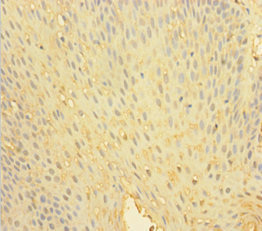
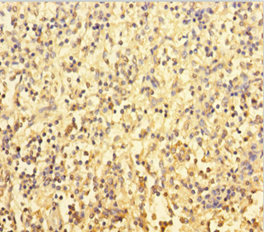
The antibody against PTPN6 was raised in rabbit using the Recombinant Human Tyrosine-protein phosphatase non-receptor type 6 protein (1-597AA of Isoform 2) as the immunogen. This antibody exists as a non-conjugated isotype IgG, purified by protein G with a purity greater than 95%. This antibody has been validated on ELISA, WB, IHC, IF.
$299.00
| Cat.No | ADC-49542A | Clonality | Polyclonal |
|---|---|---|---|
| Host Species | Rabbit | Target Name | PTPN6 |
| Form | Liquid | Species Reactivity | Human |
| Isotype | IgG | Storage Buffer | 0.01M PBS, 0.03% Proclin 300; Constituents: 50% Glycerol, PH 7.4 |
| Purification Method | >95%, Protein G purified | Conjugate | Non-conjugated |
| Application | ELISA, IF, IHC, WB | Storage | Upon receipt |
| Immunogen Description | Recombinant Human Tyrosine-protein phosphatase non-receptor type 6 protein (1-597AA of Isoform 2) | Target Species | Human |
|---|---|---|---|
| Immunogen Sequence | Complete sequences for the immunogen, target protein, and peptides are available upon request. | Uniprot ID | P29350 |
Uniprot Id
P29350
Target Species
Human
Target Name
PTPN6
Target Full Name
Tyrosine-protein phosphatase non-receptor type 6
Target Function
Modulates signaling by tyrosine phosphorylated cell surface receptors such as KIT and the EGF receptor/EGFR. The SH2 regions may interact with other cellular components to modulate its own phosphatase activity against interacting substrates. Together with MTUS1, induces UBE2V2 expression upon angiotensin II stimulation. Plays a key role in hematopoiesis.
Target Subcellular Location
Cytoplasm. Nucleus.
Target Protein Families
Protein-tyrosine phosphatase family, Non-receptor class 2 subfamily
Target Tissue Specificity
Isoform 1 is expressed in hematopoietic cells. Isoform 2 is expressed in non-hematopoietic cells.
Target Research Area
Cancer
Target Synonyms
70Z-SHP; EC 3.1.3.48; HCP; HCPH; Hematopoietic cell phosphatase ; Hematopoietic cell protein tyrosine phosphatase; Hematopoietic cell protein-tyrosine phosphatase; HPTP1C; Protein tyrosine phosphatase 1C; Protein tyrosine phosphatase non receptor type 6; Protein tyrosine phosphatase SHP1; Protein-tyrosine phosphatase 1C; protein-tyrosine phosphatase SHP 1; Protein-tyrosine phosphatase SHP-1; PTN6_HUMAN; PTP 1C; PTP-1C; PTP1C; Ptpn6; SH PTP 1; SH PTP1; SH-PTP1; SHP 1; SHP 1L; SHP1; SHP1L; tyrosine protein phosphatase non receptor type 6; Tyrosine-protein phosphatase non-receptor type 6
Target Background
The protein encoded by this gene is a member of the protein tyrosine phosphatase (PTP) family. PTPs are known to be signaling molecules that regulate a variety of cellular processes including cell growth, differentiation, mitotic cycle, and oncogenic transformation. N-terminal part of this PTP contains two tandem Src homolog (SH2) domains, which act as protein phospho-tyrosine binding domains, and mediate the interaction of this PTP with its substrates. This PTP is expressed primarily in hematopoietic cells, and functions as an important regulator of multiple signaling pathways in hematopoietic cells. This PTP has been shown to interact with, and dephosphorylate a wide spectrum of phospho-proteins involved in hematopoietic cell signaling. Multiple alternatively spliced variants of this gene, which encode distinct isoforms, have been reported.
Notification