• Contact info@abtriva.com for inquiries and orders.
  • Chinese (Simplified)

  • English

  • German

  • Korean

  • Spanish

United States (English / $ USD)

Rabbit anti-Human PTPRF Polyclonal Antibody

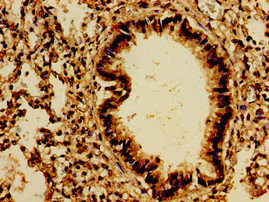
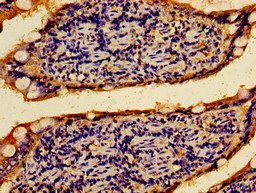
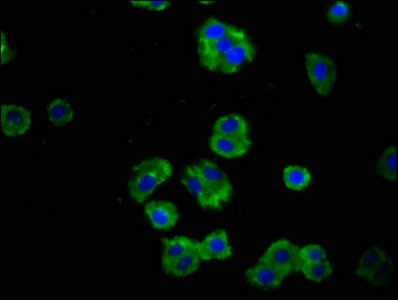
The antibody against PTPRF was raised in rabbit using the Recombinant Human Receptor-type tyrosine-protein phosphatase F protein (688-970AA) as the immunogen. This antibody exists as a non-conjugated isotype IgG, purified by protein G with a purity greater than 95%. This antibody has been validated on ELISA, IHC, IF.

ADC-08863A

The antibody against PTPRF was raised in rabbit using the Recombinant Human Receptor-type tyrosine-protein phosphatase F protein (688-970AA) as the immunogen. This antibody exists as a non-conjugated isotype IgG, purified by protein G with a purity greater than 95%. This antibody has been validated on ELISA, IHC, IF.

$299.00

Number
Order Exclusive Products Now

Request a Quote
High Purity LevelsPrecision and ReliabilityCustomization Options

Specifications


Cat.No ADC-08863A ClonalityPolyclonal
Host SpeciesRabbitTarget NamePTPRF
FormLiquidSpecies ReactivityHuman
IsotypeIgGStorage Buffer0.01M PBS, 0.03% Proclin 300; Constituents: 50% Glycerol, PH 7.4
Purification Method>95%, Protein G purifiedConjugateNon-conjugated
ApplicationELISA, IF, IHCStorageUpon receipt

Immunogen Information


Immunogen DescriptionRecombinant Human Receptor-type tyrosine-protein phosphatase F protein (688-970AA)Target SpeciesHuman
Immunogen SequenceComplete sequences for the immunogen, target protein, and peptides are available upon request.Uniprot IDP10586
Background Information
  • Uniprot Id

    P10586

  • Target Species

    Human

  • Target Name

    PTPRF

  • Target Full Name

    Receptor-type tyrosine-protein phosphatase F

  • Target Function

    Possible cell adhesion receptor. It possesses an intrinsic protein tyrosine phosphatase activity (PTPase) and dephosphorylates EPHA2 regulating its activity.; The first PTPase domain has enzymatic activity, while the second one seems to affect the substrate specificity of the first one.

  • Target Involvement

    Aplasia or hypoplasia of the breasts and/or nipples 2 (BNAH2)

  • Target Subcellular Location

    Membrane; Single-pass type I membrane protein.

  • Target Protein Families

    Protein-tyrosine phosphatase family, Receptor class 2A subfamily

  • Target Synonyms

    FLJ43335; FLJ45062; FLJ45567; LAR; LAR protein; LARFN5C; LARS; LCA homolog; Leukocyte antigen related (LAR) PTP receptor; Leukocyte antigen related; Leukocyte antigen related PTP receptor; Leukocyte antigen related tyrosine phosphatase; Leukocyte common antigen related; Protein Tyrosine Phosphatase Receptor Type F; Protein tyrosine phosphatase receptor type F polypeptide; Ptprf; PTPRF protein; PTPRF_HUMAN; Receptor linked protein tyrosine phosphatase LAR; Receptor type tyrosine protein phosphatase F; Receptor type tyrosine protein phosphatase F precursor; Receptor-type tyrosine-protein phosphatase F

  • Target Background

    The protein encoded by this gene is a member of the protein tyrosine phosphatase (PTP) family. PTPs are known to be signaling molecules that regulate a variety of cellular processes including cell growth, differentiation, mitotic cycle, and oncogenic transformation. This PTP possesses an extracellular region, a single transmembrane region, and two tandem intracytoplasmic catalytic domains, and thus represents a receptor-type PTP. The extracellular region contains three Ig-like domains, and nine non-Ig like domains similar to that of neural-cell adhesion molecule. This PTP was shown to function in the regulation of epithelial cell-cell contacts at adherents junctions, as well as in the control of beta-catenin signaling. An increased expression level of this protein was found in the insulin-responsive tissue of obese, insulin-resistant individuals, and may contribute to the pathogenesis of insulin resistance. Two alternatively spliced transcript variants of this gene, which encode distinct proteins, have been reported.

Inquire Rabbit anti-Human PTPRF Polyclonal Antibody Now


AbTriva respects your privacy and protects your personal data in accordance with AbTriva. For more information, please see our data protection statement. *

Notification