• Contact info@abtriva.com for inquiries and orders.
  • Chinese (Simplified)

  • English

  • German

  • Korean

  • Spanish

United States (English / $ USD)

Rabbit anti-Human PTPRN2 Polyclonal Antibody

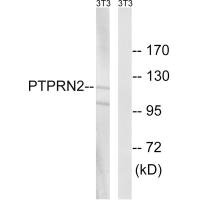
The antibody against PTPRN2 was raised in rabbit using the Synthesized peptide derived from internal of Human PTPRN2. as the immunogen. The antibody was affinity-purified from rabbit antiserum by affinity-chromatography using epitope-specific immunogen. This antibody has been validated on ELISA, WB.

ADC-40970A

The antibody against PTPRN2 was raised in rabbit using the Synthesized peptide derived from internal of Human PTPRN2. as the immunogen. The antibody was affinity-purified from rabbit antiserum by affinity-chromatography using epitope-specific immunogen. This antibody has been validated on ELISA, WB.

$297.00

Number
Order Exclusive Products Now

Request a Quote
High Purity LevelsPrecision and ReliabilityCustomization Options

Specifications


Cat.No ADC-40970A ClonalityPolyclonal
Host SpeciesRabbitTarget NamePTPRN2
Target Synonymsreceptor typeFormLiquid
Species ReactivityHumanStorage BufferPH 7.4, 0.02% sodium azide and 50% glycerol., 150mM NaCl, Rabbit IgG in phosphate buffered saline (without Mg2+ and Ca2+)
Purification MethodThe antibody was affinity-purified from rabbit antiserum by affinity-chromatography using epitope-specific immunogen.ApplicationELISA, WB
StorageUpon receipt

Immunogen Information


Immunogen DescriptionSynthesized peptide derived from internal of Human PTPRN2.Target SpeciesHuman
Immunogen SequenceComplete sequences for the immunogen, target protein, and peptides are available upon request.Uniprot IDQ92932
Background Information
  • Uniprot Id

    Q92932

  • Target Species

    Human

  • Target Name

    PTPRN2

  • Target Full Name

    Receptor-type tyrosine-protein phosphatase N2

  • Target Function

    Plays a role in vesicle-mediated secretory processes. Required for normal accumulation of secretory vesicles in hippocampus, pituitary and pancreatic islets. Required for the accumulation of normal levels of insulin-containing vesicles and preventing their degradation. Plays a role in insulin secretion in response to glucose stimuli. Required for normal accumulation of the neurotransmitters norepinephrine, dopamine and serotonin in the brain. In females, but not in males, required for normal accumulation and secretion of pituitary hormones, such as luteinizing hormone (LH) and follicle-stimulating hormone (FSH). Required to maintain normal levels of renin expression and renin release. May regulate catalytic active protein-tyrosine phosphatases such as PTPRA through dimerization. Has phosphatidylinositol phosphatase activity; the PIPase activity is involved in its ability to regulate insulin secretion. Can dephosphorylate phosphatidylinositol 4,5-biphosphate (PI(4,5)P2), phosphatidylinositol 5-phosphate and phosphatidylinositol 3-phosphate. Regulates PI(4,5)P2 level in the plasma membrane and localization of cofilin at the plasma membrane and thus is indirectly involved in regulation of actin dynamics related to cell migration and metastasis; upon hydrolyzation of PI(4,5)P2 cofilin is released from the plasma membrane and acts in the cytoplasm in severing F-actin filaments.

  • Target Involvement

    Autoantigen in insulin-dependent diabetes mellitus (IDDM).

  • Target Subcellular Location

    Cytoplasmic vesicle, secretory vesicle membrane; Single-pass type I membrane protein. Cytoplasmic vesicle, secretory vesicle, synaptic vesicle membrane; Single-pass type I membrane protein.; [IA-2beta60]: Cytoplasmic vesicle, secretory vesicle membrane.

  • Target Protein Families

    Protein-tyrosine phosphatase family, Receptor class 8 subfamily

  • Target Tissue Specificity

    Highest levels in brain and pancreas. Lower levels in trachea, prostate, stomach and spinal chord.

  • Target Research Area

    Immunology

  • Target Synonyms

    IA 2beta; IA2beta; IAR; IAR/receptor like protein tyrosine phosphatase; ICAAR; Islet cell autoantigen related protein; Islet cell autoantigen-related protein; Phogrin; Protein tyrosine phosphatase receptor pi; Protein tyrosine phosphatase, receptor type, N polypeptide 2; PTPR2_HUMAN; Ptprn2; PTPRP; R PTP N2; R-PTP-N2; Receptor-type tyrosine-protein phosphatase N2; Tyrosine phosphatase IA 2 beta

  • Target Background

    This gene encodes a protein with sequence similarity to receptor-like protein tyrosine phosphatases. However, tyrosine phosphatase activity has not been experimentally validated for this protein. Studies of the rat ortholog suggest that the encoded protein may instead function as a phosphatidylinositol phosphatase with the ability to dephosphorylate phosphatidylinositol 3-phosphate and phosphatidylinositol 4, 5-diphosphate, and this function may be involved in the regulation of insulin secretion. This protein has been identified as an autoantigen in insulin-dependent diabetes mellitus. Alternative splicing results in multiple transcript variants.

Inquire Rabbit anti-Human PTPRN2 Polyclonal Antibody Now


AbTriva respects your privacy and protects your personal data in accordance with AbTriva. For more information, please see our data protection statement. *

Notification