• Contact info@abtriva.com for inquiries and orders.
  • Chinese (Simplified)

  • English

  • German

  • Korean

  • Spanish

United States (English / $ USD)

Rabbit anti-Human PVRL3 Polyclonal Antibody

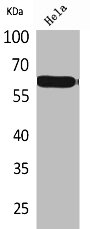
The antibody against NECTIN3 was raised in rabbit using the Synthesized peptide derived from the Internal region of Human Nectin 3. as the immunogen. This antibody exists as a non-conjugated isotype IgG. The antibody was affinity-purified from rabbit antiserum by affinity-chromatography using epitope-specific immunogen. This antibody has been validated on WB, ELISA.

ADC-37090A

The antibody against NECTIN3 was raised in rabbit using the Synthesized peptide derived from the Internal region of Human Nectin 3. as the immunogen. This antibody exists as a non-conjugated isotype IgG. The antibody was affinity-purified from rabbit antiserum by affinity-chromatography using epitope-specific immunogen. This antibody has been validated on WB, ELISA.

$167.00

Number
Order Exclusive Products Now

Request a Quote
High Purity LevelsPrecision and ReliabilityCustomization Options

Specifications


Cat.No ADC-37090A ClonalityPolyclonal
Host SpeciesRabbitTarget NameNECTIN3
FormLiquidSpecies ReactivityHuman, Mouse, Rat
IsotypeIgGStorage Buffer0.5% BSA and 0.02% sodium azide., Liquid in PBS containing 50% glycerol
Purification MethodThe antibody was affinity-purified from rabbit antiserum by affinity-chromatography using epitope-specific immunogen.ConjugateNon-conjugated
ApplicationELISA, WBStorageUpon receipt

Immunogen Information


Immunogen DescriptionSynthesized peptide derived from the Internal region of Human Nectin 3.Target SpeciesHuman
Immunogen SequenceComplete sequences for the immunogen, target protein, and peptides are available upon request.Uniprot IDQ9NQS3
Background Information
  • Uniprot Id

    Q9NQS3

  • Target Species

    Human

  • Target Name

    NECTIN3

  • Target Full Name

    Nectin-3

  • Target Function

    Plays a role in cell-cell adhesion through heterophilic trans-interactions with nectin-like proteins or nectins, such as trans-interaction with NECTIN2 at Sertoli-spermatid junctions. Trans-interaction with PVR induces activation of CDC42 and RAC small G proteins through common signaling molecules such as SRC and RAP1. Also involved in the formation of cell-cell junctions, including adherens junctions and synapses. Induces endocytosis-mediated down-regulation of PVR from the cell surface, resulting in reduction of cell movement and proliferation. Plays a role in the morphology of the ciliary body.

  • Target Subcellular Location

    Cell membrane; Single-pass membrane protein. Cell junction, synapse, postsynaptic cell membrane.

  • Target Protein Families

    Nectin family

  • Target Tissue Specificity

    Predominantly expressed in testis and placenta as well as in many cell lines, including epithelial cell lines.

  • Target Synonyms

    CD113; CDw113; DKFZP566B0846; FLJ90624; Nectin-3; Nectin3; Poliovirus receptor related 3; Poliovirus receptor related protein 3; Poliovirus receptor-like 3; Poliovirus receptor-related protein 3; PPR3; PRR3; Pvrl3; PVRL3_HUMAN; PVRR3

  • Target Background

    This gene encodes a member of the nectin family of proteins, which function as adhesion molecules at adherens junctions. This family member interacts with other nectin-like proteins and with afadin, a filamentous actin-binding protein involved in the regulation of directional motility, cell proliferation and survival. This gene plays a role in ocular development involving the ciliary body. Mutations in this gene are believed to result in congenital ocular defects. Alternative splicing results in multiple transcript variants.

Inquire Rabbit anti-Human PVRL3 Polyclonal Antibody Now


AbTriva respects your privacy and protects your personal data in accordance with AbTriva. For more information, please see our data protection statement. *

Notification