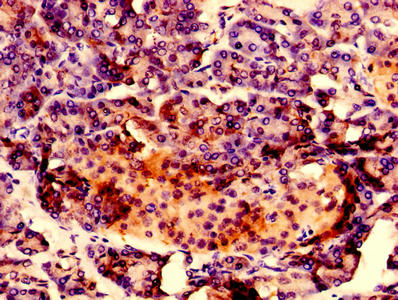
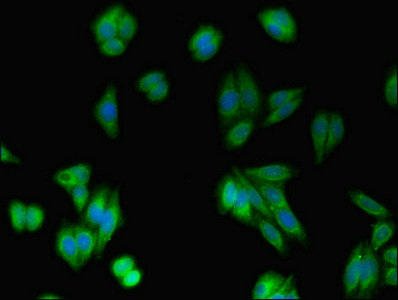
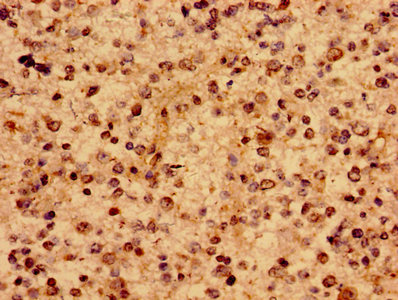
-
Chinese (Simplified)
-
English
-
German
-
Korean
-
Spanish
Chinese (Simplified)
English
German
Korean
Spanish
Sign up for an account to enjoy easy online shopping and instant order tracking.
The antibody against RAB10 was raised in rabbit using the Recombinant Human Ras-related protein Rab-10 protein (1-196AA) as the immunogen. This antibody exists as a non-conjugated isotype IgG, purified by protein G with a purity greater than 95%. This antibody has been validated on ELISA, IHC, IF.
$299.00
| Cat.No | ADC-46318A | Clonality | Polyclonal |
|---|---|---|---|
| Host Species | Rabbit | Target Name | RAB10 |
| Form | Liquid | Species Reactivity | Human |
| Isotype | IgG | Storage Buffer | 0.01M PBS, 0.03% Proclin 300; Constituents: 50% Glycerol, PH 7.4 |
| Purification Method | >95%, Protein G purified | Conjugate | Non-conjugated |
| Application | ELISA, IF, IHC | Storage | Upon receipt |
| Immunogen Description | Recombinant Human Ras-related protein Rab-10 protein (1-196AA) | Target Species | Human |
|---|---|---|---|
| Immunogen Sequence | Complete sequences for the immunogen, target protein, and peptides are available upon request. | Uniprot ID | P61026 |
Uniprot Id
P61026
Target Species
Human
Target Name
RAB10
Target Full Name
Ras-related protein Rab-10
Target Function
The small GTPases Rab are key regulators of intracellular membrane trafficking, from the formation of transport vesicles to their fusion with membranes. Rabs cycle between an inactive GDP-bound form and an active GTP-bound form that is able to recruit to membranes different set of downstream effectors directly responsible for vesicle formation, movement, tethering and fusion. That Rab is mainly involved in the biosynthetic transport of proteins from the Golgi to the plasma membrane. Regulates, for instance, SLC2A4/GLUT4 glucose transporter-enriched vesicles delivery to the plasma membrane. In parallel, it regulates the transport of TLR4, a toll-like receptor to the plasma membrane and therefore may be important for innate immune response. Plays also a specific role in asymmetric protein transport to the plasma membrane. In neurons, it is involved in axonogenesis through regulation of vesicular membrane trafficking toward the axonal plasma membrane. In epithelial cells, it regulates transport from the Golgi to the basolateral membrane. May play a role in the basolateral recycling pathway and in phagosome maturation. May play a role in endoplasmic reticulum dynamics and morphology controlling tubulation along microtubules and tubules fusion. Together with LRRK2, RAB8A, and RILPL1, it regulates ciliogenesis. When phosphorylated by LRRK2 on Thr-73, binds RILPL1 and inhibits ciliogenesis.; (Microbial infection) Upon Legionella pneumophila infection promotes endoplasmic reticulum recruitment and bacterial replication. Plays a role in remodeling the Legionella-containing vacuole (LCV) into an endoplasmic reticulum-like vacuole.
Target Subcellular Location
Cytoplasmic vesicle membrane; Lipid-anchor; Cytoplasmic side. Golgi apparatus membrane. Golgi apparatus, trans-Golgi network membrane. Endosome membrane. Recycling endosome membrane. Cytoplasmic vesicle, phagosome membrane. Cytoplasm, cytoskeleton, cilium basal body. Endoplasmic reticulum membrane. Cytoplasm, perinuclear region.
Target Protein Families
Small GTPase superfamily, Rab family
Target Tissue Specificity
Expressed in the hippocampus. Expressed in neutrophils (at protein level).
Target Research Area
Signal Transduction
Target Synonyms
GTP binding protein RAB10; Rab10; RAB10 member RAS oncogene family; RAB10_HUMAN; Ras related GTP binding protein; Ras related GTP binding protein RAB10; Ras-related protein Rab-10
Target Background
RAB10 belongs to the RAS (see HRAS; MIM 190020) superfamily of small GTPases. RAB proteins localize to exocytic and endocytic compartments and regulate intracellular vesicle trafficking (Bao et al., 1998 [PubMed 9918381]).
Notification