-
Chinese (Simplified)
-
English
-
German
-
Korean
-
Spanish
Chinese (Simplified)
English
German
Korean
Spanish
Sign up for an account to enjoy easy online shopping and instant order tracking.
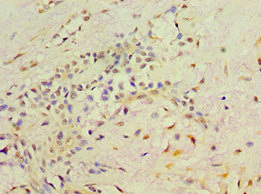
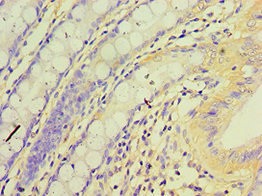
The antibody against RET was raised in rabbit using the Recombinant Human Proto-oncogene tyrosine-protein kinase receptor Ret protein (29-300AA) as the immunogen. This antibody exists as a non-conjugated isotype IgG, Antigen affinity purified. This antibody has been validated on ELISA, IHC.
$299.00
| Cat.No | ADC-40036A | Clonality | Polyclonal |
|---|---|---|---|
| Host Species | Rabbit | Target Name | RET |
| Form | Liquid | Species Reactivity | Human |
| Isotype | IgG | Storage Buffer | 50% Glycerol, PBS with 0.02% sodium azide, pH7.3. |
| Purification Method | Antigen affinity purified | Conjugate | Non-conjugated |
| Application | ELISA, IHC | Storage | Upon receipt |
| Immunogen Description | Recombinant Human Proto-oncogene tyrosine-protein kinase receptor Ret protein (29-300AA) | Target Species | Human |
|---|---|---|---|
| Immunogen Sequence | Complete sequences for the immunogen, target protein, and peptides are available upon request. | Uniprot ID | P07949 |
Uniprot Id
P07949
Target Species
Human
Target Name
RET
Target Full Name
Proto-oncogene tyrosine-protein kinase receptor Ret
Target Function
Receptor tyrosine-protein kinase involved in numerous cellular mechanisms including cell proliferation, neuronal navigation, cell migration, and cell differentiation upon binding with glial cell derived neurotrophic factor family ligands. Phosphorylates PTK2/FAK1. Regulates both cell death/survival balance and positional information. Required for the molecular mechanisms orchestration during intestine organogenesis; involved in the development of enteric nervous system and renal organogenesis during embryonic life, and promotes the formation of Peyer's patch-like structures, a major component of the gut-associated lymphoid tissue. Modulates cell adhesion via its cleavage by caspase in sympathetic neurons and mediates cell migration in an integrin (e.g. ITGB1 and ITGB3)-dependent manner. Involved in the development of the neural crest. Active in the absence of ligand, triggering apoptosis through a mechanism that requires receptor intracellular caspase cleavage. Acts as a dependence receptor; in the presence of the ligand GDNF in somatotrophs (within pituitary), promotes survival and down regulates growth hormone (GH) production, but triggers apoptosis in absence of GDNF. Regulates nociceptor survival and size. Triggers the differentiation of rapidly adapting (RA) mechanoreceptors. Mediator of several diseases such as neuroendocrine cancers; these diseases are characterized by aberrant integrins-regulated cell migration. Mediates, through interaction with GDF15-receptor GFRAL, GDF15-induced cell-signaling in the brainstem which induces inhibition of food-intake. Activates MAPK- and AKT-signaling pathways. Isoform 1 in complex with GFRAL induces higher activation of MAPK-signaling pathway than isoform 2 in complex with GFRAL.
Target Involvement
Colorectal cancer (CRC); Hirschsprung disease 1 (HSCR1); Medullary thyroid carcinoma (MTC); Multiple neoplasia 2B (MEN2B); Pheochromocytoma (PCC); Multiple neoplasia 2A (MEN2A); Congenital central hypoventilation syndrome (CCHS)
Target Subcellular Location
Cell membrane; Single-pass type I membrane protein. Endosome membrane; Single-pass type I membrane protein.
Target Protein Families
Protein kinase superfamily, Tyr protein kinase family
Target Synonyms
C ret; Cadherin family member 12; Cadherin related family member 16; CDHF 12; CDHF12; CDHR16; ELKS Fusion gene; HSCR 1; HSCR1; Hydroxyaryl protein kinase; MEN2A; MEN2B; MTC 1; MTC1; Multiple endocrine neoplasia and medullary thyroid carcinoma 1; Oncogene RET; Proto oncogene tyrosine protein kinase receptor ret; Proto-oncogene c-Ret; Proto-oncogene tyrosine-protein kinase receptor ret; PTC; RET; RET ELE1; Ret Proto oncogene; RET transforming sequence; RET_HUMAN; RET51; RET9; tyrosine-protein kinase receptor ret
Target Background
This gene encodes a transmembrane receptor and member of the tyrosine protein kinase family of proteins. Binding of ligands such as GDNF (glial cell-line derived neurotrophic factor) and other related proteins to the encoded receptor stimulates receptor dimerization and activation of downstream signaling pathways that play a role in cell differentiation, growth, migration and survival. The encoded receptor is important in development of the nervous system, and the development of organs and tissues derived from the neural crest. This proto-oncogene can undergo oncogenic activation through both cytogenetic rearrangement and activating point mutations. Mutations in this gene are associated with Hirschsprung disease and central hypoventilation syndrome and have been identified in patients with renal agenesis.
Notification