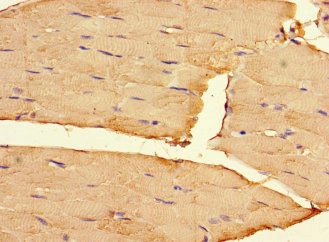
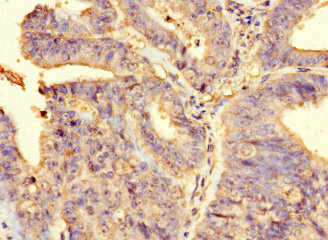
-
Chinese (Simplified)
-
English
-
German
-
Korean
-
Spanish
Chinese (Simplified)
English
German
Korean
Spanish
Sign up for an account to enjoy easy online shopping and instant order tracking.
The antibody against RIPOR2 was raised in rabbit using the Recombinant Human Rho family-interacting cell polarization regulator 2 protein (1-250AA) as the immunogen. This antibody exists as a non-conjugated isotype IgG, purified by protein G with a purity greater than 95%. This antibody has been validated on ELISA, IHC.
$299.00
| Cat.No | ADC-16034A | Clonality | Polyclonal |
|---|---|---|---|
| Host Species | Rabbit | Target Name | RIPOR2 |
| Target Synonyms | Ab2 162 antibody; C6orf32 antibody; DIFF48 antibody; FA65B_HUMAN antibody; Fam65b antibody; KIAA0386 antibody; PL48 antibody; Protein FAM65B antibody | Form | Liquid |
| Species Reactivity | Human | Isotype | IgG |
| Storage Buffer | 0.01M PBS, 0.03% Proclin 300; Constituents: 50% Glycerol, PH 7.4 | Purification Method | >95%, Protein G purified |
| Conjugate | Non-conjugated | Application | ELISA, IHC |
| Storage | Upon receipt |
| Immunogen Description | Recombinant Human Rho family-interacting cell polarization regulator 2 protein (1-250AA) | Target Species | Human |
|---|---|---|---|
| Immunogen Sequence | Complete sequences for the immunogen, target protein, and peptides are available upon request. | Uniprot ID | Q9Y4F9 |
Uniprot Id
Q9Y4F9
Target Species
Human
Target Name
RIPOR2
Target Full Name
Rho family-interacting cell polarization regulator 2
Target Function
Acts as an inhibitor of the small GTPase RHOA and plays several roles in the regulation of myoblast and hair cell differentiation, lymphocyte T proliferation and neutrophil polarization. Inhibits chemokine-induced T lymphocyte responses, such as cell adhesion, polarization and migration. Involved also in the regulation of neutrophil polarization, chemotaxis and adhesion. Required for normal development of inner and outer hair cell stereocilia within the cochlea of the inner ear. Plays a role for maintaining the structural organization of the basal domain of stereocilia. Involved in mechanosensory hair cell function. Required for normal hearing.; Acts as an inhibitor of the small GTPase RHOA. Plays a role in fetal mononuclear myoblast differentiation by promoting filopodia and myotube formation. Maintains naive T lymphocytes in a quiescent state.
Target Involvement
Deafness, autosomal recessive, 104 (DFNB104)
Target Subcellular Location
Cytoplasm. Cytoplasm, cytoskeleton. Cell projection, filopodium. Cell projection, stereocilium. Cell projection, stereocilium membrane. Apical cell membrane.; [Isoform 1]: Cytoplasm.; [Isoform 2]: Cytoplasm.
Target Protein Families
RIPOR family
Target Tissue Specificity
Expressed in primary fetal mononuclear myoblast. Expressed strongly in naive T lymphocytes. Expressed weakly in activated T lymphocytes (at protein level). Expressed in blood cells and adult tissues of hematopoietic origin, such as the secondary lymphoid
Target Synonyms
PL48; DFNA21; DIFF40; DIFF48; FAM65B; MYONAP; C6orf32; DFNB104
Target Background
This gene encodes an atypical inhibitor of the small G protein RhoA. Inhibition of RhoA activity by the encoded protein mediates myoblast fusion and polarization of T cells and neutrophils. The encoded protein is a component of hair cell stereocilia that is essential for hearing. A splice site mutation in this gene results in hearing loss in human patients.
Notification