-
Chinese (Simplified)
-
English
-
German
-
Korean
-
Spanish
Chinese (Simplified)
English
German
Korean
Spanish
Sign up for an account to enjoy easy online shopping and instant order tracking.
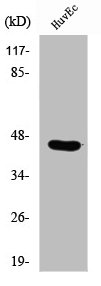
The antibody against RUNX3 was raised in rabbit using the Synthesized peptide derived from the Internal region of Human RUNX3. as the immunogen. This antibody exists as a non-conjugated isotype IgG. The antibody was affinity-purified from rabbit antiserum by affinity-chromatography using epitope-specific immunogen. This antibody has been validated on WB, ELISA.
$167.00
| Cat.No | ADC-37661A | Clonality | Polyclonal |
|---|---|---|---|
| Host Species | Rabbit | Target Name | RUNX3 |
| Form | Liquid | Species Reactivity | Human, Mouse |
| Isotype | IgG | Storage Buffer | 0.5% BSA and 0.02% sodium azide., Liquid in PBS containing 50% glycerol |
| Purification Method | The antibody was affinity-purified from rabbit antiserum by affinity-chromatography using epitope-specific immunogen. | Conjugate | Non-conjugated |
| Application | ELISA, WB | Storage | Upon receipt |
| Immunogen Description | Synthesized peptide derived from the Internal region of Human RUNX3. | Target Species | Human |
|---|---|---|---|
| Immunogen Sequence | Complete sequences for the immunogen, target protein, and peptides are available upon request. | Uniprot ID | Q13761 |
Uniprot Id
Q13761
Target Species
Human
Target Name
RUNX3
Target Full Name
Runt-related transcription factor 3
Target Function
Forms the heterodimeric complex core-binding factor (CBF) with CBFB. RUNX members modulate the transcription of their target genes through recognizing the core consensus binding sequence 5'-TGTGGT-3', or very rarely, 5'-TGCGGT-3', within their regulatory regions via their runt domain, while CBFB is a non-DNA-binding regulatory subunit that allosterically enhances the sequence-specific DNA-binding capacity of RUNX. The heterodimers bind to the core site of a number of enhancers and promoters, including murine leukemia virus, polyomavirus enhancer, T-cell receptor enhancers, LCK, IL3 and GM-CSF promoters. May be involved in the control of cellular proliferation and/or differentiation. In association with ZFHX3, upregulates CDKN1A promoter activity following TGF-beta stimulation. CBF complexes repress ZBTB7B transcription factor during cytotoxic (CD8+) T cell development. They bind to RUNX-binding sequence within the ZBTB7B locus acting as transcriptional silencer and allowing for cytotoxic T cell differentiation. CBF complexes binding to the transcriptional silencer is essential for recruitment of nuclear protein complexes that catalyze epigenetic modifications to establish epigenetic ZBTB7B silencing.
Target Subcellular Location
Nucleus. Cytoplasm.
Target Tissue Specificity
Expressed in gastric cancer tissues (at protein level).
Target Research Area
Epigenetics and Nuclear Signaling
Target Synonyms
Acute myeloid leukemia 2 protein; Acute myeloid leukemia gene 2; AML 2; AML2; CBF alpha 3; CBF-alpha-3; CBFA 3; CBFA3; Core binding factor alpha 3 subunit; core binding factor; Core binding factor runt domain alpha subunit 3; Core binding factor subunit alpha 3; core-binding factor; Core-binding factor subunit alpha-3; Oncogene AML 2; Oncogene AML-2; PEA2 alpha C; PEA2-alpha C; PEBP2 alpha C; PEBP2-alpha C; Pebp2a3; PEBP2aC; Polyomavirus enhancer binding protein 2 alpha C subunit; Polyomavirus enhancer-binding protein 2 alpha C subunit; runt domain alpha subunit 3 ; runt related transcription factor 3; Runt-related transcription factor 3; RUNX 3; Runx3; RUNX3_HUMAN; SL3 3 enhancer factor 1 alpha C subunit; SL3-3 enhancer factor 1 alpha C subunit; SL3/AKV core binding factor alpha C subunit; SL3/AKV core-binding factor alpha C subunit; Transcription factor AML2
Target Background
This gene encodes a member of the runt domain-containing family of transcription factors. A heterodimer of this protein and a beta subunit forms a complex that binds to the core DNA sequence 5'-PYGPYGGT-3' found in a number of enhancers and promoters, and can either activate or suppress transcription. It also interacts with other transcription factors. It functions as a tumor suppressor, and the gene is frequently deleted or transcriptionally silenced in cancer. Alternative splicing results in multiple transcript variants.
Notification