• Contact info@abtriva.com for inquiries and orders.
  • Chinese (Simplified)

  • English

  • German

  • Korean

  • Spanish

United States (English / $ USD)

Rabbit anti-Human S100P Polyclonal Antibody

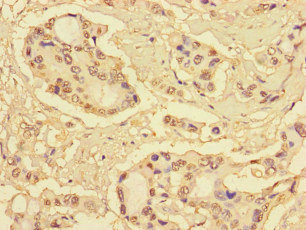
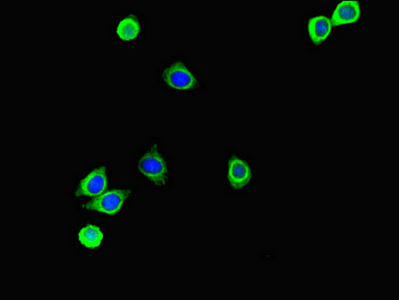
The antibody against S100P was raised in rabbit using the Recombinant Human Protein S100-P protein (17-70AA) as the immunogen. This antibody exists as a non-conjugated isotype IgG, purified by protein G with a purity greater than 95%. This antibody has been validated on ELISA, IHC, IF.

ADC-15720A

The antibody against S100P was raised in rabbit using the Recombinant Human Protein S100-P protein (17-70AA) as the immunogen. This antibody exists as a non-conjugated isotype IgG, purified by protein G with a purity greater than 95%. This antibody has been validated on ELISA, IHC, IF.

$299.00

Number
Order Exclusive Products Now

Request a Quote
High Purity LevelsPrecision and ReliabilityCustomization Options

Specifications


Cat.No ADC-15720A ClonalityPolyclonal
Host SpeciesRabbitTarget NameS100P
FormLiquidSpecies ReactivityHuman
IsotypeIgGStorage Buffer0.01M PBS, 0.03% Proclin 300; Constituents: 50% Glycerol, PH 7.4
Purification Method>95%, Protein G purifiedConjugateNon-conjugated
ApplicationELISA, IF, IHCStorageUpon receipt

Immunogen Information


Immunogen DescriptionRecombinant Human Protein S100-P protein (17-70AA)Target SpeciesHuman
Immunogen SequenceComplete sequences for the immunogen, target protein, and peptides are available upon request.Uniprot IDP25815
Background Information
  • Uniprot Id

    P25815

  • Target Species

    Human

  • Target Name

    S100P

  • Target Full Name

    Protein S100-P

  • Target Function

    May function as calcium sensor and contribute to cellular calcium signaling. In a calcium-dependent manner, functions by interacting with other proteins, such as EZR and PPP5C, and indirectly plays a role in physiological processes like the formation of microvilli in epithelial cells. May stimulate cell proliferation in an autocrine manner via activation of the receptor for activated glycation end products (RAGE).

  • Target Subcellular Location

    Nucleus. Cytoplasm. Cell projection, microvillus membrane. Note=Colocalizes with S100PBP in the nucleus. Colocolizes with EZR in the microvilli in a calcium-dependent manner.

  • Target Protein Families

    S-100 family

  • Target Tissue Specificity

    Detected in all of the tissues except brain, testis and small intestine, expression level is higher in placenta, heart, lung, skeletal muscle, spleen and leukocyte. Up-regulated in various pancreatic ductal adenocarcinomas and pancreatic intraepithelial n

  • Target Research Area

    Cancer

  • Target Synonyms

    MIG9; Migration inducing gene 9; Protein S100-E; Protein S100-P; Protein S100P; S100 calcium binding protein P; S100 calcium-binding protein P; S100 P; S100E; S100P; S100P_HUMAN

  • Target Background

    The protein encoded by this gene is a member of the S100 family of proteins containing 2 EF-hand calcium-binding motifs. S100 proteins are localized in the cytoplasm and/or nucleus of a wide range of cells, and involved in the regulation of a number of cellular processes such as cell cycle progression and differentiation. S100 genes include at least 13 members which are located as a cluster on chromosome 1q21; however, this gene is located at 4p16. This protein, in addition to binding Ca2+, also binds Zn2+ and Mg2+. This protein may play a role in the etiology of prostate cancer.

Inquire Rabbit anti-Human S100P Polyclonal Antibody Now


AbTriva respects your privacy and protects your personal data in accordance with AbTriva. For more information, please see our data protection statement. *

Notification