• Contact info@abtriva.com for inquiries and orders.
  • Chinese (Simplified)

  • English

  • German

  • Korean

  • Spanish

United States (English / $ USD)

Rabbit anti-Human S1PR1 Polyclonal Antibody

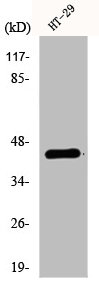
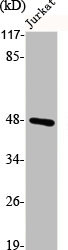
The antibody against S1PR1 was raised in rabbit using the Synthesized peptide derived from Human EDG-1 around the non-phosphorylation site of T236. as the immunogen. This antibody exists as a non-conjugated isotype IgG. The antibody was affinity-purified from rabbit antiserum by affinity-chromatography using epitope-specific immunogen. This antibody has been validated on WB, IF, ELISA.

ADC-38786A

The antibody against S1PR1 was raised in rabbit using the Synthesized peptide derived from Human EDG-1 around the non-phosphorylation site of T236. as the immunogen. This antibody exists as a non-conjugated isotype IgG. The antibody was affinity-purified from rabbit antiserum by affinity-chromatography using epitope-specific immunogen. This antibody has been validated on WB, IF, ELISA.

$167.00

Number
Order Exclusive Products Now

Request a Quote
High Purity LevelsPrecision and ReliabilityCustomization Options

Specifications


Cat.No ADC-38786A ClonalityPolyclonal
Host SpeciesRabbitTarget NameS1PR1
FormLiquidSpecies ReactivityHuman, Mouse, Rat
IsotypeIgGStorage Buffer0.5% BSA and 0.02% sodium azide., Liquid in PBS containing 50% glycerol
Purification MethodThe antibody was affinity-purified from rabbit antiserum by affinity-chromatography using epitope-specific immunogen.ConjugateNon-conjugated
ApplicationELISA, IF, WBStorageUpon receipt

Immunogen Information


Immunogen DescriptionSynthesized peptide derived from Human EDG-1 around the non-phosphorylation site of T236.Target SpeciesHuman
Immunogen SequenceComplete sequences for the immunogen, target protein, and peptides are available upon request.Uniprot IDP21453
Background Information
  • Uniprot Id

    P21453

  • Target Species

    Human

  • Target Name

    S1PR1

  • Target Full Name

    Sphingosine 1-phosphate receptor 1

  • Target Function

    G-protein coupled receptor for the bioactive lysosphingolipid sphingosine 1-phosphate (S1P) that seems to be coupled to the G(i) subclass of heteromeric G proteins. Signaling leads to the activation of RAC1, SRC, PTK2/FAK1 and MAP kinases. Plays an important role in cell migration, probably via its role in the reorganization of the actin cytoskeleton and the formation of lamellipodia in response to stimuli that increase the activity of the sphingosine kinase SPHK1. Required for normal chemotaxis toward sphingosine 1-phosphate. Required for normal embryonic heart development and normal cardiac morphogenesis. Plays an important role in the regulation of sprouting angiogenesis and vascular maturation. Inhibits sprouting angiogenesis to prevent excessive sprouting during blood vessel development. Required for normal egress of mature T-cells from the thymus into the blood stream and into peripheral lymphoid organs. Plays a role in the migration of osteoclast precursor cells, the regulation of bone mineralization and bone homeostasis. Plays a role in responses to oxidized 1-palmitoyl-2-arachidonoyl-sn-glycero-3-phosphocholine by pulmonary endothelial cells and in the protection against ventilator-induced lung injury.

  • Target Subcellular Location

    Cell membrane; Multi-pass membrane protein. Endosome. Membrane raft. Note=Recruited to caveolin-enriched plasma membrane microdomains in response to oxidized 1-palmitoyl-2-arachidonoyl-sn-glycero-3-phosphocholine. Ligand binding leads to receptor internalization.

  • Target Protein Families

    G-protein coupled receptor 1 family

  • Target Tissue Specificity

    Endothelial cells, and to a lesser extent, in vascular smooth muscle cells, fibroblasts, melanocytes, and cells of epithelioid origin.

  • Target Synonyms

    S1PR1; CHEDG1; EDG1; Sphingosine 1-phosphate receptor 1; S1P receptor 1; S1P1; Endothelial differentiation G-protein coupled receptor 1; Sphingosine 1-phosphate receptor Edg-1; S1P receptor Edg-1; CD antigen CD363

  • Target Background

    The protein encoded by this gene is structurally similar to G protein-coupled receptors and is highly expressed in endothelial cells. It binds the ligand sphingosine-1-phosphate with high affinity and high specificity, and suggested to be involved in the processes that regulate the differentiation of endothelial cells. Activation of this receptor induces cell-cell adhesion. Alternative splicing results in multiple transcript variants.

Inquire Rabbit anti-Human S1PR1 Polyclonal Antibody Now


AbTriva respects your privacy and protects your personal data in accordance with AbTriva. For more information, please see our data protection statement. *

Notification