-
Chinese (Simplified)
-
English
-
German
-
Korean
-
Spanish
Chinese (Simplified)
English
German
Korean
Spanish
Sign up for an account to enjoy easy online shopping and instant order tracking.
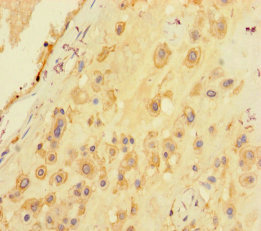
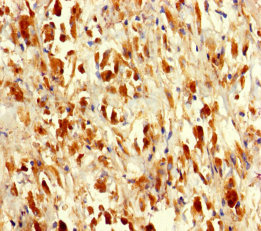
The antibody against SARS was raised in rabbit using the Recombinant Human Serine--tRNA ligase, cytoplasmic protein (2-233AA) as the immunogen. This antibody exists as a non-conjugated isotype IgG, purified by protein G with a purity greater than 95%. This antibody has been validated on ELISA, WB, IHC.
The antibody against SARS was raised in rabbit using the Recombinant Human Serine–tRNA ligase, cytoplasmic protein (2-233AA) as the immunogen. This antibody exists as a non-conjugated isotype IgG, purified by protein G with a purity greater than 95%. This antibody has been validated on ELISA, WB, IHC.
$299.00
| Cat.No | ADC-50425A | Clonality | Polyclonal |
|---|---|---|---|
| Host Species | Rabbit | Target Name | SARS |
| Target Synonyms | C78314 antibody; cytoplasmic antibody; EC 6.1.1.11 antibody; FLJ36399 antibody; sarS antibody; Sars1 antibody; Serine tRNA ligase 1, cytoplasmic antibody; Serine tRNA ligase antibody; Serine--tRNA ligase antibody; serine--tRNA ligase, cytoplasmic antibody; Seryl-tRNA(Ser/Sec) synthetase antibody; Strs antibody; SYSC_HUMAN antibody | Form | Liquid |
| Species Reactivity | Human | Isotype | IgG |
| Storage Buffer | 0.01M PBS, 0.03% Proclin 300; Constituents: 50% Glycerol, PH 7.4 | Purification Method | >95%, Protein G purified |
| Conjugate | Non-conjugated | Application | ELISA, IHC, WB |
| Storage | Upon receipt |
| Immunogen Description | Recombinant Human Serine--tRNA ligase, cytoplasmic protein (2-233AA) | Target Species | Human |
|---|---|---|---|
| Immunogen Sequence | Complete sequences for the immunogen, target protein, and peptides are available upon request. | Uniprot ID | P49591 |
Uniprot Id
P49591
Target Species
Human
Target Name
SARS
Target Full Name
Serine--tRNA ligase, cytoplasmic
Target Function
Catalyzes the attachment of serine to tRNA(Ser) in a two-step reaction: serine is first activated by ATP to form Ser-AMP and then transferred to the acceptor end of tRNA(Ser). Is probably also able to aminoacylate tRNA(Sec) with serine, to form the misacylated tRNA L-seryl-tRNA(Sec), which will be further converted into selenocysteinyl-tRNA(Sec). In the nucleus, binds to the VEGFA core promoter and prevents MYC binding and transcriptional activation by MYC. Recruits SIRT2 to the VEGFA promoter, promoting deacetylation of histone H4 at 'Lys-16' (H4K16). Thereby, inhibits the production of VEGFA and sprouting angiogenesis mediated by VEGFA.
Target Subcellular Location
Cytoplasm. Nucleus.
Target Protein Families
Class-II aminoacyl-tRNA synthetase family, Type-1 seryl-tRNA synthetase subfamily
Target Tissue Specificity
Brain.
Target Research Area
Metabolism
Target Synonyms
C78314; cytoplasmic; EC 6.1.1.11; FLJ36399; sarS; Sars1; Serine tRNA ligase 1, cytoplasmic; Serine tRNA ligase; Serine--tRNA ligase; serine--tRNA ligase, cytoplasmic; SerRS; SERS; Seryl tRNA Ser/Sec synthetase; Seryl tRNA synthetase; Seryl tRNA synthetase cytoplasmic; Seryl-tRNA Ser/Sec synthetase; Seryl-tRNA synthetase; seryl-tRNA synthetase, cytoplasmic; Seryl-tRNA(Ser/Sec) synthetase; Strs; SYSC_HUMAN
Target Background
This gene belongs to the class II amino-acyl tRNA family. The encoded enzyme catalyzes the transfer of L-serine to tRNA (Ser) and is related to bacterial and yeast counterparts. Multiple alternatively spliced transcript variants have been described but the biological validity of all variants is unknown.
Notification