• Contact info@abtriva.com for inquiries and orders.
  • Chinese (Simplified)

  • English

  • German

  • Korean

  • Spanish

United States (English / $ USD)

Rabbit anti-Human SCNN1G Polyclonal Antibody

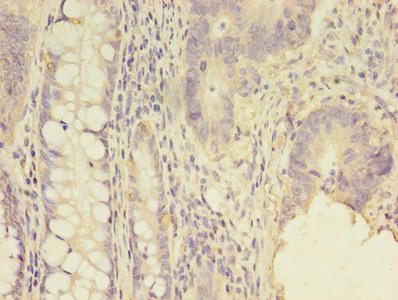
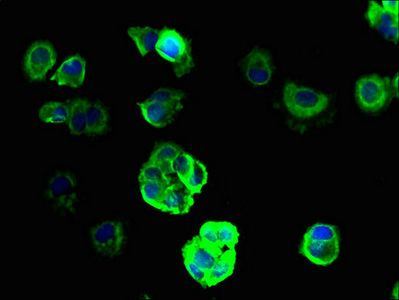
The antibody against SCNN1G was raised in rabbit using the Recombinant Human Amiloride-sensitive sodium channel subunit gamma protein (90-350AA) as the immunogen. This antibody exists as a non-conjugated isotype IgG, purified by protein G with a purity greater than 95%. This antibody has been validated on ELISA, IHC, IF.

ADC-23681A

The antibody against SCNN1G was raised in rabbit using the Recombinant Human Amiloride-sensitive sodium channel subunit gamma protein (90-350AA) as the immunogen. This antibody exists as a non-conjugated isotype IgG, purified by protein G with a purity greater than 95%. This antibody has been validated on ELISA, IHC, IF.

$299.00

Number
Order Exclusive Products Now

Request a Quote
High Purity LevelsPrecision and ReliabilityCustomization Options

Specifications


Cat.No ADC-23681A ClonalityPolyclonal
Host SpeciesRabbitTarget NameSCNN1G
FormLiquidSpecies ReactivityHuman
IsotypeIgGStorage Buffer0.01M PBS, 0.03% Proclin 300; Constituents: 50% Glycerol, PH 7.4
Purification Method>95%, Protein G purifiedConjugateNon-conjugated
ApplicationELISA, IF, IHCStorageUpon receipt

Immunogen Information


Immunogen DescriptionRecombinant Human Amiloride-sensitive sodium channel subunit gamma protein (90-350AA)Target SpeciesHuman
Immunogen SequenceComplete sequences for the immunogen, target protein, and peptides are available upon request.Uniprot IDP51170
Background Information
  • Uniprot Id

    P51170

  • Target Species

    Human

  • Target Name

    SCNN1G

  • Target Full Name

    Epithelial sodium channel subunit gamma

  • Target Function

    Sodium permeable non-voltage-sensitive ion channel inhibited by the diuretic amiloride. Mediates the electrodiffusion of the luminal sodium (and water, which follows osmotically) through the apical membrane of epithelial cells. Plays an essential role in electrolyte and blood pressure homeostasis, but also in airway surface liquid homeostasis, which is important for proper clearance of mucus. Controls the reabsorption of sodium in kidney, colon, lung and sweat glands. Also plays a role in taste perception.

  • Target Involvement

    Liddle syndrome (LIDLS); Bronchiectasis with or without elevated sweat chloride 3 (BESC3)

  • Target Subcellular Location

    Apical cell membrane; Multi-pass membrane protein.

  • Target Protein Families

    Amiloride-sensitive sodium channel (TC 1.A.6) family, SCNN1G subfamily

  • Target Tissue Specificity

    Expressed in kidney (at protein level).

  • Target Synonyms

    Amiloride sensitive epithelial sodium channel gamma subunit; Amiloride sensitive sodium channel subunit gamma; Amiloride-sensitive sodium channel subunit gamma; BESC3; ENaC gamma subunit; ENaCG; ENaCgamma; Epithelial Na(+) channel subunit gamma; Epithelial Na+ channel subunit gamma; Gamma ENaC; Gamma NaCH; Gamma-ENaC; Gamma-NaCH; Nonvoltage gated sodium channel 1 subunit gamma; Nonvoltage-gated sodium channel 1 subunit gamma; PHA 1; PHA1; SCNEG; SCNN 1G; SCNN1G; SCNNG_HUMAN; Sodium channel epithelial 1 gamma subunit; Sodium channel non voltage gated 1 gamma subunit; Sodium channel nonvoltage gated 1 gamma

  • Target Background

    Nonvoltage-gated, amiloride-sensitive, sodium channels control fluid and electrolyte transport across epithelia in many organs. These channels are heteromeric complexes consisting of 3 subunits: alpha, beta, and gamma. This gene encodes the gamma subunit, and mutations in this gene have been associated with Liddle syndrome.

Inquire Rabbit anti-Human SCNN1G Polyclonal Antibody Now


AbTriva respects your privacy and protects your personal data in accordance with AbTriva. For more information, please see our data protection statement. *

Notification