-
Chinese (Simplified)
-
English
-
German
-
Korean
-
Spanish

Chinese (Simplified)
English
German
Korean
Spanish
Sign up for an account to enjoy easy online shopping and instant order tracking.
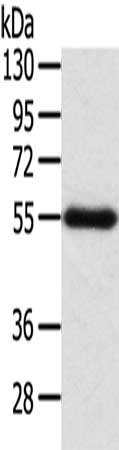
The antibody against SELENON was raised in rabbit using the Synthetic peptide of Human SEPN1 as the immunogen. This antibody exists as a non-conjugated isotype IgG, Antigen affinity purified. This antibody has been validated on ELISA, WB, IHC.
$299.00
| Cat.No | ADC-25963A | Clonality | Polyclonal |
|---|---|---|---|
| Host Species | Rabbit | Target Name | SELENON |
| Target Synonyms | 1 antibody; SelN antibody; SELN_HUMAN antibody; sepn1 antibody, CFTD antibody; MDRS1 antibody; RSMD1 antibody; RSS antibody; Selenoprotein N antibody; Selenoprotein N | Form | Liquid |
| Species Reactivity | Human | Isotype | IgG |
| Storage Buffer | 0.05% NaN3, 40% Glycerol., pH7.4 PBS | Purification Method | Antigen affinity purified |
| Conjugate | Non-conjugated | Application | ELISA, IHC, WB |
| Storage | Upon receipt |
| Immunogen Description | Synthetic peptide of Human SEPN1 | Target Species | Human |
|---|---|---|---|
| Immunogen Sequence | Complete sequences for the immunogen, target protein, and peptides are available upon request. | Uniprot ID | Q9NZV5 |
Uniprot Id
Q9NZV5
Target Species
Human
Target Name
SELENON
Target Full Name
Selenoprotein N
Target Function
Plays an important role in cell protection against oxidative stress and in the regulation of redox-related calcium homeostasis. Regulates the calcium level of the ER by protecting the calcium pump ATP2A2 against the oxidoreductase ERO1A-mediated oxidative damage. Within the ER, ERO1A activity increases the concentration of H(2)O(2), which attacks the luminal thiols in ATP2A2 and thus leads to cysteinyl sulfenic acid formation (-SOH) and SEPN1 reduces the SOH back to free thiol (-SH), thus restoring ATP2A2 activity. Acts as a modulator of ryanodine receptor (RyR) activity: protects RyR from oxidation due to increased oxidative stress, or directly controls the RyR redox state, regulating the RyR-mediated calcium mobilization required for normal muscle development and differentiation.; Essential for muscle regeneration and satellite cell maintenance in skeletal muscle.
Target Involvement
Rigid spine muscular dystrophy 1 (RSMD1); Myopathy, congenital, with fiber-type disproportion (CFTD)
Target Subcellular Location
[Isoform 2]: Endoplasmic reticulum membrane.
Target Tissue Specificity
Isoform 1 and isoform 2 are expressed in skeletal muscle, brain, lung and placenta. Isoform 2 is also expressed in heart, diaphragm and stomach.
Target Synonyms
CFTD; MDRS1; RSMD1; RSS; Selenoprotein N; Selenoprotein N, 1; SelN; SELN_HUMAN; sepn1
Target Background
This gene encodes a glycoprotein that is localized in the endoplasmic reticulum. It plays an important role in cell protection against oxidative stress, and in the regulation of redox-related calcium homeostasis. Mutations in this gene are associated with early onset muscle disorders, referred to as SEPN1-related myopathy. SEPN1-related myopathy consists of 4 autosomal recessive disorders, originally thought to be separate entities: rigid spine muscular dystrophy (RSMD1), the classical form of multiminicore disease, desmin related myopathy with Mallory-body like inclusions, and congenital fiber-type disproportion (CFTD). This protein is a selenoprotein, containing the rare amino acid selenocysteine (Sec). Sec is encoded by the UGA codon, which normally signals translation termination. The 3' UTRs of selenoprotein mRNAs contain a conserved stem-loop structure, designated the Sec insertion sequence (SECIS) element, that is necessary for the recognition of UGA as a Sec codon, rather than as a stop signal. A second stop-codon redefinition element (SRE) adjacent to the UGA codon has been identified in this gene (PMID:15791204). SRE is a phylogenetically conserved stem-loop structure that stimulates readthrough at the UGA codon, and augments the Sec insertion efficiency by SECIS. Alternatively spliced transcript variants have been found for this gene.
Notification