-
Chinese (Simplified)
-
English
-
German
-
Korean
-
Spanish
Chinese (Simplified)
English
German
Korean
Spanish
Sign up for an account to enjoy easy online shopping and instant order tracking.
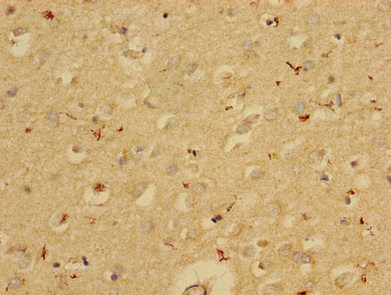
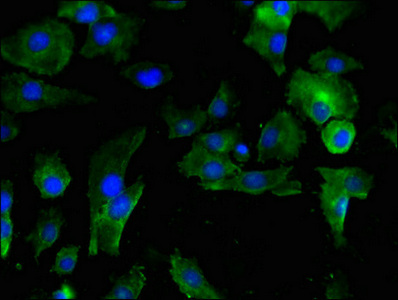
The antibody against SERPINE1 was raised in rabbit using the Recombinant Human Plasminogen activator inhibitor 1 protein (24-398AA) as the immunogen. This antibody exists as a non-conjugated isotype IgG, purified by protein G with a purity greater than 95%. This antibody has been validated on ELISA, WB, IHC, IF.
$299.00
| Cat.No | ADC-51055A | Clonality | Polyclonal |
|---|---|---|---|
| Host Species | Rabbit | Target Name | SERPINE1 |
| Form | Liquid | Species Reactivity | Human |
| Isotype | IgG | Storage Buffer | 0.01M PBS, 0.03% Proclin 300; Constituents: 50% Glycerol, PH 7.4 |
| Purification Method | >95%, Protein G purified | Conjugate | Non-conjugated |
| Application | ELISA, IF, IHC, WB | Storage | Upon receipt |
| Immunogen Description | Recombinant Human Plasminogen activator inhibitor 1 protein (24-398AA) | Target Species | Human |
|---|---|---|---|
| Immunogen Sequence | Complete sequences for the immunogen, target protein, and peptides are available upon request. | Uniprot ID | P05121 |
Uniprot Id
P05121
Target Species
Human
Target Name
SERPINE1
Target Full Name
Plasminogen activator inhibitor 1
Target Function
Serine protease inhibitor. Inhibits TMPRSS7. Is a primary inhibitor of tissue-type plasminogen activator (PLAT) and urokinase-type plasminogen activator (PLAU). As PLAT inhibitor, it is required for fibrinolysis down-regulation and is responsible for the controlled degradation of blood clots. As PLAU inhibitor, it is involved in the regulation of cell adhesion and spreading. Acts as a regulator of cell migration, independently of its role as protease inhibitor. It is required for stimulation of keratinocyte migration during cutaneous injury repair. It is involved in cellular and replicative senescence. Plays a role in alveolar type 2 cells senescence in the lung. Is involved in the regulation of cementogenic differentiation of periodontal ligament stem cells, and regulates odontoblast differentiation and dentin formation during odontogenesis.
Target Involvement
Plasminogen activator inhibitor-1 deficiency (PAI-1D)
Target Subcellular Location
Secreted.
Target Protein Families
Serpin family
Target Tissue Specificity
Expressed in endothelial cells. Found in plasma, platelets, and hepatoma and fibrosarcoma cells.
Target Research Area
Cardiovascular
Target Synonyms
Clade E; Endothelial plasminogen activator inhibitor; Nexin ; Nexin plasminogen activator inhibitor type 1; PAI 1; PAI; PAI-1; PAI1_HUMAN; PLANH1; Plasminogen activator inhibitor 1; Plasminogen activator inhibitor type 1; Serine (or cysteine) proteinase inhibitor ; Serine (or cysteine) proteinase inhibitor clade E (nexin plasminogen activator inhibitor type 1) member 1; Serine proteinase inhibitor clade E member 1; serpin; Serpin E1; Serpin peptidase inhibitor clade E (nexin plasminogen activator inhibitor type 1) member 1; Serpin peptidase inhibitor clade E; Serpine 1; SERPINE1
Target Background
This gene encodes a member of the serine proteinase inhibitor (serpin) superfamily. This member is the principal inhibitor of tissue plasminogen activator (tPA) and urokinase (uPA), and hence is an inhibitor of fibrinolysis. The protein also functions as a component of innate antiviral immunity. Defects in this gene are the cause of plasminogen activator inhibitor-1 deficiency (PAI-1 deficiency), and high concentrations of the gene product are associated with thrombophilia.
Notification