-
Chinese (Simplified)
-
English
-
German
-
Korean
-
Spanish
Chinese (Simplified)
English
German
Korean
Spanish
Sign up for an account to enjoy easy online shopping and instant order tracking.
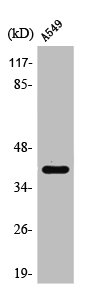
The antibody against SFTPB was raised in rabbit using the Synthesized peptide derived from the Internal region of Human SP-B. as the immunogen. This antibody exists as a non-conjugated isotype IgG. The antibody was affinity-purified from rabbit antiserum by affinity-chromatography using epitope-specific immunogen. This antibody has been validated on WB, ELISA.
$167.00
| Cat.No | ADC-37584A | Clonality | Polyclonal |
|---|---|---|---|
| Host Species | Rabbit | Target Name | SFTPB |
| Target Synonyms | SFTPB; SFTP3; Pulmonary surfactant-associated protein B; SP-B; 18 kDa pulmonary-surfactant protein; 6 kDa protein; Pulmonary surfactant-associated proteolipid SPL(Phe | Form | Liquid |
| Species Reactivity | Human | Isotype | IgG |
| Storage Buffer | 0.5% BSA and 0.02% sodium azide., Liquid in PBS containing 50% glycerol | Purification Method | The antibody was affinity-purified from rabbit antiserum by affinity-chromatography using epitope-specific immunogen. |
| Conjugate | Non-conjugated | Application | ELISA, WB |
| Storage | Upon receipt |
| Immunogen Description | Synthesized peptide derived from the Internal region of Human SP-B. | Target Species | Human |
|---|---|---|---|
| Immunogen Sequence | Complete sequences for the immunogen, target protein, and peptides are available upon request. | Uniprot ID | P07988 |
Uniprot Id
P07988
Target Species
Human
Target Name
SFTPB
Target Full Name
Pulmonary surfactant-associated protein B
Target Function
Pulmonary surfactant-associated proteins promote alveolar stability by lowering the surface tension at the air-liquid interface in the peripheral air spaces. SP-B increases the collapse pressure of palmitic acid to nearly 70 millinewtons per meter.
Target Involvement
Pulmonary surfactant metabolism dysfunction 1 (SMDP1); Respiratory distress syndrome in premature infants (RDS)
Target Subcellular Location
Secreted, extracellular space, surface film.
Target Research Area
Cell Biology, Cardiovascular
Target Synonyms
SFTPB; SFTP3; Pulmonary surfactant-associated protein B; SP-B; 18 kDa pulmonary-surfactant protein; 6 kDa protein; Pulmonary surfactant-associated proteolipid SPL(Phe
Target Background
This gene encodes the pulmonary-associated surfactant protein B (SPB), an amphipathic surfactant protein essential for lung function and homeostasis after birth. Pulmonary surfactant is a surface-active lipoprotein complex composed of 90% lipids and 10% proteins which include plasma proteins and apolipoproteins SPA, SPB, SPC and SPD. The surfactant is secreted by the alveolar cells of the lung and maintains the stability of pulmonary tissue by reducing the surface tension of fluids that coat the lung. The SPB enhances the rate of spreading and increases the stability of surfactant monolayers in vitro. Multiple mutations in this gene have been identified, which cause pulmonary surfactant metabolism dysfunction type 1, also called pulmonary alveolar proteinosis due to surfactant protein B deficiency, and are associated with fatal respiratory distress in the neonatal period. Alternatively spliced transcript variants encoding the same protein have been identified.
Notification