-
Chinese (Simplified)
-
English
-
German
-
Korean
-
Spanish
Chinese (Simplified)
English
German
Korean
Spanish
Sign up for an account to enjoy easy online shopping and instant order tracking.
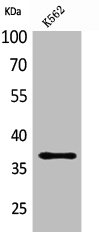
The antibody against SLAMF1 was raised in rabbit using the Synthesized peptide derived from the region of Human SLAM. as the immunogen. This antibody exists as a non-conjugated isotype IgG. The antibody was affinity-purified from rabbit antiserum by affinity-chromatography using epitope-specific immunogen. This antibody has been validated on WB, ELISA.
$167.00
| Cat.No | ADC-37074A | Clonality | Polyclonal |
|---|---|---|---|
| Host Species | Rabbit | Target Name | SLAMF1 |
| Form | Liquid | Species Reactivity | Human, Mouse, Rat |
| Isotype | IgG | Storage Buffer | 0.5% BSA and 0.02% sodium azide., Liquid in PBS containing 50% glycerol |
| Purification Method | The antibody was affinity-purified from rabbit antiserum by affinity-chromatography using epitope-specific immunogen. | Conjugate | Non-conjugated |
| Application | ELISA, WB | Storage | Upon receipt |
| Immunogen Description | Synthesized peptide derived from the region of Human SLAM. | Target Species | Human |
|---|---|---|---|
| Immunogen Sequence | Complete sequences for the immunogen, target protein, and peptides are available upon request. | Uniprot ID | Q13291 |
Uniprot Id
Q13291
Target Species
Human
Target Name
SLAMF1
Target Full Name
Signaling lymphocytic activation molecule
Target Function
Self-ligand receptor of the signaling lymphocytic activation molecule (SLAM) family. SLAM receptors triggered by homo- or heterotypic cell-cell interactions are modulating the activation and differentiation of a wide variety of immune cells and thus are involved in the regulation and interconnection of both innate and adaptive immune response. Activities are controlled by presence or absence of small cytoplasmic adapter proteins, SH2D1A/SAP and/or SH2D1B/EAT-2. SLAMF1-induced signal-transduction events in T-lymphocytes are different from those in B-cells. Two modes of SLAMF1 signaling seem to exist: one depending on SH2D1A (and perhaps SH2D1B) and another in which protein-tyrosine phosphatase 2C (PTPN11)-dependent signal transduction operates. Initially it has been proposed that association with SH2D1A prevents binding to inhibitory effectors including INPP5D/SHIP1 and PTPN11/SHP-2. However, signaling is also regulated by SH2D1A which can simultaneously interact with and recruit FYN which subsequently phosphorylates and activates SLAMF1. Mediates IL-2-independent proliferation of activated T-cells during immune responses and induces IFN-gamma production. Downstreaming signaling involves INPP5D, DOK1 and DOK2 leading to inhibited IFN-gamma production in T-cells, and PRKCQ, BCL10 and NFKB1 leading to increased T-cell activation and Th2 cytokine production. Promotes T-cell receptor-induced IL-4 secretion by CD4(+) cells. Inhibits antigen receptor-mediated production of IFN-gamma, but not IL-2, in CD4(-)/CD8(-) T-cells. Required for IL-4 production by germinal centers T follicular helper (T(Fh))cells. May inhibit CD40-induced signal transduction in monocyte-derived dendritic cells. May play a role in allergic responses and may regulate allergen-induced Th2 cytokine and Th1 cytokine secretion. In conjunction with SLAMF6 controls the transition between positive selection and the subsequent expansion and differentiation of the thymocytic natural killer T (NKT) cell lineage. Involved in the peripheral differentiation of indifferent natural killer T (iNKT) cells toward a regulatory NKT2 type. In macrophages involved in down-regulation of IL-12, TNF-alpha and nitric oxide in response to lipopolysaccharide (LPS). In B-cells activates the ERK signaling pathway independently of SH2D1A but implicating both, SYK and INPP5D, and activates Akt signaling dependent on SYK and SH2D1A. In B-cells also activates p38 MAPK and JNK1 and JNK2. In conjunction with CD84/SLAMF5 and SLAMF6 may be a negative regulator of the humoral immune response. Involved in innate immune response against Gram-negative bacteria in macrophages; probably recognizes OmpC and/or OmpF on the bacterial surface, regulates phagosome maturation and recruitment of the PI3K complex II (PI3KC3-C2) leading to accumulation of PdtIns(3)P and NOX2 activity in the phagosomes.; (Microbial infection) Acts as a receptor for Measles virus; also including isoform 4.
Target Subcellular Location
Cell membrane; Single-pass type I membrane protein.; [Isoform 3]: Secreted.; [Isoform 4]: Cell membrane.
Target Tissue Specificity
Constitutively expressed on peripheral blood memory T-cells, T-cell clones, immature thymocytes and a proportion of B-cells, and is rapidly induced on naive T-cells after activation. Activated B-cells express isoform 1, isoform 3 and a cytoplasmic isoform
Target Synonyms
4933415F16; AA177906; CD 150; CD150; CD150 antigen; CDw150; Estm51; Ipo 3; IPO-3; Ipo3; MGC151472; MGC151476; OTTHUMP00000025670 ; OTTHUMP00000060252; RGD1560634; Signaling lymphocytic activation molecule; Signaling lymphocytic activation molecule family member 1; Signaling lymphocytic activation molecule family member 1; isoform CRA_a ; Signaling lymphocytic activation molecule family member 1; isoform CRA_b ; Signaling lymphocytic activation molecule precursor ; Slaf1 ; SLAF1_HUMAN; SLAM family; member 1; Slamf 1; SLAMF1; SLAMF1 protein
Target Background
Enables SH2 domain binding activity and identical protein binding activity. Involved in several processes, including negative regulation of CD40 signaling pathway; negative regulation of cytokine production; and positive regulation of MAPK cascade. Located in extracellular exosome.
Notification