-
Chinese (Simplified)
-
English
-
German
-
Korean
-
Spanish

Chinese (Simplified)
English
German
Korean
Spanish
Sign up for an account to enjoy easy online shopping and instant order tracking.
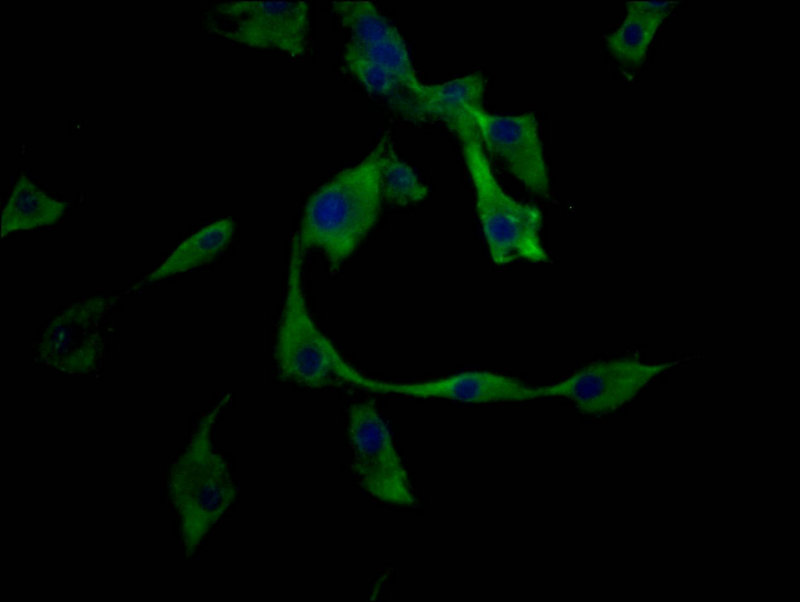
The antibody against SLAMF7 was raised in rabbit using the Recombinant Human SLAM family member 7 protein (23-226AA) as the immunogen. This antibody exists as a non-conjugated isotype IgG, Antigen affinity purified. This antibody has been validated on ELISA, WB, IHC, IF.
$299.00
| Cat.No | ADC-45125A | Clonality | Polyclonal |
|---|---|---|---|
| Host Species | Rabbit | Target Name | SLAMF7 |
| Form | Liquid | Species Reactivity | Human |
| Isotype | IgG | Storage Buffer | 50% Glycerol, PBS with 0.02% sodium azide, pH7.3. |
| Purification Method | Antigen affinity purified | Conjugate | Non-conjugated |
| Application | ELISA, IF, IHC, WB | Storage | Upon receipt |
| Immunogen Description | Recombinant Human SLAM family member 7 protein (23-226AA) | Target Species | Human |
|---|---|---|---|
| Immunogen Sequence | Complete sequences for the immunogen, target protein, and peptides are available upon request. | Uniprot ID | Q9NQ25 |
Uniprot Id
Q9NQ25
Target Species
Human
Target Name
SLAMF7
Target Full Name
SLAM family member 7
Target Function
Self-ligand receptor of the signaling lymphocytic activation molecule (SLAM) family. SLAM receptors triggered by homo- or heterotypic cell-cell interactions are modulating the activation and differentiation of a wide variety of immune cells and thus are involved in the regulation and interconnection of both innate and adaptive immune response. Activities are controlled by presence or absence of small cytoplasmic adapter proteins, SH2D1A/SAP and/or SH2D1B/EAT-2. Isoform 1 mediates NK cell activation through a SH2D1A-independent extracellular signal-regulated ERK-mediated pathway. Positively regulates NK cell functions by a mechanism dependent on phosphorylated SH2D1B. Downstream signaling implicates PLCG1, PLCG2 and PI3K. In addition to heterotypic NK cells-target cells interactions also homotypic interactions between NK cells may contribute to activation. However, in the absence of SH2D1B, inhibits NK cell function. Acts also inhibitory in T-cells. May play a role in lymphocyte adhesion. In LPS-activated monocytes negatively regulates production of proinflammatory cytokines.; Isoform 3 does not mediate any NK cell activation.
Target Subcellular Location
Membrane; Single-pass type I membrane protein.
Target Tissue Specificity
Expressed in spleen, lymph node, peripheral blood leukocytes, bone marrow, small intestine, stomach, appendix, lung and trachea. Expression was detected in NK cells, activated B-cells, NK-cell line but not in promyelocytic, B-, or T-cell lines. Expressed
Target Synonyms
SLAMF7; CS1; UNQ576/PRO1138; SLAM family member 7; CD2 subset 1; CD2-like receptor-activating cytotoxic cells; CRACC; Membrane protein FOAP-12; Novel Ly9; Protein 19A; CD antigen CD319
Target Background
Enables identical protein binding activity. Predicted to be involved in adaptive immune response. Predicted to act upstream of or within regulation of natural killer cell activation. Located in endoplasmic reticulum.
Notification