-
Chinese (Simplified)
-
English
-
German
-
Korean
-
Spanish
Chinese (Simplified)
English
German
Korean
Spanish
Sign up for an account to enjoy easy online shopping and instant order tracking.
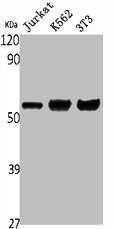
The antibody against SLC29A1 was raised in rabbit using the Synthesized peptide derived from the N-terminal region of Human ENT1. as the immunogen. This antibody exists as a non-conjugated isotype IgG. The antibody was affinity-purified from rabbit antiserum by affinity-chromatography using epitope-specific immunogen. This antibody has been validated on WB, ELISA.
$167.00
| Cat.No | ADC-37315A | Clonality | Polyclonal |
|---|---|---|---|
| Host Species | Rabbit | Target Name | SLC29A1 |
| Target Synonyms | member 1 antibody; solute carrier family 29 (nucleoside transporters), member 1 antibody; Solute carrier family 29 member 1 antibody | Form | Liquid |
| Species Reactivity | Human, Mouse, Rat | Isotype | IgG |
| Storage Buffer | 0.5% BSA and 0.02% sodium azide., Liquid in PBS containing 50% glycerol | Purification Method | The antibody was affinity-purified from rabbit antiserum by affinity-chromatography using epitope-specific immunogen. |
| Conjugate | Non-conjugated | Application | ELISA, WB |
| Storage | Upon receipt |
| Immunogen Description | Synthesized peptide derived from the N-terminal region of Human ENT1. | Target Species | Human |
|---|---|---|---|
| Immunogen Sequence | Complete sequences for the immunogen, target protein, and peptides are available upon request. | Uniprot ID | Q99808 |
Uniprot Id
Q99808
Target Species
Human
Target Name
SLC29A1
Target Full Name
Equilibrative nucleoside transporter 1
Target Function
Mediates both influx and efflux of nucleosides across the membrane (equilibrative transporter). It is sensitive (ES) to low concentrations of the inhibitor nitrobenzylmercaptopurine riboside (NBMPR) and is sodium-independent. It has a higher affinity for adenosine. Inhibited by dipyridamole and dilazep (anticancer chemotherapeutics drugs).
Target Subcellular Location
Basolateral cell membrane; Multi-pass membrane protein. Apical cell membrane; Multi-pass membrane protein. Cell membrane; Multi-pass membrane protein. Note=Predominantly localized in the basolateral membrane in polarized MDCK cells.
Target Protein Families
SLC29A/ENT transporter (TC 2.A.57) family
Target Tissue Specificity
Detected in erythrocytes (at protein level). Expressed in heart, brain, mammary gland, erythrocytes and placenta, and also in fetal liver and spleen.
Target Synonyms
Equilibrative NBMPR-sensitive nucleoside transporter; equilibrative nitrobenzylmercaptopurine riboside (NBMPR)-sensitive nucleoside transporter; Equilibrative nitrobenzylmercaptopurine riboside-sensitive nucleoside transporter; Equilibrative nucleoside transporter 1; es-type; MGC1465; MGC3778; Nucleoside transporter; Nucleoside transporter, es-type; OTTHUMP00000016506; OTTHUMP00000016507; OTTHUMP00000016508; OTTHUMP00000016509; OTTHUMP00000016510; OTTHUMP00000016511; OTTHUMP00000016512; S29A1_HUMAN; Slc29a1; solute carrier family 29 (equilibrative nucleoside transporter), member 1; solute carrier family 29 (nucleoside transporters), member 1; Solute carrier family 29 member 1
Target Background
This gene is a member of the equilibrative nucleoside transporter family. The gene encodes a transmembrane glycoprotein that localizes to the plasma and mitochondrial membranes and mediates the cellular uptake of nucleosides from the surrounding medium. The protein is categorized as an equilibrative (as opposed to concentrative) transporter that is sensitive to inhibition by nitrobenzylthioinosine (NBMPR). Nucleoside transporters are required for nucleotide synthesis in cells that lack de novo nucleoside synthesis pathways, and are also necessary for the uptake of cytotoxic nucleosides used for cancer and viral chemotherapies. Multiple alternatively spliced variants, encoding the same protein, have been found for this gene.
Notification