-
Chinese (Simplified)
-
English
-
German
-
Korean
-
Spanish
Chinese (Simplified)
English
German
Korean
Spanish
Sign up for an account to enjoy easy online shopping and instant order tracking.
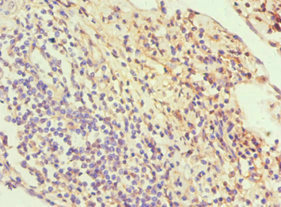
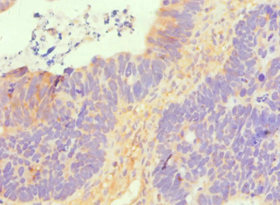
The antibody against SLC2A1 was raised in rabbit using the Recombinant Human Solute carrier family 2, facilitated glucose transporter member 1 protein (210-310AA) as the immunogen. This antibody exists as a non-conjugated isotype IgG, Antigen affinity purified. This antibody has been validated on ELISA, WB, IHC.
$299.00
| Cat.No | ADC-45271A | Clonality | Polyclonal |
|---|---|---|---|
| Host Species | Rabbit | Target Name | SLC2A1 |
| Target Synonyms | facilitated glucose transporter member 1 antibody, member 1 antibody; Solute carrier family 2 antibody; Solute carrier family 2 | Form | Liquid |
| Species Reactivity | Human, Mouse | Isotype | IgG |
| Storage Buffer | 50% Glycerol, PBS with 0.02% sodium azide, pH7.3. | Purification Method | Antigen affinity purified |
| Conjugate | Non-conjugated | Application | ELISA, IHC, WB |
| Storage | Upon receipt |
| Immunogen Description | Recombinant Human Solute carrier family 2, facilitated glucose transporter member 1 protein (210-310AA) | Target Species | Human |
|---|---|---|---|
| Immunogen Sequence | Complete sequences for the immunogen, target protein, and peptides are available upon request. | Uniprot ID | P11166 |
Uniprot Id
P11166
Target Species
Human
Target Name
SLC2A1
Target Full Name
Solute carrier family 2, facilitated glucose transporter member 1
Target Function
Facilitative glucose transporter, which is responsible for constitutive or basal glucose uptake. Has a very broad substrate specificity; can transport a wide range of aldoses including both pentoses and hexoses. Most important energy carrier of the brain: present at the blood-brain barrier and assures the energy-independent, facilitative transport of glucose into the brain. In association with BSG and NXNL1, promotes retinal cone survival by increasing glucose uptake into photoreceptors.
Target Involvement
GLUT1 deficiency syndrome 1 (GLUT1DS1); GLUT1 deficiency syndrome 2 (GLUT1DS2); Epilepsy, idiopathic generalized 12 (EIG12); Dystonia 9 (DYT9); Stomatin-deficient cryohydrocytosis with neurologic defects (SDCHCN)
Target Subcellular Location
Cell membrane; Multi-pass membrane protein. Melanosome. Photoreceptor inner segment.
Target Protein Families
Major facilitator superfamily, Sugar transporter (TC 2.A.1.1) family, Glucose transporter subfamily
Target Tissue Specificity
Detected in erythrocytes (at protein level). Expressed at variable levels in many human tissues.
Target Research Area
Metabolism
Target Synonyms
Choreoathetosis/spasticity episodic (paroxysmal choreoathetosis/spasticity); CSE; DYT17; DYT18; DYT9; EIG12; erythrocyte/brain; Erythrocyte/hepatoma glucose transporter; facilitated glucose transporter member 1; Glucose transporter 1; Glucose transporter type 1; Glucose transporter type 1, erythrocyte/brain; GLUT ; GLUT-1; GLUT1; GLUT1DS; GLUTB; GT1; GTG1; Gtg3; GTR1_HUMAN; HepG2 glucose transporter; HTLVR; Human T cell leukemia virus (I and II) receptor; MGC141895; MGC141896; PED; RATGTG1; Receptor for HTLV 1 and HTLV 2; SLC2A1; Solute carrier family 2 (facilitated glucose transporter), member 1; Solute carrier family 2; Solute carrier family 2, facilitated glucose transporter member 1
Target Background
This gene encodes a major glucose transporter in the mammalian blood-brain barrier. The encoded protein is found primarily in the cell membrane and on the cell surface, where it can also function as a receptor for human T-cell leukemia virus (HTLV) I and II. Mutations in this gene have been found in a family with paroxysmal exertion-induced dyskinesia.
Notification