-
Chinese (Simplified)
-
English
-
German
-
Korean
-
Spanish
Chinese (Simplified)
English
German
Korean
Spanish
Sign up for an account to enjoy easy online shopping and instant order tracking.
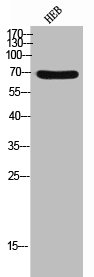
The antibody against SLC3A2 was raised in rabbit using the Synthesized peptide derived from the C-terminal region of Human CD98. as the immunogen. This antibody exists as a non-conjugated isotype IgG. The antibody was affinity-purified from rabbit antiserum by affinity-chromatography using epitope-specific immunogen. This antibody has been validated on WB, ELISA.
$167.00
| Cat.No | ADC-36778A | Clonality | Polyclonal |
|---|---|---|---|
| Host Species | Rabbit | Target Name | SLC3A2 |
| Target Synonyms | SLC3A2; MDU1; 4F2 cell-surface antigen heavy chain; 4F2hc; 4F2 heavy chain antigen; Lymphocyte activation antigen 4F2 large subunit; Solute carrier family 3 member 2; CD antigen CD98 | Form | Liquid |
| Species Reactivity | Human, Mouse, Rat | Isotype | IgG |
| Storage Buffer | 0.5% BSA and 0.02% sodium azide., Liquid in PBS containing 50% glycerol | Purification Method | The antibody was affinity-purified from rabbit antiserum by affinity-chromatography using epitope-specific immunogen. |
| Conjugate | Non-conjugated | Application | ELISA, WB |
| Storage | Upon receipt |
| Immunogen Description | Synthesized peptide derived from the C-terminal region of Human CD98. | Target Species | Human |
|---|---|---|---|
| Immunogen Sequence | Complete sequences for the immunogen, target protein, and peptides are available upon request. | Uniprot ID | P08195 |
Uniprot Id
P08195
Target Species
Human
Target Name
SLC3A2
Target Full Name
Amino acid transporter heavy chain SLC3A2
Target Function
Component of several heterodimeric complexes involved in amino acid transport. The precise substrate specificity depends on the other subunit in the heterodimer. The complexes function as amino acid exchangers. The homodimer functions as sodium-independent, high-affinity transporter that mediates uptake of large neutral amino acids such as phenylalanine, tyrosine, L-DOPA, leucine, histidine, methionine and tryptophan. The heterodimer formed by SLC3A2 and SLC7A6 or SLC3A2 and SLC7A7 mediates the uptake of dibasic amino acids. The heterodimer with SLC7A5/LAT1 mediates the transport of thyroid hormones triiodothyronine (T3) and thyroxine (T4) across the cell membrane. The heterodimer with SLC7A5/LAT1 is involved in the uptake of toxic methylmercury (MeHg) when administered as the L-cysteine or D,L-homocysteine complexes. The heterodimer with SLC7A5/LAT1 is involved in the uptake of leucine. When associated with LAPTM4B, the heterodimer with SLC7A5/LAT1 is recruited to lysosomes to promote leucine uptake into these organelles, and thereby mediates mTORC1 activation. The heterodimer with SLC7A5/LAT1 may play a role in the transport of L-DOPA across the blood-brain barrier. The heterodimer formed by SLC3A2 and SLC7A5/LAT1 or SLC3A2 and SLC7A8/LAT2 is involved in the cellular activity of small molecular weight nitrosothiols, via the stereoselective transport of L-nitrosocysteine (L-CNSO) across the transmembrane. Together with ICAM1, regulates the transport activity of SLC7A8/LAT2 in polarized intestinal cells by generating and delivering intracellular signals. Required for targeting of SLC7A5/LAT1 and SLC7A8/LAT2 to the plasma membrane and for channel activity. Plays a role in nitric oxide synthesis in human umbilical vein endothelial cells (HUVECs) via transport of L-arginine. May mediate blood-to-retina L-leucine transport across the inner blood-retinal barrier.; (Microbial infection) In case of hepatitis C virus/HCV infection, the complex formed by SLC3A2 and SLC7A5/LAT1 plays a role in HCV propagation by facilitating viral entry into host cell and increasing L-leucine uptake-mediated mTORC1 signaling activation, thereby contributing to HCV-mediated pathogenesis.
Target Subcellular Location
Apical cell membrane. Cell membrane; Single-pass type II membrane protein. Cell junction. Lysosome membrane. Melanosome.
Target Protein Families
SLC3A transporter family
Target Tissue Specificity
Expressed ubiquitously in all tissues tested with highest levels detected in kidney, placenta and testis and weakest level in thymus. During gestation, expression in the placenta was significantly stronger at full-term than at the mid-trimester stage. Exp
Target Synonyms
SLC3A2; MDU1; 4F2 cell-surface antigen heavy chain; 4F2hc; 4F2 heavy chain antigen; Lymphocyte activation antigen 4F2 large subunit; Solute carrier family 3 member 2; CD antigen CD98
Target Background
This gene is a member of the solute carrier family and encodes a cell surface, transmembrane protein. The protein exists as the heavy chain of a heterodimer, covalently bound through di-sulfide bonds to one of several possible light chains. The encoded transporter plays a role in regulation of intracellular calcium levels and transports L-type amino acids. Alternatively spliced transcript variants, encoding different isoforms, have been characterized.
Notification