• Contact info@abtriva.com for inquiries and orders.
  • Chinese (Simplified)

  • English

  • German

  • Korean

  • Spanish

United States (English / $ USD)

Rabbit anti-Human SLC8A1 Polyclonal Antibody

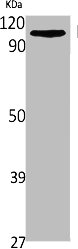
The antibody against SLC8A1 was raised in rabbit using the Synthesized peptide derived from the Internal region of Human NCX1. as the immunogen. This antibody exists as a non-conjugated isotype IgG. The antibody was affinity-purified from rabbit antiserum by affinity-chromatography using epitope-specific immunogen. This antibody has been validated on WB, ELISA.

ADC-37244A

The antibody against SLC8A1 was raised in rabbit using the Synthesized peptide derived from the Internal region of Human NCX1. as the immunogen. This antibody exists as a non-conjugated isotype IgG. The antibody was affinity-purified from rabbit antiserum by affinity-chromatography using epitope-specific immunogen. This antibody has been validated on WB, ELISA.

$167.00

Number
Order Exclusive Products Now

Request a Quote
High Purity LevelsPrecision and ReliabilityCustomization Options

Specifications


Cat.No ADC-37244A ClonalityPolyclonal
Host SpeciesRabbitTarget NameSLC8A1
FormLiquidSpecies ReactivityHuman, Mouse, Rat
IsotypeIgGStorage Buffer0.5% BSA and 0.02% sodium azide., Liquid in PBS containing 50% glycerol
Purification MethodThe antibody was affinity-purified from rabbit antiserum by affinity-chromatography using epitope-specific immunogen.ConjugateNon-conjugated
ApplicationELISA, WBStorageUpon receipt

Immunogen Information


Immunogen DescriptionSynthesized peptide derived from the Internal region of Human NCX1.Target SpeciesHuman
Immunogen SequenceComplete sequences for the immunogen, target protein, and peptides are available upon request.Uniprot IDP32418
Background Information
  • Uniprot Id

    P32418

  • Target Species

    Human

  • Target Name

    SLC8A1

  • Target Full Name

    Sodium/calcium exchanger 1

  • Target Function

    Mediates the exchange of one Ca(2+) ion against three to four Na(+) ions across the cell membrane, and thereby contributes to the regulation of cytoplasmic Ca(2+) levels and Ca(2+)-dependent cellular processes. Contributes to Ca(2+) transport during excitation-contraction coupling in muscle. In a first phase, voltage-gated channels mediate the rapid increase of cytoplasmic Ca(2+) levels due to release of Ca(2+) stores from the endoplasmic reticulum. SLC8A1 mediates the export of Ca(2+) from the cell during the next phase, so that cytoplasmic Ca(2+) levels rapidly return to baseline. Required for normal embryonic heart development and the onset of heart contractions.

  • Target Subcellular Location

    Cell membrane; Multi-pass membrane protein.

  • Target Protein Families

    Ca(2+):cation antiporter (CaCA) (TC 2.A.19) family, SLC8 subfamily

  • Target Tissue Specificity

    Detected primarily in heart and at lower levels in brain. Expressed in cardiac sarcolemma, brain, kidney, liver, pancreas, skeletal muscle, placenta and lung.

  • Target Research Area

    others

  • Target Synonyms

    CNC; DKFZp779F0871; MGC119581; Na(+)/Ca(2+)-exchange protein 1; Na+/Ca2+ exchange protein 1; Na+/Ca2+ exchanger; NAC1_HUMAN; NCX 1; NCX; NCX1; SLC8A1; SLC8A1 protein; Sodium Calcium Exchanger; Sodium/calcium exchanger 1; Solute carrier family 8 (sodium/calcium exchanger) member 1; Solute carrier family 8 member 1

  • Target Background

    In cardiac myocytes, Ca(2+) concentrations alternate between high levels during contraction and low levels during relaxation. The increase in Ca(2+) concentration during contraction is primarily due to release of Ca(2+) from intracellular stores. However, some Ca(2+) also enters the cell through the sarcolemma (plasma membrane). During relaxation, Ca(2+) is sequestered within the intracellular stores. To prevent overloading of intracellular stores, the Ca(2+) that entered across the sarcolemma must be extruded from the cell. The Na(+)-Ca(2+) exchanger is the primary mechanism by which the Ca(2+) is extruded from the cell during relaxation. In the heart, the exchanger may play a key role in digitalis action. The exchanger is the dominant mechanism in returning the cardiac myocyte to its resting state following excitation.

Inquire Rabbit anti-Human SLC8A1 Polyclonal Antibody Now


AbTriva respects your privacy and protects your personal data in accordance with AbTriva. For more information, please see our data protection statement. *

Notification