-
Chinese (Simplified)
-
English
-
German
-
Korean
-
Spanish
Chinese (Simplified)
English
German
Korean
Spanish
Sign up for an account to enjoy easy online shopping and instant order tracking.
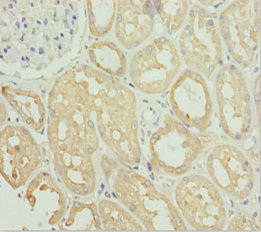
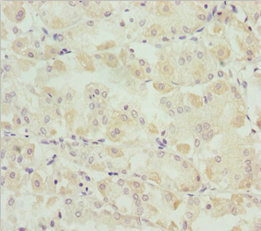
The antibody against SNAP29 was raised in rabbit using the Recombinant Human Synaptosomal-associated protein 29 protein (1-258AA) as the immunogen. This antibody exists as a non-conjugated isotype IgG, Antigen affinity purified. This antibody has been validated on ELISA, WB, IHC.
$299.00
| Cat.No | ADC-16818A | Clonality | Polyclonal |
|---|---|---|---|
| Host Species | Rabbit | Target Name | SNAP29 |
| Form | Liquid | Species Reactivity | Human |
| Isotype | IgG | Storage Buffer | 50% Glycerol, PBS with 0.02% sodium azide, pH7.3. |
| Purification Method | Antigen affinity purified | Conjugate | Non-conjugated |
| Application | ELISA, IHC, WB | Storage | Upon receipt |
| Immunogen Description | Recombinant Human Synaptosomal-associated protein 29 protein (1-258AA) | Target Species | Human |
|---|---|---|---|
| Immunogen Sequence | Complete sequences for the immunogen, target protein, and peptides are available upon request. | Uniprot ID | O95721 |
Uniprot Id
O95721
Target Species
Human
Target Name
SNAP29
Target Full Name
Synaptosomal-associated protein 29
Target Function
SNAREs, soluble N-ethylmaleimide-sensitive factor-attachment protein receptors, are essential proteins for fusion of cellular membranes. SNAREs localized on opposing membranes assemble to form a trans-SNARE complex, an extended, parallel four alpha-helical bundle that drives membrane fusion. SNAP29 is a SNARE involved in autophagy through the direct control of autophagosome membrane fusion with the lysososome membrane. Plays also a role in ciliogenesis by regulating membrane fusions.
Target Involvement
Cerebral dysgenesis, neuropathy, ichthyosis, and palmoplantar keratoderma syndrome (CEDNIK)
Target Subcellular Location
Cytoplasm. Golgi apparatus membrane; Peripheral membrane protein. Cytoplasmic vesicle, autophagosome membrane; Peripheral membrane protein. Cell projection, cilium membrane; Peripheral membrane protein.
Target Protein Families
SNAP-25 family
Target Tissue Specificity
Found in brain, heart, kidney, liver, lung, placenta, skeletal muscle, spleen and pancreas.
Target Research Area
Neuroscience
Target Synonyms
CEDNIK; FLJ21051; SNAP 29; SNAP-29; SNAP29; SNP29_HUMAN; Soluble 29 kDa NSF attachment protein; Synaptosomal associated protein 29; Synaptosomal associated protein 29kDa; Synaptosomal-associated protein 29; Vesicle membrane fusion protein SNAP 29; Vesicle membrane fusion protein SNAP29; Vesicle-membrane fusion protein SNAP-29
Target Background
This gene, a member of the SNAP25 gene family, encodes a protein involved in multiple membrane trafficking steps. Two other members of this gene family, SNAP23 and SNAP25, encode proteins that bind a syntaxin protein and mediate synaptic vesicle membrane docking and fusion to the plasma membrane. The protein encoded by this gene binds tightly to multiple syntaxins and is localized to intracellular membrane structures rather than to the plasma membrane. While the protein is mostly membrane-bound, a significant fraction of it is found free in the cytoplasm. Use of multiple polyadenylation sites has been noted for this gene.
Notification