-
Chinese (Simplified)
-
English
-
German
-
Korean
-
Spanish
Chinese (Simplified)
English
German
Korean
Spanish
Sign up for an account to enjoy easy online shopping and instant order tracking.
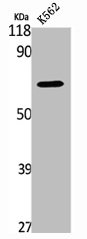
The antibody against SNX1 was raised in rabbit using the Synthesized peptide derived from the Internal region of Human SNX1. as the immunogen. This antibody exists as a non-conjugated isotype IgG. The antibody was affinity-purified from rabbit antiserum by affinity-chromatography using epitope-specific immunogen. This antibody has been validated on WB, ELISA.
$167.00
| Cat.No | ADC-37591A | Clonality | Polyclonal |
|---|---|---|---|
| Host Species | Rabbit | Target Name | SNX1 |
| Form | Liquid | Species Reactivity | Human, Mouse, Rat |
| Isotype | IgG | Storage Buffer | 0.5% BSA and 0.02% sodium azide., Liquid in PBS containing 50% glycerol |
| Purification Method | The antibody was affinity-purified from rabbit antiserum by affinity-chromatography using epitope-specific immunogen. | Conjugate | Non-conjugated |
| Application | ELISA, WB | Storage | Upon receipt |
| Immunogen Description | Synthesized peptide derived from the Internal region of Human SNX1. | Target Species | Human |
|---|---|---|---|
| Immunogen Sequence | Complete sequences for the immunogen, target protein, and peptides are available upon request. | Uniprot ID | Q13596 |
Uniprot Id
Q13596
Target Species
Human
Target Name
SNX1
Target Full Name
Sorting nexin-1
Target Function
Involved in several stages of intracellular trafficking. Interacts with membranes containing phosphatidylinositol 3-phosphate (PtdIns(3P)) or phosphatidylinositol 3,5-bisphosphate (PtdIns(3,5)P2). Acts in part as component of the retromer membrane-deforming SNX-BAR subcomplex. The SNX-BAR retromer mediates retrograde transport of cargo proteins from endosomes to the trans-Golgi network (TGN) and is involved in endosome-to-plasma membrane transport for cargo protein recycling. The SNX-BAR subcomplex functions to deform the donor membrane into a tubular profile called endosome-to-TGN transport carrier (ETC) (Probable). Can sense membrane curvature and has in vitro vesicle-to-membrane remodeling activity. Involved in retrograde endosome-to-TGN transport of lysosomal enzyme receptors (IGF2R, M6PR and SORT1) and Shiginella dysenteria toxin stxB. Plays a role in targeting ligand-activated EGFR to the lysosomes for degradation after endocytosis from the cell surface and release from the Golgi. Involvement in retromer-independent endocytic trafficking of P2RY1 and lysosomal degradation of protease-activated receptor-1/F2R. Promotes KALRN- and RHOG-dependent but retromer-independent membrane remodeling such as lamellipodium formation; the function is dependent on GEF activity of KALRN. Required for endocytosis of DRD5 upon agonist stimulation but not for basal receptor trafficking.
Target Subcellular Location
Endosome membrane; Peripheral membrane protein; Cytoplasmic side. Golgi apparatus, trans-Golgi network membrane; Peripheral membrane protein; Cytoplasmic side. Early endosome membrane; Peripheral membrane protein; Cytoplasmic side. Cell projection, lamellipodium.
Target Protein Families
Sorting nexin family
Target Research Area
Signal Transduction
Target Synonyms
HsT17379; MGC8664; SNX 1; SNX 1a; Snx1; SNX1_HUMAN; SNX1A; Sorting nexin 1; Sorting nexin 1A; Sorting nexin-1; Vps5
Target Background
This gene encodes a member of the sorting nexin family. Members of this family contain a phox (PX) domain, which is a phosphoinositide binding domain, and are involved in intracellular trafficking. This endosomal protein regulates the cell-surface expression of epidermal growth factor receptor. This protein also has a role in sorting protease-activated receptor-1 from early endosomes to lysosomes. This protein may form oligomeric complexes with family members. This gene results in three transcript variants encoding distinct isoforms.
Notification