• Contact info@abtriva.com for inquiries and orders.
  • Chinese (Simplified)

  • English

  • German

  • Korean

  • Spanish

United States (English / $ USD)

Rabbit anti-Human SST Polyclonal Antibody

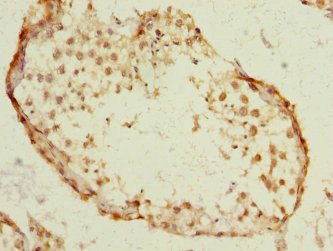
The antibody against SST was raised in rabbit using the Peptide sequence from Human Somatostatin protein as the immunogen. This antibody exists as a non-conjugated isotype IgG, purified by protein G with a purity greater than 95%. This antibody has been validated on ELISA, IHC.

ADC-21367A

The antibody against SST was raised in rabbit using the Peptide sequence from Human Somatostatin protein as the immunogen. This antibody exists as a non-conjugated isotype IgG, purified by protein G with a purity greater than 95%. This antibody has been validated on ELISA, IHC.

$299.00

Number
Order Exclusive Products Now

Request a Quote
High Purity LevelsPrecision and ReliabilityCustomization Options

Specifications


Cat.No ADC-21367A ClonalityPolyclonal
Host SpeciesRabbitTarget NameSST
FormLiquidSpecies ReactivityHuman
IsotypeIgGStorage Buffer0.01M PBS, 0.03% Proclin 300; Constituents: 50% Glycerol, PH 7.4
Purification Method>95%, Protein G purifiedConjugateNon-conjugated
ApplicationELISA, IHCStorageUpon receipt

Immunogen Information


Immunogen DescriptionPeptide sequence from Human Somatostatin proteinTarget SpeciesHuman
Immunogen SequenceComplete sequences for the immunogen, target protein, and peptides are available upon request.Uniprot IDP61278
Background Information
  • Uniprot Id

    P61278

  • Target Species

    Human

  • Target Name

    SST

  • Target Full Name

    Somatostatin

  • Target Function

    Inhibits the secretion of pituitary hormones, including that of growth hormone/somatotropin (GH1), PRL, ACTH, luteinizing hormone (LH) and TSH. Also impairs ghrelin- and GnRH-stimulated secretion of GH1 and LH; the inhibition of ghrelin-stimulated secretion of GH1 can be further increased by neuronostatin.; May enhance low-glucose-induced glucagon release by pancreatic alpha cells. This effect may be mediated by binding to GPR107 and PKA activation. May regulate cardiac contractile function. May compromise cardiomyocyte viability. In the central nervous system, may impair memory retention and may affect hippocampal excitability. May also have anxiolytic and anorexigenic effects. May play a role in arterial pressure regulation. May inhibit basal, but not ghrelin- or GnRH-stimulated secretion of GH1 or LH, but does not affect the release of other pituitary hormones, including PRL, ACTH, FSH or TSH. Potentiates inhibitory action of somatostatin on ghrelin-stimulated secretion of GH1, but not that on GnRH-stimulated secretion of LH.

  • Target Subcellular Location

    Secreted.

  • Target Protein Families

    Somatostatin family

  • Target Synonyms

    Growth hormone release inhibiting factor; Growth hormone release-inhibiting factor; Prepro somatostatin; SMS_HUMAN; SMST; Somatostatin 14; Somatostatin 28; Somatostatin-14; SST

  • Target Background

    The hormone somatostatin has active 14 aa and 28 aa forms that are produced by alternate cleavage of the single preproprotein encoded by this gene. Somatostatin is expressed throughout the body and inhibits the release of numerous secondary hormones by binding to high-affinity G-protein-coupled somatostatin receptors. This hormone is an important regulator of the endocrine system through its interactions with pituitary growth hormone, thyroid stimulating hormone, and most hormones of the gastrointestinal tract. Somatostatin also affects rates of neurotransmission in the central nervous system and proliferation of both normal and tumorigenic cells.

Inquire Rabbit anti-Human SST Polyclonal Antibody Now


AbTriva respects your privacy and protects your personal data in accordance with AbTriva. For more information, please see our data protection statement. *

Notification