• Contact info@abtriva.com for inquiries and orders.
  • Chinese (Simplified)

  • English

  • German

  • Korean

  • Spanish

United States (English / $ USD)

Rabbit anti-Human STIM1 Polyclonal Antibody

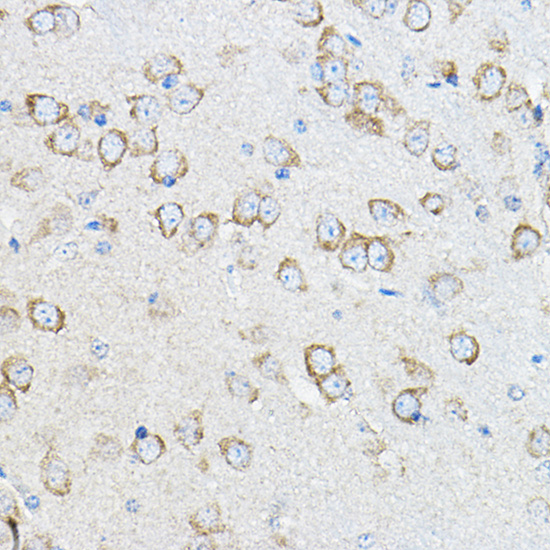
The antibody against STIM1 was raised in Rabbit using the recombinant fusion protein containing a sequence corresponding to amino acids 451-685 of human STIM1 (NP_003147.2) as the immunogen. The polyclonal antibody exists as a isotype IgG, by affinity purification. This antibody has been validated on WB, IHC-P, IP, ELISA.

ADA-07786A

The antibody against STIM1 was raised in Rabbit using the recombinant fusion protein containing a sequence corresponding to amino acids 451-685 of human STIM1 (NP_003147.2) as the immunogen. The polyclonal antibody exists as a isotype IgG, by affinity purification. This antibody has been validated on WB, IHC-P, IP, ELISA.

Number
Order Exclusive Products Now

Request a Quote
High Purity LevelsPrecision and ReliabilityCustomization Options

Specifications


Cat.No ADA-07786A ClonalityPolyclonal
Host SpeciesRabbitTarget NameSTIM1
Target SynonymsGOK; TAM; TAM1; IMD10; STRMK; D11S4896E; STIM1FormLiquid
Species ReactivityHuman, Mouse, RatIsotypeIgG
Storage Buffer50% Glycerol, PBS with 0.01% thimerosal, pH7.3.Purification MethodAffinity purification
Positive SamplesHeLaApplicationELISA, WB, IHC-P, IP

Immunogen Information


Immunogen DescriptionRecombinant fusion protein containing a sequence corresponding to amino acids 451-685 of human STIM1 (NP_003147.2).Target SpeciesHuman
Uniprot IDQ13586Immunogen Sequence
Background Information
  • Uniprot Id

    Q13586

  • Target Species

    Human

  • Target Name

    STIM1

  • Target Full Name

    Stromal interaction molecule 1

  • Target Function

    Plays a role in mediating store-operated Ca(2+) entry (SOCE), a Ca(2+) influx following depletion of intracellular Ca(2+) stores. Acts as Ca(2+) sensor in the endoplasmic reticulum via its EF-hand domain. Upon Ca(2+) depletion, translocates from the endoplasmic reticulum to the plasma membrane where it activates the Ca(2+) release-activated Ca(2+) (CRAC) channel subunit ORAI1. Involved in enamel formation. Activated following interaction with STIMATE, leading to promote STIM1 conformational switch.

  • Target Involvement

    Immunodeficiency 10 (IMD10); Myopathy, tubular aggregate, 1 (TAM1); Stormorken syndrome (STRMK)

  • Target Subcellular Location

    Cell membrane; Single-pass type I membrane protein. Endoplasmic reticulum membrane; Single-pass type I membrane protein. Cytoplasm, cytoskeleton. Sarcoplasmic reticulum.

  • Target Tissue Specificity

    Ubiquitously expressed in various human primary cells and tumor cell lines.

  • Target Synonyms

    D11S4896E; GOK; OTTHUMP00000164512; OTTHUMP00000229140; OTTHUMP00000230742; SIM; STIM 1; STIM1; Stim1 stromal interaction molecule 1; STIM1_HUMAN; STIM1L; Stromal interaction molecule 1

  • Target Background

    This gene encodes a type 1 transmembrane protein that mediates Ca2+ influx after depletion of intracellular Ca2+ stores by gating of store-operated Ca2+ influx channels (SOCs). It is one of several genes located in the imprinted gene domain of 11p15.5, an important tumor-suppressor gene region. Alterations in this region have been associated with the Beckwith-Wiedemann syndrome, Wilms tumor, rhabdomyosarcoma, adrenocrotical carcinoma, and lung, ovarian, and breast cancer. This gene may play a role in malignancies and disease that involve this region, as well as early hematopoiesis, by mediating attachment to stromal cells. Mutations in this gene are associated with fatal classic Kaposi sarcoma, immunodeficiency due to defects in store-operated calcium entry (SOCE) in fibroblasts, ectodermal dysplasia and tubular aggregate myopathy. This gene is oriented in a head-to-tail configuration with the ribonucleotide reductase 1 gene (RRM1), with the 3' end of this gene situated 1.6 kb from the 5' end of the RRM1 gene. Alternative splicing of this gene results in multiple transcript variants.

Inquire Rabbit anti-Human STIM1 Polyclonal Antibody Now


AbTriva respects your privacy and protects your personal data in accordance with AbTriva. For more information, please see our data protection statement. *

Notification