-
Chinese (Simplified)
-
English
-
German
-
Korean
-
Spanish
Chinese (Simplified)
English
German
Korean
Spanish
Sign up for an account to enjoy easy online shopping and instant order tracking.
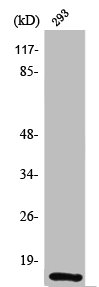
The antibody against SUMO1 was raised in rabbit using the Synthesized peptide derived from the N-terminal region of Human SUMO-1. as the immunogen. This antibody exists as a non-conjugated isotype IgG. The antibody was affinity-purified from rabbit antiserum by affinity-chromatography using epitope-specific immunogen. This antibody has been validated on WB, IHC, IF, ELISA.
$167.00
| Cat.No | ADC-37543A | Clonality | Polyclonal |
|---|---|---|---|
| Host Species | Rabbit | Target Name | SUMO1 |
| Target Synonyms | yeast | Form | Liquid |
| Species Reactivity | Human, Mouse, Rat | Isotype | IgG |
| Storage Buffer | 0.5% BSA and 0.02% sodium azide., Liquid in PBS containing 50% glycerol | Purification Method | The antibody was affinity-purified from rabbit antiserum by affinity-chromatography using epitope-specific immunogen. |
| Conjugate | Non-conjugated | Application | ELISA, IF, IHC, WB |
| Storage | Upon receipt |
| Immunogen Description | Synthesized peptide derived from the N-terminal region of Human SUMO-1. | Target Species | Human |
|---|---|---|---|
| Immunogen Sequence | Complete sequences for the immunogen, target protein, and peptides are available upon request. | Uniprot ID | P63165 |
Uniprot Id
P63165
Target Species
Human
Target Name
SUMO1
Target Full Name
Small ubiquitin-related modifier 1
Target Function
Ubiquitin-like protein that can be covalently attached to proteins as a monomer or a lysine-linked polymer. Covalent attachment via an isopeptide bond to its substrates requires prior activation by the E1 complex SAE1-SAE2 and linkage to the E2 enzyme UBE2I, and can be promoted by E3 ligases such as PIAS1-4, RANBP2 or CBX4. This post-translational modification on lysine residues of proteins plays a crucial role in a number of cellular processes such as nuclear transport, DNA replication and repair, mitosis and signal transduction. Involved for instance in targeting RANGAP1 to the nuclear pore complex protein RANBP2. Covalently attached to the voltage-gated potassium channel KCNB1; this modulates the gating characteristics of KCNB1. Polymeric SUMO1 chains are also susceptible to polyubiquitination which functions as a signal for proteasomal degradation of modified proteins. May also regulate a network of genes involved in palate development. Covalently attached to ZFHX3.
Target Involvement
Non-syndromic orofacial cleft 10 (OFC10)
Target Subcellular Location
Nucleus membrane. Nucleus speckle. Cytoplasm. Nucleus, PML body. Cell membrane. Nucleus.
Target Protein Families
Ubiquitin family, SUMO subfamily
Target Synonyms
DAP1; GAP modifying protein 1; GAP-modifying protein 1; GMP 1; GMP1; OFC10; PIC 1; PIC1; SENP2; Sentrin 1; Sentrin; Small ubiquitin related modifier 1; Small ubiquitin-like modifier 1; Small ubiquitin-related modifier 1; SMT3; SMT3 homolog 3; SMT3 suppressor of mif two 3 homolog 1; SMT3, yeast, homolog 3; Smt3C; SMT3H3; SUMO-1; SUMO1; SUMO1_HUMAN; Ubiquitin homology domain protein PIC1; Ubiquitin Like 1; Ubiquitin like protein SMT3C; Ubiquitin like protein UBL1; Ubiquitin-homology domain protein PIC1; Ubiquitin-like protein SMT3C; Ubiquitin-like protein UBL1; UBL 1; UBL1
Target Background
This gene encodes a protein that is a member of the SUMO (small ubiquitin-like modifier) protein family. It functions in a manner similar to ubiquitin in that it is bound to target proteins as part of a post-translational modification system. However, unlike ubiquitin which targets proteins for degradation, this protein is involved in a variety of cellular processes, such as nuclear transport, transcriptional regulation, apoptosis, and protein stability. It is not active until the last four amino acids of the carboxy-terminus have been cleaved off. Several pseudogenes have been reported for this gene. Alternate transcriptional splice variants encoding different isoforms have been characterized.
Notification