• Contact info@abtriva.com for inquiries and orders.
  • Chinese (Simplified)

  • English

  • German

  • Korean

  • Spanish

United States (English / $ USD)

Rabbit anti-Human SUMO2 Polyclonal Antibody

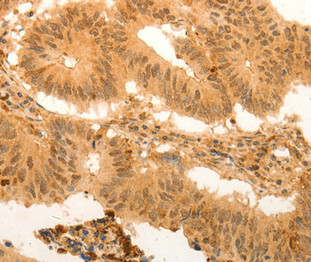
The antibody against SUMO2 was raised in rabbit using the Synthetic peptide corresponding to a region derived from internal residues of Human SMT3 suppressor of mif two 3 homolog 2/3/4 (S. cerevisiae) as the immunogen. This antibody exists as a polyclonal antibody to the immunogen, Antigen affinity purified. This antibody has been validated on ELISA, WB, IHC.

ADC-40638A

The antibody against SUMO2 was raised in rabbit using the Synthetic peptide corresponding to a region derived from internal residues of Human SMT3 suppressor of mif two 3 homolog 2/3/4 (S. cerevisiae) as the immunogen. This antibody exists as a polyclonal antibody to the immunogen, Antigen affinity purified. This antibody has been validated on ELISA, WB, IHC.

$297.00

Number
Order Exclusive Products Now

Request a Quote
High Purity LevelsPrecision and ReliabilityCustomization Options

Specifications


Cat.No ADC-40638A ClonalityPolyclonal
Host SpeciesRabbitTarget NameSUMO2
Target SynonymsyeastFormLiquid
Species ReactivityHuman, Mouse, RatStorage Buffer0.05% NaN3, 50% Glycerol, Rabbit IgG in pH7.3 PBS
Purification MethodAntigen affinity purifiedApplicationELISA, IHC, WB
StorageUpon receipt

Immunogen Information


Immunogen DescriptionSynthetic peptide corresponding to a region derived from internal residues of Human SMT3 suppressor of mif two 3 homolog 2/3/4 (S. cerevisiae)Target SpeciesHuman
Immunogen SequenceComplete sequences for the immunogen, target protein, and peptides are available upon request.Uniprot IDP61956
Background Information
  • Uniprot Id

    P61956

  • Target Species

    Human

  • Target Name

    SUMO2

  • Target Full Name

    Small ubiquitin-related modifier 2

  • Target Function

    Ubiquitin-like protein that can be covalently attached to proteins as a monomer or as a lysine-linked polymer. Covalent attachment via an isopeptide bond to its substrates requires prior activation by the E1 complex SAE1-SAE2 and linkage to the E2 enzyme UBE2I, and can be promoted by an E3 ligase such as PIAS1-4, RANBP2, CBX4 or ZNF451. This post-translational modification on lysine residues of proteins plays a crucial role in a number of cellular processes such as nuclear transport, DNA replication and repair, mitosis and signal transduction. Polymeric SUMO2 chains are also susceptible to polyubiquitination which functions as a signal for proteasomal degradation of modified proteins. Plays a role in the regulation of sumoylation status of SETX.

  • Target Subcellular Location

    Nucleus. Nucleus, PML body.

  • Target Protein Families

    Ubiquitin family, SUMO subfamily

  • Target Tissue Specificity

    Broadly expressed.

  • Target Synonyms

    HSMT 3; HSMT3; MGC117191; Sentrin 2; Sentrin-2; Sentrin2; Small ubiquitin like modifier 2; Small ubiquitin related modifier 2; Small ubiquitin-related modifier 2; SMT 3B; SMT3 homolog 2; SMT3 suppressor of mif two 3 homolog 2; SMT3 suppressor of mif two 3 homolog 2 (S. cerevisiae); SMT3, yeast, homolog 2; Smt3A; SMT3B; SMT3H2; SUMO-2; SUMO-3; SUMO2; SUMO2_HUMAN; Sumo3; Ubiquitin like protein SMT3B; Ubiquitin-like protein SMT3A

  • Target Background

    This gene encodes a protein that is a member of the SUMO (small ubiquitin-like modifier) protein family. It functions in a manner similar to ubiquitin in that it is bound to target proteins as part of a post-translational modification system. However, unlike ubiquitin which targets proteins for degradation, this protein is involved in a variety of cellular processes, such as nuclear transport, transcriptional regulation, apoptosis, and protein stability. It is not active until the last two amino acids of the carboxy-terminus have been cleaved off. Numerous pseudogenes have been reported for this gene. Alternate transcriptional splice variants, encoding different isoforms, have been characterized.

Inquire Rabbit anti-Human SUMO2 Polyclonal Antibody Now


AbTriva respects your privacy and protects your personal data in accordance with AbTriva. For more information, please see our data protection statement. *

Notification