• Contact info@abtriva.com for inquiries and orders.
  • Chinese (Simplified)

  • English

  • German

  • Korean

  • Spanish

United States (English / $ USD)

Rabbit anti-Human SUMO3 Polyclonal Antibody

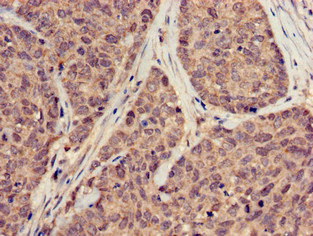
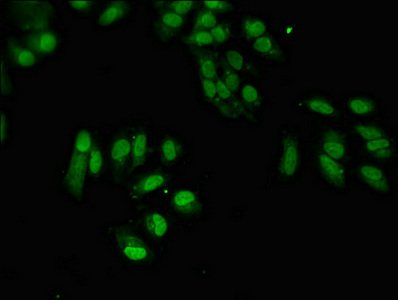
The antibody against SUMO3 was raised in rabbit using the Recombinant Human Small ubiquitin-related modifier 3 protein (1-92AA) as the immunogen. This antibody exists as a non-conjugated isotype IgG, purified by protein G with a purity greater than 95%. This antibody has been validated on ELISA, IHC, IF.

ADC-10677A

The antibody against SUMO3 was raised in rabbit using the Recombinant Human Small ubiquitin-related modifier 3 protein (1-92AA) as the immunogen. This antibody exists as a non-conjugated isotype IgG, purified by protein G with a purity greater than 95%. This antibody has been validated on ELISA, IHC, IF.

$299.00

Number
Order Exclusive Products Now

Request a Quote
High Purity LevelsPrecision and ReliabilityCustomization Options

Specifications


Cat.No ADC-10677A ClonalityPolyclonal
Host SpeciesRabbitTarget NameSUMO3
Target SynonymsyeastFormLiquid
Species ReactivityHumanIsotypeIgG
Storage Buffer0.01M PBS, 0.03% Proclin 300; Constituents: 50% Glycerol, PH 7.4Purification Method>95%, Protein G purified
ConjugateNon-conjugatedApplicationELISA, IF, IHC
StorageUpon receipt

Immunogen Information


Immunogen DescriptionRecombinant Human Small ubiquitin-related modifier 3 protein (1-92AA)Target SpeciesHuman
Immunogen SequenceComplete sequences for the immunogen, target protein, and peptides are available upon request.Uniprot IDP55854
Background Information
  • Uniprot Id

    P55854

  • Target Species

    Human

  • Target Name

    SUMO3

  • Target Full Name

    Small ubiquitin-related modifier 3

  • Target Function

    Ubiquitin-like protein which can be covalently attached to target lysines either as a monomer or as a lysine-linked polymer. Does not seem to be involved in protein degradation and may function as an antagonist of ubiquitin in the degradation process. Plays a role in a number of cellular processes such as nuclear transport, DNA replication and repair, mitosis and signal transduction. Covalent attachment to its substrates requires prior activation by the E1 complex SAE1-SAE2 and linkage to the E2 enzyme UBE2I, and can be promoted by an E3 ligase such as PIAS1-4, RANBP2 or CBX4. Plays a role in the regulation of sumoylation status of SETX.

  • Target Subcellular Location

    Cytoplasm. Nucleus. Nucleus, PML body.

  • Target Protein Families

    Ubiquitin family, SUMO subfamily

  • Target Tissue Specificity

    Expressed predominantly in liver.

  • Target Synonyms

    Small ubiquitin like modifier 3; Small ubiquitin related modifier 3; Small ubiquitin-related modifier 3; SMT3 homolog 1; SMT3 suppressor of mif two 3 homolog 1; SMT3 suppressor of mif two 3 homolog 3; SMT3, yeast, homolog 1; SMT3A; Smt3B; SMT3H1; SUMO-2; SUMO-3; sumo3; SUMO3_HUMAN; Ubiquitin like protein SMT3A; Ubiquitin-like protein SMT3B

  • Target Background

    This gene encodes a member of the small ubiquitin-related modifier (SUMO) family of eukaryotic proteins. The encoded protein is covalently conjugated to other proteins via a post-translation modification known as sumoylation. Sumoylation may play a role in a wide variety of cellular processes, including nuclear transport, DNA replication and repair, mitosis, transcriptional regulation, and signal transduction. Alternatively spliced transcript variants encoding distinct proteins have been described.

Inquire Rabbit anti-Human SUMO3 Polyclonal Antibody Now


AbTriva respects your privacy and protects your personal data in accordance with AbTriva. For more information, please see our data protection statement. *

Notification