-
Chinese (Simplified)
-
English
-
German
-
Korean
-
Spanish
Chinese (Simplified)
English
German
Korean
Spanish
Sign up for an account to enjoy easy online shopping and instant order tracking.
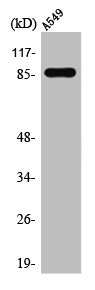
The antibody against TAF5 was raised in rabbit using the Synthesized peptide derived from the Internal region of Human TAF II p100. as the immunogen. This antibody exists as a non-conjugated isotype IgG. The antibody was affinity-purified from rabbit antiserum by affinity-chromatography using epitope-specific immunogen. This antibody has been validated on WB, IHC, ELISA.
$167.00
| Cat.No | ADC-37517A | Clonality | Polyclonal |
|---|---|---|---|
| Host Species | Rabbit | Target Name | TAF5 |
| Form | Liquid | Species Reactivity | Human, Mouse |
| Isotype | IgG | Storage Buffer | 0.5% BSA and 0.02% sodium azide., Liquid in PBS containing 50% glycerol |
| Purification Method | The antibody was affinity-purified from rabbit antiserum by affinity-chromatography using epitope-specific immunogen. | Conjugate | Non-conjugated |
| Application | ELISA, IHC, WB | Storage | Upon receipt |
| Immunogen Description | Synthesized peptide derived from the Internal region of Human TAF II p100. | Target Species | Human |
|---|---|---|---|
| Immunogen Sequence | Complete sequences for the immunogen, target protein, and peptides are available upon request. | Uniprot ID | Q15542 |
Uniprot Id
Q15542
Target Species
Human
Target Name
TAF5
Target Full Name
Transcription initiation factor TFIID subunit 5
Target Function
TAFs are components of the transcription factor IID (TFIID) complex, PCAF histone acetylase complex and TBP-free TAFII complex (TFTC). TAFs components-TIIFD are essential for mediating regulation of RNA polymerase transcription. TAF5/TAFII100 interacts strongly with the histone H4-related TAF6/TAFII80 and the histone H3-related TAF9/TAFII31, as well as a stable complex comprised of both TAF5/TAFII80 and TAF6/TAFII31. Apparently weaker interactions of TAF5/TAFII100 with TBP, TAF1/TAFII250, TAF11/TAFII28, and TAF12/TAFII20, but not TAF7/TAFII55, also have been observed.
Target Subcellular Location
Nucleus.
Target Protein Families
WD repeat TAF5 family
Target Synonyms
TAF5; TAF2D; Transcription initiation factor TFIID subunit 5; Transcription initiation factor TFIID 100 kDa subunit; TAF(II)100; TAFII-100; TAFII100
Target Background
Initiation of transcription by RNA polymerase II requires the activities of more than 70 polypeptides. The protein that coordinates these activities is transcription factor IID (TFIID), which binds to the core promoter to position the polymerase properly, serves as the scaffold for assembly of the remainder of the transcription complex, and acts as a channel for regulatory signals. TFIID is composed of the TATA-binding protein (TBP) and a group of evolutionarily conserved proteins known as TBP-associated factors or TAFs. TAFs may participate in basal transcription, serve as coactivators, function in promoter recognition or modify general transcription factors (GTFs) to facilitate complex assembly and transcription initiation. This gene encodes an integral subunit of TFIID associated with all transcriptionally competent forms of that complex. This subunit interacts strongly with two TFIID subunits that show similarity to histones H3 and H4, and it may participate in forming a nucleosome-like core in the TFIID complex. Alternative splicing results in multiple transcript variants.
Notification