-
Chinese (Simplified)
-
English
-
German
-
Korean
-
Spanish

Chinese (Simplified)
English
German
Korean
Spanish
Sign up for an account to enjoy easy online shopping and instant order tracking.
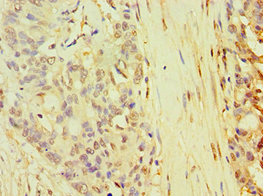
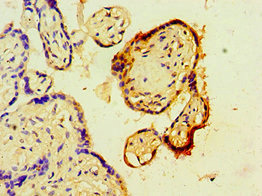
The antibody against TARBP2 was raised in rabbit using the Recombinant Human RISC-loading complex subunit TARBP2 protein (1-366AA) as the immunogen. This antibody exists as a non-conjugated isotype IgG, Antigen affinity purified. This antibody has been validated on ELISA, IHC.
$299.00
| Cat.No | ADC-40496A | Clonality | Polyclonal |
|---|---|---|---|
| Host Species | Rabbit | Target Name | TARBP2 |
| Form | Liquid | Species Reactivity | Human |
| Isotype | IgG | Storage Buffer | 50% Glycerol, PBS with 0.02% sodium azide, pH7.3. |
| Purification Method | Antigen affinity purified | Conjugate | Non-conjugated |
| Application | ELISA, IHC | Storage | Upon receipt |
| Immunogen Description | Recombinant Human RISC-loading complex subunit TARBP2 protein (1-366AA) | Target Species | Human |
|---|---|---|---|
| Immunogen Sequence | Complete sequences for the immunogen, target protein, and peptides are available upon request. | Uniprot ID | Q15633 |
Uniprot Id
Q15633
Target Species
Human
Target Name
TARBP2
Target Full Name
RISC-loading complex subunit TARBP2
Target Function
Required for formation of the RNA induced silencing complex (RISC). Component of the RISC loading complex (RLC), also known as the micro-RNA (miRNA) loading complex (miRLC), which is composed of DICER1, AGO2 and TARBP2. Within the RLC/miRLC, DICER1 and TARBP2 are required to process precursor miRNAs (pre-miRNAs) to mature miRNAs and then load them onto AGO2. AGO2 bound to the mature miRNA constitutes the minimal RISC and may subsequently dissociate from DICER1 and TARBP2. May also play a role in the production of short interfering RNAs (siRNAs) from double-stranded RNA (dsRNA) by DICER1.; (Microbial infection) Binds to the HIV-1 TAR RNA which is located in the long terminal repeat (LTR) of HIV-1, and stimulates translation of TAR-containing RNAs. This is achieved in part at least by binding to and inhibiting EIF2AK2/PKR, thereby reducing phosphorylation and inhibition of EIF2S1/eIF-2-alpha. May also promote translation of TAR-containing RNAs independently of EIF2AK2/PKR. Mediates recruitment of FTSJ3 methyltransferase to HIV-1 RNA, leading to 2'-O-methylation of the viral genome, allowing HIV-1 to escape the innate immune system.
Target Subcellular Location
Cytoplasm. Cytoplasm, perinuclear region. Nucleus.
Target Protein Families
TARBP2 family
Target Research Area
Microbiology
Target Synonyms
LOQS; Prbp; RISC loading complex subunit TARBP2; RISC-loading complex subunit tarbp2; TAR (HIV 1) RNA binding protein 2; TAR (HIV) RNA binding protein 2; TAR (HIV) RNA-binding protein TRBP1; TAR RNA Binding Protein 2; TAR RNA-binding protein 2; tarbp2; TARBP2 RISC loading complex RNA binding subunit; Trans-activation-responsive RNA-binding protein; TRBP; TRBP1; TRBP2; TRBP2_HUMAN
Target Background
HIV-1, the causative agent of acquired immunodeficiency syndrome (AIDS), contains an RNA genome that produces a chromosomally integrated DNA during the replicative cycle. Activation of HIV-1 gene expression by the transactivator Tat is dependent on an RNA regulatory element (TAR) located downstream of the transcription initiation site. The protein encoded by this gene binds between the bulge and the loop of the HIV-1 TAR RNA regulatory element and activates HIV-1 gene expression in synergy with the viral Tat protein. Alternative splicing results in multiple transcript variants encoding different isoforms. This gene also has a pseudogene.
Notification