• Contact info@abtriva.com for inquiries and orders.
  • Chinese (Simplified)

  • English

  • German

  • Korean

  • Spanish

United States (English / $ USD)

Rabbit anti-Human TDP-43/TARDBP Polyclonal Antibody

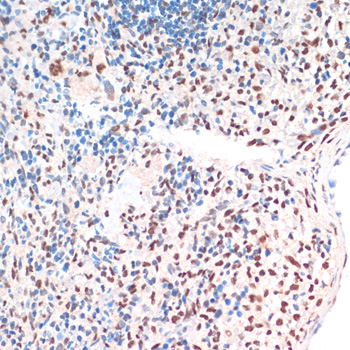
The antibody against TDP-43/TARDBP was raised in Rabbit using the recombinant fusion protein containing a sequence corresponding to amino acids 1-260 of human TDP-43/TARDBP (NP_031401.1) as the immunogen. The polyclonal antibody exists as a isotype IgG, by affinity purification. This antibody has been validated on WB, IHC-P, IF/ICC, ELISA.

ADA-05904A

The antibody against TDP-43/TARDBP was raised in Rabbit using the recombinant fusion protein containing a sequence corresponding to amino acids 1-260 of human TDP-43/TARDBP (NP_031401.1) as the immunogen. The polyclonal antibody exists as a isotype IgG, by affinity purification. This antibody has been validated on WB, IHC-P, IF/ICC, ELISA.

Number
Order Exclusive Products Now

Request a Quote
High Purity LevelsPrecision and ReliabilityCustomization Options

Specifications


Cat.No ADA-05904A ClonalityPolyclonal
Host SpeciesRabbitTarget NameTDP-43/TARDBP
Target SynonymsALS10; TDP-43; TDP-43/TARDBPFormLiquid
Species ReactivityHuman, Mouse, RatIsotypeIgG
Storage Buffer50% Glycerol, PBS with 0.02% sodium azide, pH7.3.Purification MethodAffinity purification
ApplicationELISA, WB, IF/ICC, IHC-P

Immunogen Information


Immunogen DescriptionRecombinant fusion protein containing a sequence corresponding to amino acids 1-260 of human TDP-43/TARDBP (NP_031401.1).Target SpeciesHuman
Uniprot IDQ13148Immunogen Sequence
Background Information
  • Uniprot Id

    Q13148

  • Target Species

    Human

  • Target Name

    TARDBP

  • Target Full Name

    TAR DNA-binding protein 43

  • Target Function

    RNA-binding protein that is involved in various steps of RNA biogenesis and processing. Preferentially binds, via its two RNA recognition motifs RRM1 and RRM2, to GU-repeats on RNA molecules predominantly localized within long introns and in the 3'UTR of mRNAs. In turn, regulates the splicing of many non-coding and protein-coding RNAs including proteins involved in neuronal survival, as well as mRNAs that encode proteins relevant for neurodegenerative diseases. Plays a role in maintaining mitochondrial homeostasis by regulating the processing of mitochondrial transcripts. Regulates also mRNA stability by recruiting CNOT7/CAF1 deadenylase on mRNA 3'UTR leading to poly(A) tail deadenylation and thus shortening. In response to oxidative insult, associates with stalled ribosomes localized to stress granules (SGs) and contributes to cell survival. Participates also in the normal skeletal muscle formation and regeneration, forming cytoplasmic myo-granules and binding mRNAs that encode sarcomeric proteins. Plays a role in the maintenance of the circadian clock periodicity via stabilization of the CRY1 and CRY2 proteins in a FBXL3-dependent manner. Negatively regulates the expression of CDK6. Regulates the expression of HDAC6, ATG7 and VCP in a PPIA/CYPA-dependent manner.

  • Target Involvement

    Amyotrophic lateral sclerosis 10 (ALS10)

  • Target Subcellular Location

    Nucleus. Cytoplasm. Cytoplasm, Stress granule.

  • Target Tissue Specificity

    Ubiquitously expressed. In particular, expression is high in pancreas, placenta, lung, genital tract and spleen.

  • Target Research Area

    Transcription, Microbiology

  • Target Synonyms

    ALS10; OTTHUMP00000002171; OTTHUMP00000002172; OTTHUMP00000002173; TADBP_HUMAN; TAR DNA binding protein 43; TAR DNA binding protein; TAR DNA-binding protein 43; TARDBP; TDP 43; TDP-43; TDP43

  • Target Background

    HIV-1, the causative agent of acquired immunodeficiency syndrome (AIDS), contains an RNA genome that produces a chromosomally integrated DNA during the replicative cycle. Activation of HIV-1 gene expression by the transactivator Tat is dependent on an RNA regulatory element (TAR) located downstream of the transcription initiation site. The protein encoded by this gene is a transcriptional repressor that binds to chromosomally integrated TAR DNA and represses HIV-1 transcription. In addition, this protein regulates alternate splicing of the CFTR gene. A similar pseudogene is present on chromosome 20.

Inquire Rabbit anti-Human TDP-43/TARDBP Polyclonal Antibody Now


AbTriva respects your privacy and protects your personal data in accordance with AbTriva. For more information, please see our data protection statement. *

Notification