• Contact info@abtriva.com for inquiries and orders.
  • Chinese (Simplified)

  • English

  • German

  • Korean

  • Spanish

United States (English / $ USD)

Rabbit anti-Human TDP1 Polyclonal Antibody

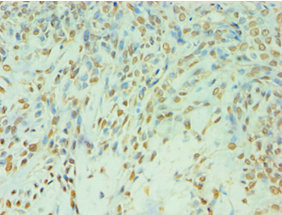
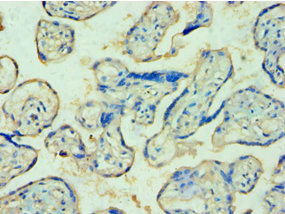
The antibody against TDP1 was raised in rabbit using the Recombinant Human Tyrosyl-DNA phosphodiesterase 1 protein (1-260AA) as the immunogen. This antibody exists as a non-conjugated isotype IgG, Antigen affinity purified. This antibody has been validated on ELISA, WB, IHC, IP.

ADC-44185A

The antibody against TDP1 was raised in rabbit using the Recombinant Human Tyrosyl-DNA phosphodiesterase 1 protein (1-260AA) as the immunogen. This antibody exists as a non-conjugated isotype IgG, Antigen affinity purified. This antibody has been validated on ELISA, WB, IHC, IP.

$299.00

Number
Order Exclusive Products Now

Request a Quote
High Purity LevelsPrecision and ReliabilityCustomization Options

Specifications


Cat.No ADC-44185A ClonalityPolyclonal
Host SpeciesRabbitTarget NameTDP1
FormLiquidSpecies ReactivityHuman, Mouse, Rat
IsotypeIgGStorage Buffer50% Glycerol, PBS with 0.02% sodium azide, pH7.3.
Purification MethodAntigen affinity purifiedConjugateNon-conjugated
ApplicationELISA, IHC, WB, IPStorageUpon receipt

Immunogen Information


Immunogen DescriptionRecombinant Human Tyrosyl-DNA phosphodiesterase 1 protein (1-260AA)Target SpeciesHuman
Immunogen SequenceComplete sequences for the immunogen, target protein, and peptides are available upon request.Uniprot IDQ9NUW8
Background Information
  • Uniprot Id

    Q9NUW8

  • Target Species

    Human

  • Target Name

    TDP1

  • Target Full Name

    Tyrosyl-DNA phosphodiesterase 1

  • Target Function

    DNA repair enzyme that can remove a variety of covalent adducts from DNA through hydrolysis of a 3'-phosphodiester bond, giving rise to DNA with a free 3' phosphate. Catalyzes the hydrolysis of dead-end complexes between DNA and the topoisomerase I active site tyrosine residue. Hydrolyzes 3'-phosphoglycolates on protruding 3' ends on DNA double-strand breaks due to DNA damage by radiation and free radicals. Acts on blunt-ended double-strand DNA breaks and on single-stranded DNA. Has low 3'exonuclease activity and can remove a single nucleoside from the 3'end of DNA and RNA molecules with 3'hydroxyl groups. Has no exonuclease activity towards DNA or RNA with a 3'phosphate.

  • Target Involvement

    Spinocerebellar ataxia, autosomal recessive, with axonal neuropathy (SCAN1)

  • Target Subcellular Location

    Nucleus. Cytoplasm.

  • Target Protein Families

    Tyrosyl-DNA phosphodiesterase family

  • Target Tissue Specificity

    Ubiquitously expressed. Similar expression throughout the central nervous system (whole brain, amygdala, caudate nucleus, cerebellum, cerebral cortex, frontal lobe, hippocampus, medulla oblongata, occipital lobe, putamen, substantia nigra, temporal lobe,

  • Target Synonyms

    AI838772; AW493413; FLJ11090; MGC104252; MGC112732; RP24-311F12.2; SCAN1; TDP1; TYDP; TYDP1_HUMAN; Tyr-DNA phosphodiesterase 1; Tyrosyl-DNA phosphodiesterase 1

  • Target Background

    The protein encoded by this gene is involved in repairing stalled topoisomerase I-DNA complexes by catalyzing the hydrolysis of the phosphodiester bond between the tyrosine residue of topoisomerase I and the 3-prime phosphate of DNA. This protein may also remove glycolate from single-stranded DNA containing 3-prime phosphoglycolate, suggesting a role in repair of free-radical mediated DNA double-strand breaks. This gene is a member of the phospholipase D family and contains two PLD phosphodiesterase domains. Mutations in this gene are associated with the disease spinocerebellar ataxia with axonal neuropathy (SCAN1).

Inquire Rabbit anti-Human TDP1 Polyclonal Antibody Now


AbTriva respects your privacy and protects your personal data in accordance with AbTriva. For more information, please see our data protection statement. *

Notification