-
Chinese (Simplified)
-
English
-
German
-
Korean
-
Spanish

Chinese (Simplified)
English
German
Korean
Spanish
Sign up for an account to enjoy easy online shopping and instant order tracking.
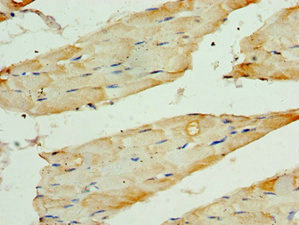
The antibody against TERF1 was raised in rabbit using the Recombinant Human Telomeric repeat-binding factor 1 protein (260-439AA) as the immunogen. This antibody exists as a non-conjugated isotype IgG, Antigen affinity purified. This antibody has been validated on ELISA, IHC.
$299.00
| Cat.No | ADC-40181A | Clonality | Polyclonal |
|---|---|---|---|
| Host Species | Rabbit | Target Name | TERF1 |
| Form | Liquid | Species Reactivity | Human |
| Isotype | IgG | Storage Buffer | 50% Glycerol, PBS with 0.02% sodium azide, pH7.3. |
| Purification Method | Antigen affinity purified | Conjugate | Non-conjugated |
| Application | ELISA, IHC | Storage | Upon receipt |
| Immunogen Description | Recombinant Human Telomeric repeat-binding factor 1 protein (260-439AA) | Target Species | Human |
|---|---|---|---|
| Immunogen Sequence | Complete sequences for the immunogen, target protein, and peptides are available upon request. | Uniprot ID | P54274 |
Uniprot Id
P54274
Target Species
Human
Target Name
TERF1
Target Full Name
Telomeric repeat-binding factor 1
Target Function
Binds the telomeric double-stranded 5'-TTAGGG-3' repeat and negatively regulates telomere length. Involved in the regulation of the mitotic spindle. Component of the shelterin complex (telosome) that is involved in the regulation of telomere length and protection. Shelterin associates with arrays of double-stranded 5'-TTAGGG-3' repeats added by telomerase and protects chromosome ends; without its protective activity, telomeres are no longer hidden from the DNA damage surveillance and chromosome ends are inappropriately processed by DNA repair pathways.
Target Subcellular Location
Nucleus. Cytoplasm, cytoskeleton, spindle. Chromosome, telomere. Note=Colocalizes with telomeric DNA in interphase and prophase cells. Telomeric localization decreases in metaphase, anaphase and telophase. Associates with the mitotic spindle.
Target Tissue Specificity
Highly expressed and ubiquitous. Isoform Pin2 predominates.
Target Synonyms
hTRF1 AS; NIMA interacting protein 2; NIMA-interacting protein 2; PIN 2; PIN2; t TRF1; Telomeric protein Pin2; Telomeric protein Pin2/TRF1; Telomeric repeat binding factor (NIMA interacting) 1; Telomeric repeat binding factor 1; Telomeric repeat binding protein 1; Telomeric repeat-binding factor 1; TERF 1; Terf1; TERF1_HUMAN; TRBF 1; TRBF1; TRF 1; TRF; TTAGGG repeat binding factor 1; TTAGGG repeat-binding factor 1
Target Background
This gene encodes a telomere specific protein which is a component of the telomere nucleoprotein complex. This protein is present at telomeres throughout the cell cycle and functions as an inhibitor of telomerase, acting in cis to limit the elongation of individual chromosome ends. The protein structure contains a C-terminal Myb motif, a dimerization domain near its N-terminus and an acidic N-terminus. Multiple transcripts of this gene are alternatively spliced products.
Notification