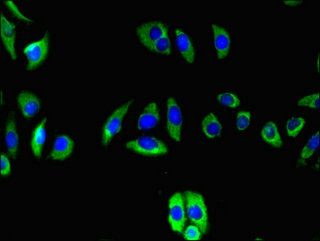
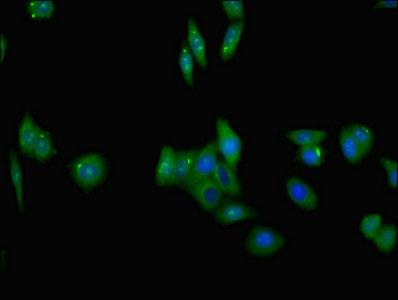
-
Chinese (Simplified)
-
English
-
German
-
Korean
-
Spanish
Chinese (Simplified)
English
German
Korean
Spanish
Sign up for an account to enjoy easy online shopping and instant order tracking.
The antibody against TNFRSF10C was raised in rabbit using the Recombinant Human Tumor necrosis factor receptor superfamily member 10C protein (26-236AA) as the immunogen. This antibody exists as a non-conjugated isotype IgG, purified by protein G with a purity greater than 95%. This antibody has been validated on ELISA, IF.
$299.00
| Cat.No | ADC-13399A | Clonality | Polyclonal |
|---|---|---|---|
| Host Species | Rabbit | Target Name | TNFRSF10C |
| Form | Liquid | Species Reactivity | Human |
| Isotype | IgG | Storage Buffer | 0.01M PBS, 0.03% Proclin 300; Constituents: 50% Glycerol, PH 7.4 |
| Purification Method | >95%, Protein G purified | Conjugate | Non-conjugated |
| Application | ELISA, IF | Storage | Upon receipt |
| Immunogen Description | Recombinant Human Tumor necrosis factor receptor superfamily member 10C protein (26-236AA) | Target Species | Human |
|---|---|---|---|
| Immunogen Sequence | Complete sequences for the immunogen, target protein, and peptides are available upon request. | Uniprot ID | O14798 |
Uniprot Id
O14798
Target Species
Human
Target Name
TNFRSF10C
Target Full Name
Tumor necrosis factor receptor superfamily member 10C
Target Function
Receptor for the cytotoxic ligand TRAIL. Lacks a cytoplasmic death domain and hence is not capable of inducing apoptosis. May protect cells against TRAIL mediated apoptosis by competing with TRAIL-R1 and R2 for binding to the ligand.
Target Subcellular Location
Cell membrane; Lipid-anchor, GPI-anchor.
Target Tissue Specificity
Higher expression in normal tissues than in tumor cell lines. Highly expressed in peripheral blood lymphocytes, spleen, skeletal muscle, placenta, lung and heart.
Target Synonyms
TNFRSF10C; DCR1; LIT; TRAILR3; TRID; UNQ321/PRO366; Tumor necrosis factor receptor superfamily member 10C; Antagonist decoy receptor for TRAIL/Apo-2L; Decoy TRAIL receptor without death domain; Decoy receptor 1; DcR1; Lymphocyte inhibitor of TRAIL; TNF-related apoptosis-inducing ligand receptor 3; TRAIL receptor 3; TRAIL-R3; TRAIL receptor without an intracellular domain; CD antigen CD263
Target Background
The protein encoded by this gene is a member of the TNF-receptor superfamily. This receptor contains an extracellular TRAIL-binding domain and a transmembrane domain, but no cytoplasmic death domain. This receptor is not capable of inducing apoptosis, and is thought to function as an antagonistic receptor that protects cells from TRAIL-induced apoptosis. This gene was found to be a p53-regulated DNA damage-inducible gene. The expression of this gene was detected in many normal tissues but not in most cancer cell lines, which may explain the specific sensitivity of cancer cells to the apoptosis-inducing activity of TRAIL.
Notification