• Contact info@abtriva.com for inquiries and orders.
  • Chinese (Simplified)

  • English

  • German

  • Korean

  • Spanish

United States (English / $ USD)

Rabbit anti-Human TNFRSF1A Polyclonal Antibody

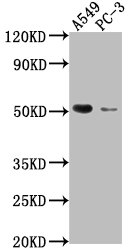
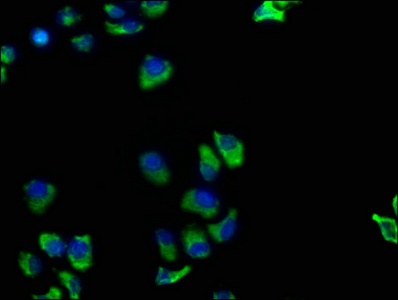
The antibody against TNFRSF1A was raised in rabbit using the Recombinant Human Tumor necrosis factor receptor superfamily member 1A protein (249-455AA) as the immunogen. This antibody exists as a non-conjugated isotype IgG, purified by protein G with a purity greater than 95%. This antibody has been validated on ELISA, WB, IHC, IF.

ADC-00925A

The antibody against TNFRSF1A was raised in rabbit using the Recombinant Human Tumor necrosis factor receptor superfamily member 1A protein (249-455AA) as the immunogen. This antibody exists as a non-conjugated isotype IgG, purified by protein G with a purity greater than 95%. This antibody has been validated on ELISA, WB, IHC, IF.

$299.00

Number
Order Exclusive Products Now

Request a Quote
High Purity LevelsPrecision and ReliabilityCustomization Options

Specifications


Cat.No ADC-00925A ClonalityPolyclonal
Host SpeciesRabbitTarget NameTNFRSF1A
Target Synonymsmember 1A antibody; Tumor necrosis factor receptor type 1 antibody; Tumor necrosis factor receptor type I antibody; Tumor necrosis factor-binding protein 1 antibodyFormLiquid
Species ReactivityHumanIsotypeIgG
Storage Buffer0.01M PBS, 0.03% Proclin 300; Constituents: 50% Glycerol, PH 7.4Purification Method>95%, Protein G purified
ConjugateNon-conjugatedApplicationELISA, IF, IHC, WB
StorageUpon receipt

Immunogen Information


Immunogen DescriptionRecombinant Human Tumor necrosis factor receptor superfamily member 1A protein (249-455AA)Target SpeciesHuman
Immunogen SequenceComplete sequences for the immunogen, target protein, and peptides are available upon request.Uniprot IDP19438
Background Information
  • Uniprot Id

    P19438

  • Target Species

    Human

  • Target Name

    TNFRSF1A

  • Target Full Name

    Tumor necrosis factor receptor superfamily member 1A

  • Target Function

    Receptor for TNFSF2/TNF-alpha and homotrimeric TNFSF1/lymphotoxin-alpha. The adapter molecule FADD recruits caspase-8 to the activated receptor. The resulting death-inducing signaling complex (DISC) performs caspase-8 proteolytic activation which initiates the subsequent cascade of caspases (aspartate-specific cysteine proteases) mediating apoptosis. Contributes to the induction of non-cytocidal TNF effects including anti-viral state and activation of the acid sphingomyelinase.

  • Target Involvement

    Familial hibernian fever (FHF); Multiple sclerosis 5 (MS5)

  • Target Subcellular Location

    Cell membrane; Single-pass type I membrane protein. Golgi apparatus membrane; Single-pass type I membrane protein. Secreted. Note=A secreted form is produced through proteolytic processing.; [Isoform 4]: Secreted. Note=Lacks a Golgi-retention motif, is not membrane bound and therefore is secreted.

  • Target Research Area

    Apoptosis, Signal Transduction

  • Target Synonyms

    CD120a; FPF; MGC19588; p55; p55-R; p60; TBP1; TBPI; TNF R; TNF R55; TNF-R1; TNF-RI; TNFAR; TNFR-I; TNFR1; TNFR55; TNFR60; TNFRI; TNFRSF1a; TNR1A_HUMAN; Tumor necrosis factor receptor 1; Tumor necrosis factor receptor superfamily, member 1A; Tumor necrosis factor receptor type 1; Tumor necrosis factor receptor type I; Tumor necrosis factor-binding protein 1

  • Target Background

    This gene encodes a member of the TNF receptor superfamily of proteins. The encoded receptor is found in membrane-bound and soluble forms that interact with membrane-bound and soluble forms, respectively, of its ligand, tumor necrosis factor alpha. Binding of membrane-bound tumor necrosis factor alpha to the membrane-bound receptor induces receptor trimerization and activation, which plays a role in cell survival, apoptosis, and inflammation. Proteolytic processing of the encoded receptor results in release of the soluble form of the receptor, which can interact with free tumor necrosis factor alpha to inhibit inflammation. Mutations in this gene underlie tumor necrosis factor receptor-associated periodic syndrome (TRAPS), characterized by fever, abdominal pain and other features. Mutations in this gene may also be associated with multiple sclerosis in human patients.

Inquire Rabbit anti-Human TNFRSF1A Polyclonal Antibody Now


AbTriva respects your privacy and protects your personal data in accordance with AbTriva. For more information, please see our data protection statement. *

Notification