-
Chinese (Simplified)
-
English
-
German
-
Korean
-
Spanish
Chinese (Simplified)
English
German
Korean
Spanish
Sign up for an account to enjoy easy online shopping and instant order tracking.
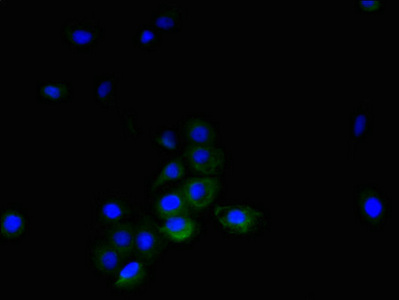
The antibody against TNFSF14 was raised in rabbit using the Recombinant Human Tumor necrosis factor ligand superfamily member 14 protein (1-239AA) as the immunogen. This antibody exists as a non-conjugated isotype IgG, purified by protein G with a purity greater than 95%. This antibody has been validated on ELISA, WB, IF.
$299.00
| Cat.No | ADC-54393A | Clonality | Polyclonal |
|---|---|---|---|
| Host Species | Rabbit | Target Name | TNFSF14 |
| Target Synonyms | TNFSF14; HVEML; LIGHT; UNQ391/PRO726; Tumor necrosis factor ligand superfamily member 14; Herpes virus entry mediator ligand; HVEM-L; Herpesvirus entry mediator ligand; CD antigen CD258 | Form | Liquid |
| Species Reactivity | Human | Isotype | IgG |
| Storage Buffer | 0.01M PBS, 0.03% Proclin 300; Constituents: 50% Glycerol, PH 7.4 | Purification Method | >95%, Protein G purified |
| Conjugate | Non-conjugated | Application | ELISA, IF, WB |
| Storage | Upon receipt |
| Immunogen Description | Recombinant Human Tumor necrosis factor ligand superfamily member 14 protein (1-239AA) | Target Species | Human |
|---|---|---|---|
| Immunogen Sequence | Complete sequences for the immunogen, target protein, and peptides are available upon request. | Uniprot ID | O43557 |
Uniprot Id
O43557
Target Species
Human
Target Name
TNFSF14
Target Full Name
Tumor necrosis factor ligand superfamily member 14
Target Function
Cytokine that binds to TNFRSF3/LTBR. Binding to the decoy receptor TNFRSF6B modulates its effects. Acts as a ligand for TNFRSF14/HVEM. Upon binding to TNFRSF14/HVEM, delivers costimulatory signals to T cells, leading to T cell proliferation and IFNG production.
Target Subcellular Location
[Tumor necrosis factor ligand superfamily member 14, membrane form]: Cell membrane; Single-pass type II membrane protein.; [Tumor necrosis factor ligand superfamily member 14, soluble form]: Secreted.; [Isoform 2]: Cytoplasm.
Target Protein Families
Tumor necrosis factor family
Target Tissue Specificity
Predominantly expressed in the spleen but also found in the brain. Weakly expressed in peripheral lymphoid tissues and in heart, placenta, liver, lung, appendix, and kidney, and no expression seen in fetal tissues, endocrine glands, or nonhematopoietic tu
Target Synonyms
TNFSF14; HVEML; LIGHT; UNQ391/PRO726; Tumor necrosis factor ligand superfamily member 14; Herpes virus entry mediator ligand; HVEM-L; Herpesvirus entry mediator ligand; CD antigen CD258
Target Background
The protein encoded by this gene is a member of the tumor necrosis factor (TNF) ligand family. This protein is a ligand for TNFRSF14, which is a member of the tumor necrosis factor receptor superfamily, and which is also known as a herpesvirus entry mediator (HVEM). This protein may function as a costimulatory factor for the activation of lymphoid cells and as a deterrent to infection by herpesvirus. This protein has been shown to stimulate the proliferation of T cells, and trigger apoptosis of various tumor cells. This protein is also reported to prevent tumor necrosis factor alpha mediated apoptosis in primary hepatocyte. Two alternatively spliced transcript variant encoding distinct isoforms have been reported.
Notification