-
Chinese (Simplified)
-
English
-
German
-
Korean
-
Spanish
Chinese (Simplified)
English
German
Korean
Spanish
Sign up for an account to enjoy easy online shopping and instant order tracking.
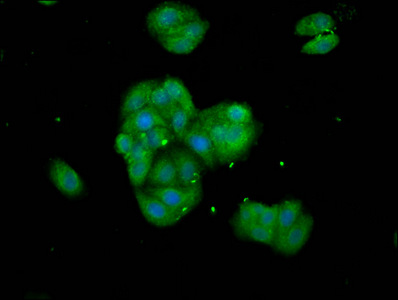
The antibody against TNKS was raised in rabbit using the Recombinant Human Tankyrase-1 protein (35-130AA) as the immunogen. This antibody exists as a non-conjugated isotype IgG, purified by protein G with a purity greater than 95%. This antibody has been validated on ELISA, WB, IHC, IF.
$299.00
| Cat.No | ADC-07283A | Clonality | Polyclonal |
|---|---|---|---|
| Host Species | Rabbit | Target Name | TNKS |
| Form | Liquid | Species Reactivity | Human |
| Isotype | IgG | Storage Buffer | 0.01M PBS, 0.03% Proclin 300; Constituents: 50% Glycerol, PH 7.4 |
| Purification Method | >95%, Protein G purified | Conjugate | Non-conjugated |
| Application | ELISA, IF, IHC, WB | Storage | Upon receipt |
| Immunogen Description | Recombinant Human Tankyrase-1 protein (35-130AA) | Target Species | Human |
|---|---|---|---|
| Immunogen Sequence | Complete sequences for the immunogen, target protein, and peptides are available upon request. | Uniprot ID | O95271 |
Uniprot Id
O95271
Target Species
Human
Target Name
TNKS
Target Full Name
Poly [ADP-ribose] polymerase tankyrase-1
Target Function
Poly-ADP-ribosyltransferase involved in various processes such as Wnt signaling pathway, telomere length and vesicle trafficking. Acts as an activator of the Wnt signaling pathway by mediating poly-ADP-ribosylation (PARsylation) of AXIN1 and AXIN2, 2 key components of the beta-catenin destruction complex: poly-ADP-ribosylated target proteins are recognized by RNF146, which mediates their ubiquitination and subsequent degradation. Also mediates PARsylation of BLZF1 and CASC3, followed by recruitment of RNF146 and subsequent ubiquitination. Mediates PARsylation of TERF1, thereby contributing to the regulation of telomere length. Involved in centrosome maturation during prometaphase by mediating PARsylation of HEPACAM2/MIKI. May also regulate vesicle trafficking and modulate the subcellular distribution of SLC2A4/GLUT4-vesicles. May be involved in spindle pole assembly through PARsylation of NUMA1. Stimulates 26S proteasome activity.
Target Subcellular Location
Cytoplasm. Golgi apparatus membrane; Peripheral membrane protein. Cytoplasm, cytoskeleton, microtubule organizing center, centrosome. Nucleus, nuclear pore complex. Chromosome, telomere. Cytoplasm, cytoskeleton, spindle pole.
Target Tissue Specificity
Ubiquitous; highest levels in testis.
Target Research Area
Epigenetics and Nuclear Signaling
Target Synonyms
ADP-ribosyltransferase diphtheria toxin-like 5; OTTHUMP00000115550; OTTHUMP00000224675; PARP 5a; PARP5A; PARPL; pART5; Poly [ADP-ribose] polymerase 5A; TANK 1; TANK1; Tankyrase 1; Tankyrase I; Tankyrase TRF1 interacting ankyrin related ADP ribose polymerase; Tankyrase-1; Tankyrase1; TankyraseI; TIN 1; TIN1; TINF 1; TINF1; TNKS 1; TNKS; TNKS-1; TNKS1; TNKS1_HUMAN; TRF1 interacting ankyrin related ADP ribose polymerase; TRF1-interacting ankyrin-related ADP-ribose polymerase
Target Background
Enables histone binding activity; pentosyltransferase activity; and zinc ion binding activity. Involved in several processes, including negative regulation of maintenance of mitotic sister chromatid cohesion, telomeric; protein ADP-ribosylation; and regulation of nucleobase-containing compound metabolic process. Acts upstream of or within peptidyl-serine phosphorylation; peptidyl-threonine phosphorylation; and protein ADP-ribosylation. Located in several cellular components, including chromosome, telomeric region; mitotic spindle pole; and nucleus.
Notification